At 50 years old, most athletes are slowing down.
But Jason Grubb, seven-time CrossFit Games champion, is training harder than many competitors half his age.
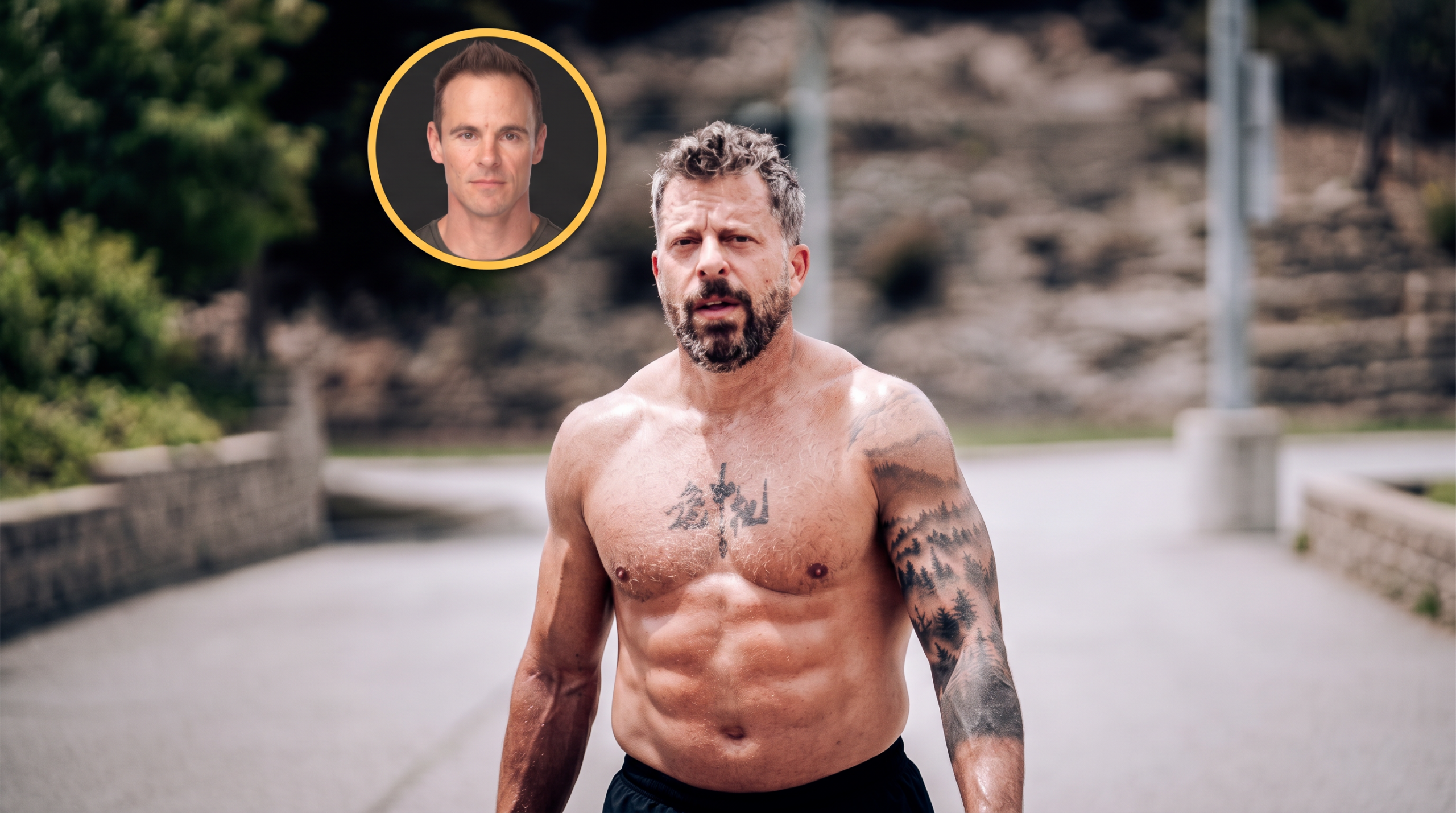
In a recent video breaking down his exact weekly training split, Grubbs pulled back the curtain on what it actually takes to stay competitive at the elite level as a masters athlete.
The sheer volume might shock you—but the strategic mix of intensities reveals why he’s still dominating.
Jump to:
- The Morning Ritual: Building Aerobic Capacity Before Breakfast
- Afternoon Sessions: Where the Real Work Happens
- Tuesday: Durability and Volume Endurance
- Wednesday: Olympic Lifting and Max Power Cleans
- Thursday: The Recovery Day That Isn’t Really Off
- Friday: Pushing Endurance and Heavy Lifts
- Saturday: Full Send with Friends
- The Time Commitment: Building Life Around Training
- The Intensity Spectrum: Not All Workouts Are Max Effort
- Ramping Up for Competition
- What Masters Athletes Can Learn
- The Bigger Picture: Redefining What’s Possible After 50
The Morning Ritual: Building Aerobic Capacity Before Breakfast
Grubbs’s days start with what he calls a “capacity session”—essentially zone two cardio work performed fasted, immediately after waking.
On Monday, that meant 52 minutes of continuous work rotating between rower, bike erg, and ski erg, starting a new five-minute round on each machine with short bursts of strength reinforcement between intervals.
No products found.
I literally get out of bed, drink some water with some electrolytes in it, and immediately jump into this.
Between machine rounds, he performs quick accessory work—tempo goblet squats, strict pull-ups, single-leg RDLs, and farmers carries—before hopping back on for another five minutes.
The whole session takes about 60 minutes, and he watches Netflix (currently Narcos) to make the time pass. He pauses when he hops off for the reinforcement exercises, then gets right back to reading subtitles.
Why Zone Two Work Matters for Longevity
Zone two training—working at a pace where you can still hold a conversation—builds aerobic base and mitochondrial efficiency without crushing recovery.
For masters athletes especially, this low-intensity volume protects joints while developing cardiovascular endurance that supports higher-intensity work later in the day.
Grubbs isn’t just grinding for the sake of it. Every morning session is green zone—easy, sustainable effort designed to build capacity without dipping into recovery reserves needed for afternoon training.
Afternoon Sessions: Where the Real Work Happens
After morning capacity work and a few hours of work time, Grubbs heads to the gym for his “elite session”—the main training block lasting two to two-and-a-half hours.
No products found.
Monday afternoon kicked off with pulling endurance: five sets of a 300-meter run into max unbroken ring muscle-ups, starting every three minutes. He finished with 42 total reps across those five sets.
Then came Olympic lifting.
- Power snatches at escalating percentages (68% to 81%)
- Squat snatches from low blocks, building to 84% of his max
- Snatch battery: sets of one through ten reps as singles, with 35 double-unders between, all on a one-minute-on, 30-second-off cadence
- Back squats: five sets of five at 79%
- Conditioning finisher: five rounds of 15 chest-to-bar pull-ups, 10 bar-facing burpees, five squat snatches at 155 pounds
We live in these percentages. I want to be able to hit that 82 to 85% any day of the week anytime. You just tell me get warm I can hit those percentages. That’s what I really want.
That’s Monday. And it’s not even his hardest day.
Tuesday: Durability and Volume Endurance
Tuesday’s capacity session was 50 minutes on the True Form runner in his garage—five 10-minute rounds structured as six minutes conversational pace, two minutes controlled zone three, then 10 push-ups on dumbbells and eight ring rows before walking or jogging the remaining time.
Afternoon work started with core endurance: 10 wall balls and 10 toes-to-bar every two minutes, adding two reps to each movement every round until failure.
Grubbs made it through the round of 22 and got 20 toes-to-bar on the 24s before tapping out. He kept toes-to-bar unbroken through the 20s, a serious feat of midline stamina.
No products found.
It wasn’t a kill-yourself type movement. It was a yellow workout, sustainable, just getting a good amount of volume in.
Next came behind-the-neck push jerks and split jerks, followed by a jerk battery—accumulating 75 push presses at 115 pounds in intervals, with a 50-foot handstand walk and 10-calorie ski erg buy-in each round.
He finished in about 10.5 minutes, hitting 25 push presses in the first round alone.
Durability Conditioning: The Grind
Tuesday’s closer was three rounds for quality, not time—designed to build long, sustainable effort without spiking heart rate excessively.
Each round included:
- 400-meter run
- 100-foot sandbag carry on shoulder
- 500-meter ski erg
- 200-foot kettlebell carry with 70-pounders
- 1,000-meter bike erg
- 100-foot kettlebell front rack walking lunges
The lunges, he admitted, were brutal. He broke them into 25-foot increments to keep his heart rate manageable.
Total time: about 30 minutes. But the point wasn’t speed—it was building durability under sustained load.
No products found.
Wednesday: Olympic Lifting and Max Power Cleans
Grubbs recorded his video mid-week, so Wednesday’s plan was still ahead of him—but he walked through it in detail.
Morning: alternating five-minute blocks on ski erg and rower for four rounds each, hopping off for ring rows and goblet squats on rounds one through four, then side box step-downs and suitcase carries on rounds five through nine.
Afternoon session:
- Pulling and core endurance: 40-30-20-10 GHD sit-ups with 4-3-2-1 legless rope climbs
- Power cleans, then three-position squat cleans (floor, hang, high hang) building to 74%
- Clean battery: 90 seconds work, 90 seconds rest—start each interval with a 15-calorie echo bike, then max power cleans at 225 pounds until 20 total reps are complete
- Optional clean pulls
- Front squats: five sets of five at 78%
- Red conditioning: six sets of one minute hard run for max distance, one minute rest
This should be maximal effort. It is a red workout, so I will be giving it a solid push.
Midweek Olympic lifting stays lighter, Grubbs explained, saving the heavy percentages for Saturday when he trains with a larger crew and the energy is higher.
Thursday: The Recovery Day That Isn’t Really Off
Thursday is technically a recovery day, but that doesn’t mean lying on the couch.
Instead of a capacity session, Grubbs hits the sauna and cold plunge for contrast therapy—20 minutes sauna, three-minute cold plunge, 10 minutes sauna, and possibly another minute in the cold if time allows.
No products found.
There’s growing interest in contrast therapy for recovery, though research on its effectiveness remains mixed. While some athletes report subjective benefits like reduced soreness and improved readiness, controlled studies haven’t consistently shown superior outcomes compared to other recovery methods. Still, for an athlete like Grubbs managing enormous training volume, any tool that aids perceived recovery and keeps him moving forward can play a role.
Friday: Pushing Endurance and Heavy Lifts
Friday morning brings 52 minutes on the bike erg at zone two, hopping off every five minutes for dumbbell bench presses with 50s (slow tempo, deep stretch) and sled pushes on rounds one through five, then dumbbell RDLs and backward sled drags on rounds six through 10.
Those are my best days. I love the bike erg when it’s just that.
Afternoon pushing endurance starts with deficit handstand push-ups—9, 6, and 3 reps with a six-inch deficit (kipping, not strict unless specified), followed by a 50-foot handstand walk after each set. Rest three minutes between, then repeat the whole sequence.
Next: bench press and deadlift supersets—three sets of five bench at 82%, three sets of three deadlifts at 82%. Getting heavy now.
Conditioning finisher for time, 12-minute cap:
- 45 bar-facing burpees
- 150 double-unders
- 21 bar muscle-ups
Boom. Done Friday.
No products found.
Saturday: Full Send with Friends
Saturday is the big training day at the gym—no morning capacity session at home. Instead, Grubbs goes straight to the gym and tackles the week’s heaviest Olympic lifts with his crew.
Session starts with row waves: two full waves of 1,000m / 750m / 500m / 250m at descending paces (154 / 150 / 146 / 142 split times), rest, then repeat.
Then squat snatches and clean-and-jerks, building to 86% on both lifts—the heaviest percentages of the week.
The day closes with “Full Send Saturday”—a 15-minute AMRAP with friends:
- 50 toes-to-bar
- 50 wall balls
- 50-calorie row
- 50 dumbbell snatches
That’s going to be a great workout to do with friends, of course.
If he has time in the afternoon, Grubbs adds a 55- to 60-minute zone two run—about five and a half to six miles, usually taking around 50 minutes.
The Time Commitment: Building Life Around Training
Morning sessions take about an hour, done at home. Afternoon sessions require a 20- to 25-minute drive each way, plus two to two-and-a-half hours of training.
No products found.
That’s roughly a three-hour round trip when you factor in travel time.
So, that’s a big chunk of my day. But, as I’ve talked about in lots of other videos, like I build my life in my work around my training day.
Between the morning and afternoon sessions, Grubbs works. After training, he works again before family time.
It’s a highly structured week, repeated consistently, week in and week out.
The Intensity Spectrum: Not All Workouts Are Max Effort
One of the most important takeaways from Grubbs’s split is the variation in intensity.
Not every session is a soul-crushing grind. He categorizes workouts by color:
- Green: Easy, sustainable—all morning capacity sessions
- Yellow: Moderate, sustainable pace—like the Tuesday toes-to-bar/wall ball endurance
- Orange: Competition pace—challenging but controlled
- Red: Max effort—like Wednesday’s one-minute hard runs
All of this that I do is at various intensities. This isn’t all absolute just kill-yourself kind of stuff. It’s important.
This periodization within the week prevents overtraining and allows him to hit true max efforts when it counts, while still accumulating enormous training volume.
No products found.
Ramping Up for Competition
As Grubbs prepares for events like the World Fitness Project finals in Copenhagen or the CrossFit Games in summer, his training intensifies.
Percentages on lifts creep up slightly as competition approaches. In the final six weeks before the Games, volume increases by roughly 10%.
It’s fairly unsustainable. It’s this plus maybe about 10% more, which is very hard and I love it. It’s my favorite time of the year, but it’s not something I would do year round.
Even a seven-time champion recognizes limits. Peak training blocks are temporary surges, not year-round norms.
What Masters Athletes Can Learn
Grubbs’s week isn’t a template for the average person—nor should it be.
But the principles behind his programming apply across ability levels:
- Prioritize aerobic base work. Morning zone two sessions build capacity without crushing recovery.
- Vary intensity deliberately. Not every workout should leave you wrecked.
- Build structure and consistency. Grubbs trains the same split week after week, allowing adaptation and progress.
- Train with others when possible. Saturday’s “Full Send” sessions with friends provide motivation and accountability.
- Respect recovery. Even on “off” days, he’s doing something—but it’s restorative, not destructive.
- Lift heavy, but smart. He lives in the 82-86% range most weeks, saving true maxes for competition.
Masters athletes especially benefit from emphasizing volume over intensity in base phases, protecting joints while building endurance and work capacity that supports higher-intensity efforts.
No products found.
The Bigger Picture: Redefining What’s Possible After 50
Grubbs’s training week shatters the narrative that performance inevitably declines with age.
Yes, he’s genetically gifted. Yes, he’s been training at elite levels for years. But the consistency, structure, and intelligent intensity variation are teachable principles.
At 50, he’s not just maintaining—he’s competing at the highest level, training twice a day, six days a week, managing enormous volume through smart programming and relentless discipline.
This is just what I do week in and week out. I love it. I love the training.
That love shows. And it’s a reminder that performance doesn’t have an expiration date—not if you’re willing to put in the work, stay consistent, and train smart.
Whether you’re chasing a podium or just want to stay strong and mobile as you age, the lesson is clear: structure, variety, and commitment never go out of style.