Sometimes the simplest habits lead to the most profound results.
That’s what journalist Danielle Friedman discovered when she visited 102-year-old yoga instructor Charlotte Chopin in her quiet village in France.
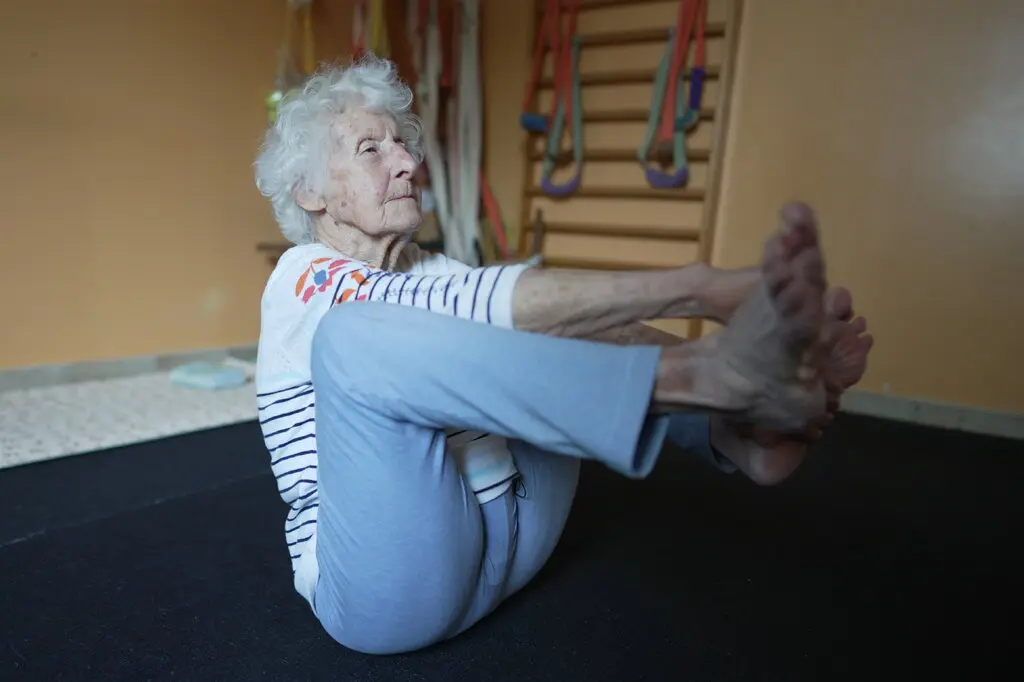
There, in a modest studio with worn mats and cotton clothes, Chopin embodies the power of consistency, connection, and joy in movement.
Her story isn’t just about doing yoga at 102 — it’s about rethinking our approach to fitness entirely.
Here’s what Friedman learned from the centenarian yogi — and why the lessons apply whether you’re 22 or 82.
Jump to:
The best workout? The one you keep doing
Despite decades of writing about health and fitness, Friedman kept hearing the same truth from experts: “The best exercise is the one you’ll do.”
Trendy programs come and go, fitness tech evolves, and studies shift what’s “optimal.” But showing up consistently – because you enjoy what you’re doing – trumps it all.
Charlotte Chopin is living proof.
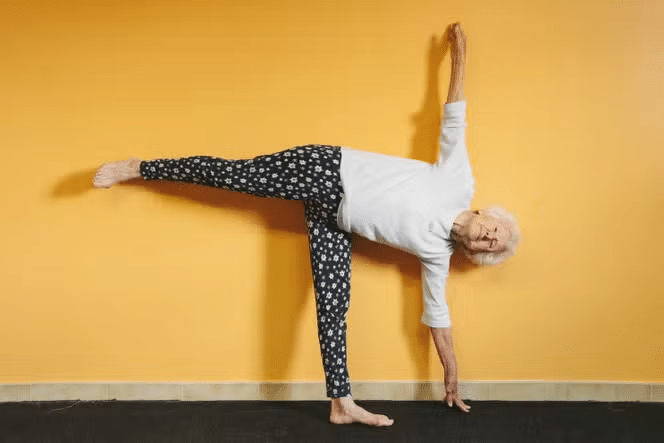
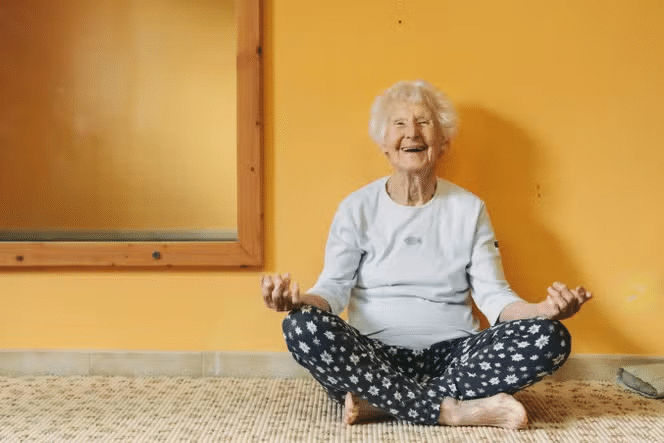
She took her first yoga class at 50. She fell in love with it and never stopped going. At 60, she began teaching, and now, over 40 years later, she’s still leading classes three times a week.
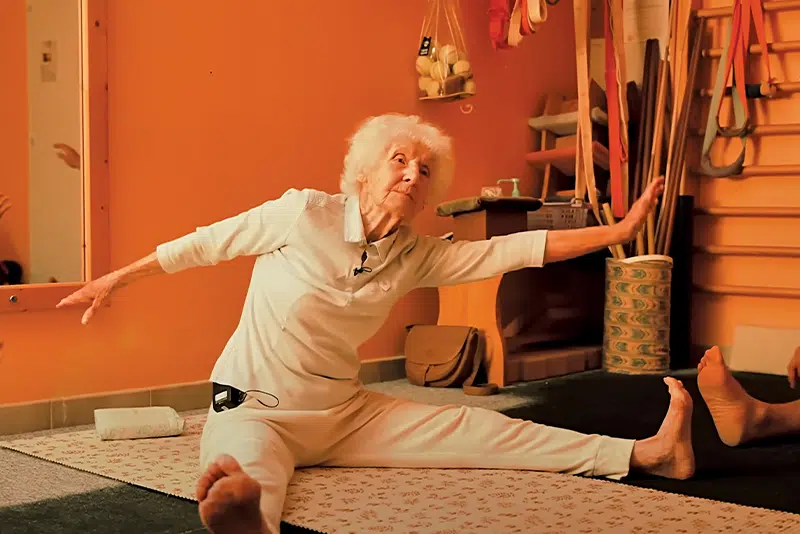
She hasn’t changed her format in decades. No fancy flows or reformer machines. Just the same sequence of postures, practiced with purpose and joy.
Fitness doesn’t have to be complicated
Today’s fitness culture often pushes us into decision anxiety — HIIT or Pilates? Strength or cardio? Whispers of optimization can become so overwhelming that people do… nothing at all.
Friedman admits this happened to her, too. The desire to “get it just right” kept her from getting started.
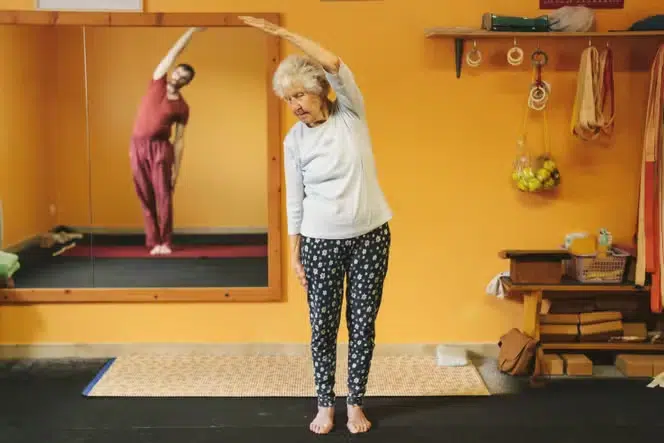
But watching Ms. Chopin flow through her postures gently but deliberately, Friedman was reminded that movement can be simple. And that’s often what makes it sustainable.
Chopin’s practice isn’t about flashy poses. It’s about doing something that feels right and doing it regularly.
Longevity thrives on community and purpose
One of the most powerful takeaways wasn’t just about the yoga — it was about why Charlotte shows up to class every week.
She loves her students. She values the social aspect of the practice. Most of her regulars are in their 30s to 60s, and she looks forward to seeing them as much as moving with them.
“She loves people,” her son shared with Friedman. And that love keeps her motivated — and moving. Social bonds fuel her physical health, just as much as exercise does.
This aligns with growing research on aging. Older adults with strong social ties have better health outcomes and life satisfaction. In one study published in Psychosomatic Medicine, meaningful relationships were linked to improved cardiovascular health and lower mortality risk.
In simpler terms: people who feel less alone, live longer.
Gratitude is a proven health tool
When asked about her secret to aging well, Chopin didn’t mention supplements, hacks, or even yoga.
She said: “I’m very lucky. I have four nice children. I’m in good health. I don’t have too many problems. I have an activity that I like.”
That’s gratitude — and it matters far more than many people realize.
A 2024 study showed older women who scored high in gratitude had significantly lower mortality rates from all causes, including heart disease and neurodegenerative conditions.
Gratitude may promote healthier behaviors, reduce stress, and improve sleep. And it seems Charlotte’s mindset is protective in every way.
Group movement builds emotional connection

Friedman, who never especially loved yoga or felt good at it, said class with Chopin felt different.
Despite being decades older, Chopin “was tough,” correcting posture, pushing participants a little beyond their limits.
But it was the communal joy — the shared experience — that made it special. Moving in sync with others fosters feelings of safety, trust, and belonging. That “invisible thread” may be one of the most overlooked benefits of group fitness.
Science supports this: synchronizing physical movements in group settings triggers the release of oxytocin — the bonding hormone — creating emotional closeness and elevating mood.
Friedman left the class feeling invigorated. Because for once, she wasn’t chasing perfection — just presence.
Lessons from a lifetime of movement
If there’s a takeaway from Chopin’s story, it’s not about yoga — it’s about showing up for yourself daily in small, consistent, joyful ways.
Whether it’s stretching for 10 minutes, walking with a friend, or dancing in your kitchen, movement done regularly and joyfully supports both mind and body long-term.
Her life reflects four pillars of healthy aging that research continues to validate:
- Consistent and enjoyable movement
- Strong social ties
- A routine filled with purpose
- A grateful mindset
Doing yoga well into your 100s might seem like the goal. But maybe the goal is simply finding something you love enough to do again tomorrow.
As Chopin shows us: devotion beats duration. Joy sustains effort. And a small, meaningful routine can carry you a very long way.