A hybrid athlete recently put his fitness to the ultimate test, heading to the lab for three comprehensive performance assessments that would reveal exactly where his body stands after completing an extraordinary endurance challenge.
The timing couldn’t be more critical—he’d just finished 10 Iron Man competitions in 10 consecutive days across 10 different cities.
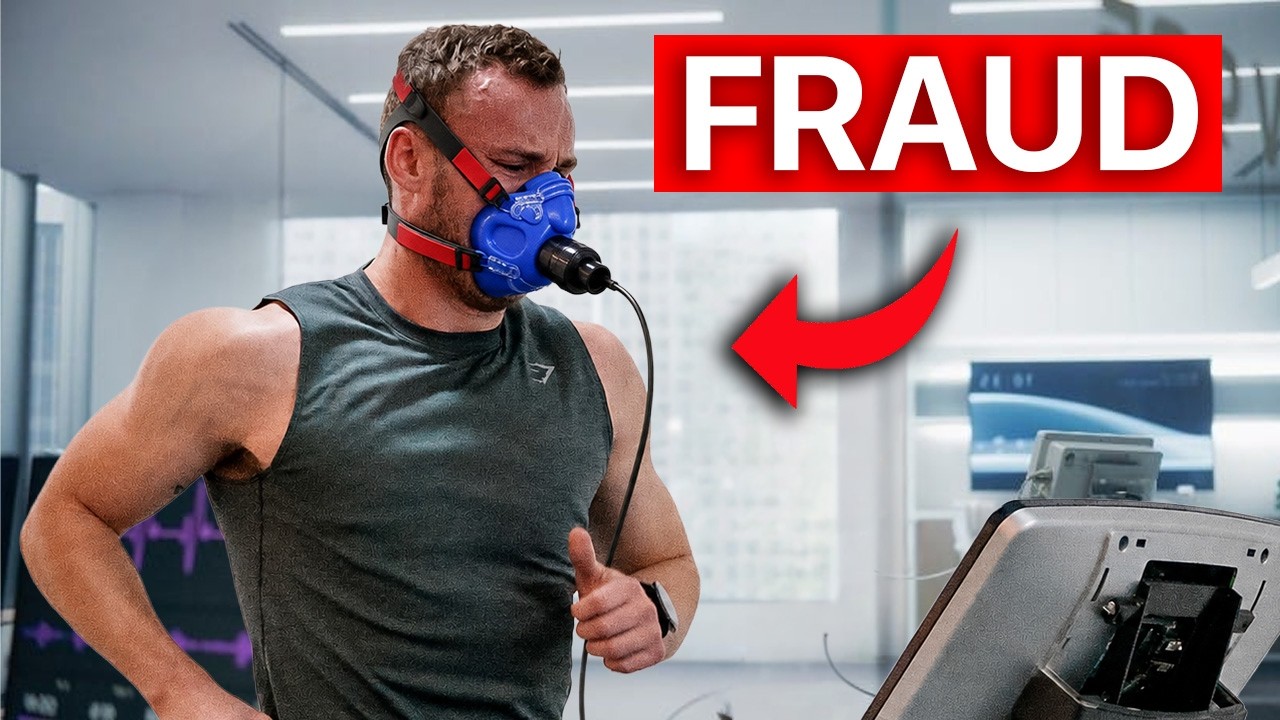
But before embracing his next big life challenge of becoming a father, he wanted concrete data on his current fitness levels.
What he discovered through blood lactate profiling, sweat testing, and heat chamber analysis would fundamentally change how he approaches training and racing.
Jump to:
The Hybrid Athlete Philosophy
Self-described as someone who optimizes for being “slightly above average across opposing disciplines concurrently,” this athlete takes training seriously without taking himself too seriously. He views exercise as a way of maximizing fulfillment rather than obsessing over arbitrary performance metrics.
However, lab testing day was all about non-arbitrary metrics that would provide actionable insights for future performance.

If you want something simple that actually works, this is one of the most effective tools I’ve used to build strength, conditioning, and endurance without needing a full gym setup.
- Full-body training with one weight using swings, squats, and presses
- Solid cast iron build that feels stable and lasts for years
- Comfortable grip that makes high-rep workouts easier to handle
Test One: Blood Lactate Profiling
Blood lactate profiling measures lactate concentrations during incremental exercise to map how your body handles effort and fatigue. This 45-minute progressive test involved running at increasingly faster paces—from 6 minutes per kilometer down to 3:30 per kilometer—in 4-minute intervals.
Blood readings taken after each interval helped determine two critical thresholds: LT1 and LT2, which define optimal training zones for different workout intensities.
Understanding The Results
Working with physiologist Tash, the athlete reviewed his lactate curve. His LT1 (first threshold) occurred around 4:45 pace with a heart rate of approximately 144 beats per minute. LT1 is typically identified as 0.5 to 1 millimoles above baseline lactate levels.
Zone one, zone two training should be done at or below that pace. So, slower than 4:45s to be getting the most out of it and it sounds like that’s what you’ve been doing.
Interestingly, his starting lactate level was 1.5 millimoles—higher than the typical 0.9 expected from most athletes. Tash explained this could result from his warm-up routine, recent food intake, or coffee consumption, all of which trigger insulin responses that elevate blood glucose processing.
His LT2 (second threshold) landed around 4-minute kilometer pace with a heart rate near 160 bpm. Beyond this threshold, blood lactate accumulates rapidly, making sustained effort difficult.
The jump between stages was significant—from 3.6 millimoles to 5.3 millimoles—confirming that 3:55 to 4:00 pace represents his upper sustainable threshold.
If you want something simple that actually works, this is one of the most effective tools I’ve used to build strength, conditioning, and endurance without needing a full gym setup.
- Full-body training with one weight using swings, squats, and presses
- Solid cast iron build that feels stable and lasts for years
- Comfortable grip that makes high-rep workouts easier to handle
Test Two: Sweat Composition Analysis
Sweat testing examines two critical components: volume (fluid lost) and composition (sodium lost). Sodium is the primary electrolyte lost through sweat and plays a crucial role in hydration status.
Individual sodium loss varies dramatically—from as little as 200mg per liter to as much as 2,000mg per liter. This variation is largely genetic, making personalized testing essential for optimal hydration strategies.
The Testing Process
Working with Raff, the athlete underwent sweat induction using small electrodes and gel discs. This specifically measures sweat sodium concentration expressed as milligrams per liter.
Going into testing, he estimated needing 750ml fluid per hour and 750mg sodium per hour based on his UK training environment. His actual results would either confirm his intuition or reveal he’d been significantly off-target for years.
Sweat Sodium Results
His sweat sodium concentration came in at 676mg per liter—placing him in the below-average category for composition. While initially seeming disappointing, this actually represents an advantage for endurance athletes.
If you were going to design an endurance athlete, they would have a relatively low sweat sodium concentration because it means they don’t have to think about replacing as much and relatively high volume sweat because it means they can have greater control over their core body temperature.
Lower sodium concentration means less electrolyte replacement needed during exercise—a significant benefit during long-duration events like Iron Man competitions.
If you want something simple that actually works, this is one of the most effective tools I’ve used to build strength, conditioning, and endurance without needing a full gym setup.
- Full-body training with one weight using swings, squats, and presses
- Solid cast iron build that feels stable and lasts for years
- Comfortable grip that makes high-rep workouts easier to handle
Test Three: Heat Chamber Performance
Heat acclimation training involves exercising in simulated hot environments to improve performance both in heat and temperate conditions. This final test would determine sweat rate in liters per hour and reveal performance drop-off during sustained heat exposure.
Working with Dr. Lindsay, a thermal physiology expert, the athlete faced 60 minutes of running in 38°C (100°F) conditions—significantly hotter than his usual 28°C training environment.
The Brutal Reality
Starting at 4:20 per kilometer pace, performance degraded rapidly. By session end, pace had slowed to 6:30 per kilometer—requiring 30 seconds of walking to complete the hour.
I wanted to quit after about 25 minutes, which isn’t a huge amount of minutes into 60 of them.
Core body temperature reached 39.5°C—slightly higher than optimal but not dangerous. Pre and post-test weigh-ins revealed exactly 1 kilogram of weight loss, providing critical data for calculating sweat rate.
Sweat Rate Revelation
His steady-state sweat rate measured 2.4 liters per hour—approximately 30% above the facility’s average of 1.8 liters per hour. This places him well above typical athletes in terms of sweat volume.
Dr. Lindsay explained that exercise intensity, running speed, and body size all influence sweat rate. At 93kg with significant muscle mass, higher metabolic heat production requires greater sweat output for temperature regulation.
If you want something simple that actually works, this is one of the most effective tools I’ve used to build strength, conditioning, and endurance without needing a full gym setup.
- Full-body training with one weight using swings, squats, and presses
- Solid cast iron build that feels stable and lasts for years
- Comfortable grip that makes high-rep workouts easier to handle
Heat Acclimation Protocol
Standard heat acclimation involves 1 hour daily sessions, 5 days weekly, for approximately 3 weeks. After this protocol, athletes typically regain cool-weather performance levels even in hot conditions.
With 2 to 3 weeks of heat training, you basically get back to cool weather performance in reasonable conditions.
Following proper heat training, he could expect to maintain around 5-minute kilometer pace in 38°C conditions—a dramatic improvement from his current 6:30 pace at session end.
Practical Applications For Athletes
These three tests provide a comprehensive blueprint for optimizing training and racing performance:
- Zone 2 training should stay at or below 4:45 per kilometer pace (144 bpm heart rate)
- Threshold work targets 3:55-4:00 per kilometer pace (160 bpm heart rate)
- Hydration strategy requires approximately 2.4 liters fluid per hour in extreme heat
- Electrolyte needs calculated at 676mg sodium per liter of sweat lost
- Heat preparation demands dedicated 3-week acclimation blocks before hot-weather racing
Beyond The Numbers
Laboratory testing removes guesswork from training prescription. Rather than estimating effort levels or fluid needs, athletes receive precise physiological data that eliminates trial-and-error approaches.
Most importantly, follow-up testing in race-specific conditions remains essential. Lab results provide baseline metrics, but outdoor testing at race intensity and in weather conditions matching upcoming events fine-tunes strategies for competition day.
For hybrid athletes juggling multiple disciplines, this data proves invaluable for balancing training stress across different energy systems while avoiding overtraining in any single zone.
If you want something simple that actually works, this is one of the most effective tools I’ve used to build strength, conditioning, and endurance without needing a full gym setup.
- Full-body training with one weight using swings, squats, and presses
- Solid cast iron build that feels stable and lasts for years
- Comfortable grip that makes high-rep workouts easier to handle
After pushing through 10 Iron Man competitions in 10 days, understanding current physiological status creates a foundation for intelligent recovery and future performance progression—even with fatherhood approaching.