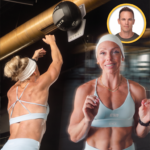
Former Elite 15 Hyrox World Champion Meg Jacobe has broken down every station of the popular fitness race format, and her insights could shave minutes off race times.
The eight-station gauntlet tests endurance, strength, and mental toughness in equal measure.
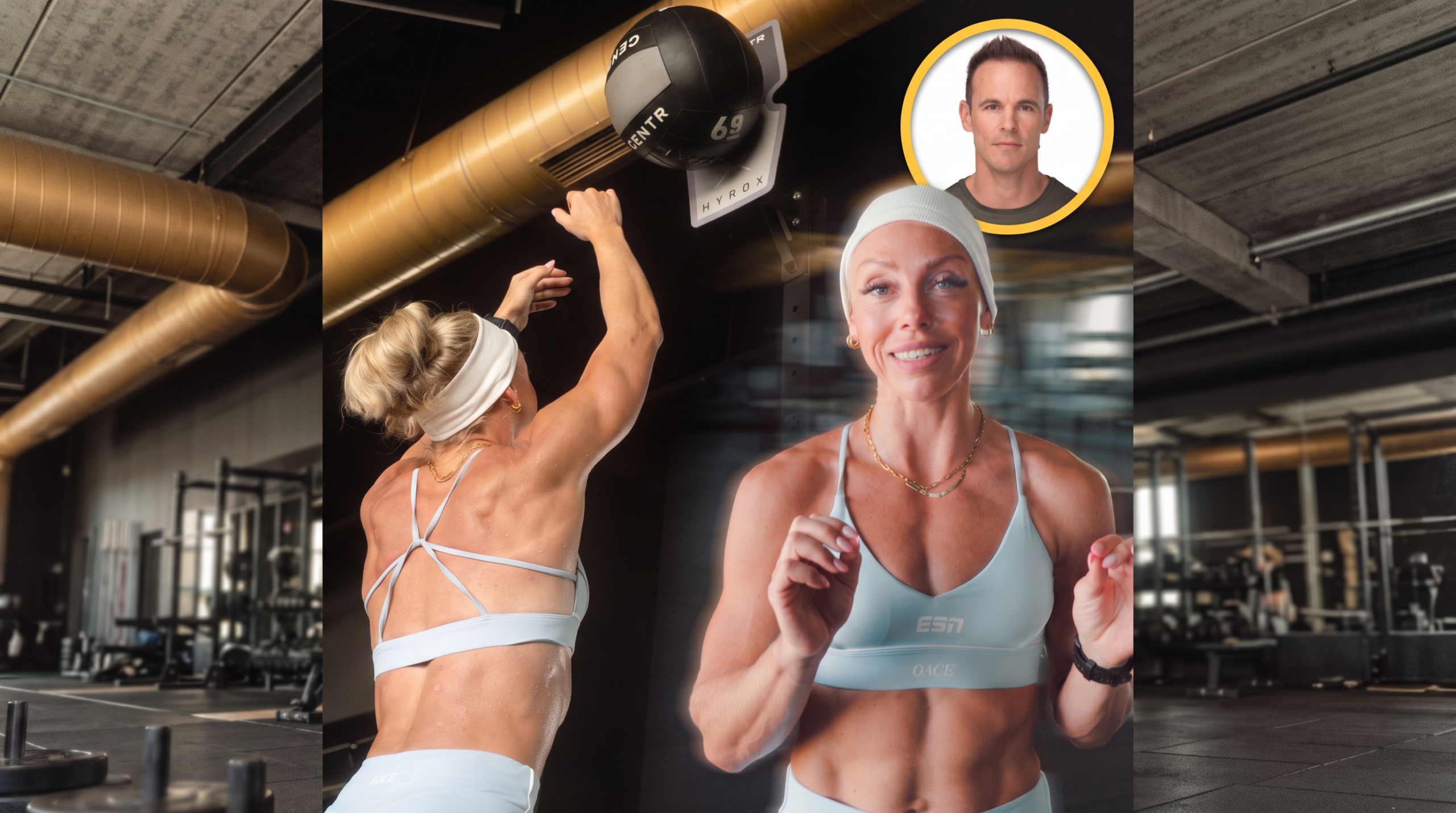
But technical execution matters just as much as raw fitness.
In a recent training video, Jacobe shared race-day strategies that separate podium finishers from the middle of the pack.
Jump to:
- Station One: The Ski Erg Sets the Tone
- Sled Push: Body Position Creates Leverage
- Sled Pull: Where Rope Management Makes or Breaks Times
- Burpee Broad Jumps: The Heart Rate Spike Arrives
- The Rower: A Chance to Breathe
- Farmer’s Carry: Short and Fast Wins
- Sandbag Lunges: One Hundred Meters of Suffering
- Wall Balls: Accuracy Under Extreme Fatigue
- Mental Game and Race Strategy
- Equipment Familiarity Matters
- The Finish Line Mindset
Station One: The Ski Erg Sets the Tone
The ski erg opens every Hyrox race, which means pacing matters more than power.
Jacobe emphasizes checking the damper setting before strapping in—a detail many competitors forget until they’re already pulling. She keeps hers at four, though lower settings generally prove more efficient for most athletes.
No products found.
When we want to get the fan going, we want to do a couple quick pulls and then settle into our race pace.
Hand positioning determines how much of the body contributes. Arms should travel from slightly above the head down to the hips—not behind the body or excessively high. This engages lats and core rather than burning out triceps.
The movement mirrors a hinge, not a squat. A slight knee bend with hips driving back creates the most efficient stroke pattern.
Listen for the continuous “whoosh” of the fan. When that sound drops off dramatically between strokes, the athlete is working harder than necessary to restart momentum each rep.
One final technical note: stay on the platform until the display registers completion. Early exits result in penalties.
Sled Push: Body Position Creates Leverage
The sled push isn’t complex, but small adjustments in body position dramatically affect efficiency.
Jacobe uses “hook grip”—elbows resting on the poles with body weight shifted slightly over the sled. This position leverages body mass instead of relying purely on muscular force.
No products found.
I wrap my head slightly to the side and rest my cheek on the pole so that my back is very, very neutral because for me, this is a way more powerful position.
This neutral spine position activates glutes more effectively than an upright or excessively low stance. Standing too tall overworks calves, which compromises the runs still to come.
Strategic breaking becomes essential by the fourth lane. Most athletes outside the Elite 15 category should plan deliberate rest points rather than pushing to complete failure.
Jacobe recommends practicing timed breaks—she rests five to six seconds at the halfway mark of each lane.
Equipment familiarity matters enormously here. Different turf surfaces create varying levels of friction, which means race-day sled weight might feel completely different from gym training. Jacobe sometimes adjusts training weight to match the resistance feel rather than simply loading competition specs.
Sled Pull: Where Rope Management Makes or Breaks Times
The sled pull presents the most technical challenge in the entire competition.
Rope management separates efficient athletes from those who lose precious seconds in tangled chaos. Jacobe offers two methods: weaving hands through the rope continuously, or picking up and dropping with each rep.
No products found.
The second method proves cleaner for beginners or athletes without regular sled access.
Positioning at the box matters. Feet should start about an inch from the front line—close enough to maximize box usage, but with wiggle room to avoid penalties from inadvertent line touches.
We want to sit our butt back like we’re sitting in a chair, extend our hips, and then use our body weight to help leverage the sled as we walk back.
This remains a hinge movement, not a squat. Athletes waste energy pulling vertically when horizontal force moves the sled. Leaning back and walking the weight proves more efficient than crouching low.
Jacobe counts her steps to ensure she uses the full box without touching either boundary line. Half the box accommodates the rope pile; the other half provides walking space.
Burpee Broad Jumps: The Heart Rate Spike Arrives
Station four marks where fatigue truly sets in.
Burpee broad jumps spike heart rate faster than any previous station, which makes pacing critical. Jacobe uses a step-up method in solo races—one foot at a time before the jump—rather than explosive two-foot hops.
No products found.
Soft, low landings conserve energy. This isn’t track and field long jump; height wastes effort.
Feet should land as parallel as possible, though rules have relaxed slightly this year. Hands can extend about one foot-length from toes, but keeping them tight to the body reduces scrutiny from judges.
I actually keep my hands even closer to my toes than required per the rule book.
The chest must touch the floor every rep. When stepping up, the back foot cannot exceed the toes of the stationary foot.
For doubles teams, seven to eight reps per partner creates optimal flow. Weaker athletes might switch every five reps to prevent dramatic slowdowns.
Always finish a started rep. Switching mid-movement forces the incoming partner to complete an awkward partial rep, which breaks rhythm.
The Rower: A Chance to Breathe
Station five offers the first opportunity to sit down, and smart athletes use it as active recovery.
No products found.
Damper adjustment comes first—before strapping feet in—because reaching it afterward proves nearly impossible. Jacobe sets hers at five and recommends staying under 30 strokes per minute.
Higher stroke rates push into anaerobic zones, which defeats the recovery purpose of this station.
We recommend you use this a little bit more as a recovery point. We’re sitting down so we can allow our heart rate to come down a little bit.
Both feet must touch the plates before pulling begins. Starting with one foot while grabbing the handle results in penalties.
Rowing emphasizes leg drive far more than arm pull. The sequence flows: legs, core, arms on the drive; arms, core, legs on recovery. The handle should finish at bra-line height—not high at the chin or low at the stomach.
Body angle rocks from two o’clock to ten o’clock. Excessive forward lean or sitting too close to heels collapses posture and kills power transfer.
In doubles competition, Jacobe never tightens foot straps. Transitions matter too much to waste seconds extracting feet from bindings.
No products found.
Farmer’s Carry: Short and Fast Wins
Station six provides surprising psychological relief despite the load.
It’s not particularly aerobic or muscularly devastating, which often gives athletes a second wind. The Centr kettlebells feature smooth handles that require aggressive chalking.
Grip begins at the front curve of the handles rather than centered. This position reduces strain on the pinky finger—the first digit to fail when grip weakens.
I always think squeeze your pinkies. Squeeze your pinkies.
Posture stays upright with core braced tight. Arms remain still; swinging wastes energy and stresses shoulders unnecessarily.
Short, fast steps cover ground more efficiently than long strides. Break before forced failure—putting bells down while still capable allows quicker recovery than waiting until grip gives out completely.
Elite doubles teams swap kettlebells mid-air for seamless transitions. The trailing partner walks close behind, ready to catch as soon as the lead athlete sets down.
No products found.
Sandbag Lunges: One Hundred Meters of Suffering
Station seven tests mental fortitude as much as physical capacity.
Hand placement in the handles determines comfort over the full distance. Jacobe keeps arms loose and wide rather than gripping tightly, which restricts blood flow and creates arm pump.
Both feet must start completely behind the line. Knees must touch the ground each rep for the movement to count.
Stride length affects power output dramatically. Excessively long steps tax legs unnecessarily; optimal distance sits around one meter per lunge.
It’s not about doing the first 20 meters as fast as possible and then having to take a lot of breaks. It’s about managing our effort so we can minimize the breaks.
Full step-through technique keeps momentum flowing. Some athletes prefer a slight pause between reps to preserve energy. Jacobe drags her back foot slightly, which provides micro-recovery without slowing pace.
For doubles transitions, the incoming partner positions directly behind and sticks their head under the bag while the first athlete drops it onto their shoulders. This prevents awkward handoffs and avoids penalties for dropping the sandbag.
No products found.
Wall Balls: Accuracy Under Extreme Fatigue
The final station demands precision when athletes have almost nothing left.
Centr targets are smaller than standard gym versions, which means hitting the center X becomes critical. Judges look for accuracy, not extra height.
Jacobe emphasizes “three points of contact”—two hands and chin on the ball. This keeps the ball high and tight to the body rather than held out at arm’s length, which destroys shoulders.
Positioning matters: stand approximately arm’s length from the wall, directly under the target. Further away requires pushing the ball outward, which demands significantly more effort.
We want to focus on being about an arm’s length away. Start with the ball up high.
Hip crease must drop below the knee at the bottom. Power drives through the squat, not the arms. Catching the ball returns it immediately to the chin—”kissing the wall ball,” as Jacobe describes it.
Rep schemes determine success or failure. The 16-down-to-9 countdown (one fewer rep each set) totals 100 and provides clear mental benchmarks for beginners.
No products found.
Break strategically. Athletes who can complete 40-50 unbroken reps in training should not attempt that in competition. Planned breaks every 20-30 reps minimize total rest time.
If judges call no-reps, put the ball down immediately, reset mentally, and start fresh rather than spiraling into frustration.
Mental Game and Race Strategy
Technical execution carries athletes only so far.
Jacobe repeatedly emphasizes strategic pacing over maximum effort at individual stations. Overcooking early stations forces extended rest periods that erase any time gained from aggressive starts.
Transitions between stations offer opportunities to recover without stopping. Walking transitions after red-lining a station wastes time that could be saved by backing off effort slightly during the work.
For doubles teams, clear communication prevents chaos. Establish who leads, who follows, and exact transition points before the race begins. Predetermined strategies eliminate decision fatigue when exhaustion sets in.
No products found.
Knowing the rule book proves just as important as physical preparation. Penalties for technical violations—feet on lines, incomplete reps, dropped equipment—cost more time than minor efficiency gains from perfect form.
Equipment Familiarity Matters
Race-day equipment feels different from standard gym gear.
Centr sleds, ski ergs, rowers, kettlebells, sandbags, and wall ball targets all have specific characteristics. Training on this equipment builds unconscious competence that pays dividends under fatigue.
Turf friction varies between venues. An athlete who trains only on one surface might find race-day sleds feel dramatically heavier or lighter. Jacobe adjusts training weight to match resistance feel rather than blindly following competition specs.
Wall ball targets shrink from typical gym sizes. Farmers carry kettlebells feature slicker handles. These details seem minor until fatigue amplifies every small inefficiency.
The Finish Line Mindset
By station eight, physical reserves are depleted.
No products found.
What separates finishers from those who bonk comes down to mental resilience. Jacobe reminds athletes that the finish line waits just beyond the wall balls.
Remember, the finish line is right there. We want to get these done. It’s right there.
Visualization helps. Knowing that a DJ, celebration, and recovery await on the other side provides motivation when legs refuse to cooperate and lungs burn.
Each station builds on the previous one, which makes early pacing decisions compound throughout the race. Athletes who treat station one as an all-out sprint arrive at wall balls with nothing left. Those who pace intelligently maintain consistent output across all eight challenges.
Technical mastery, strategic pacing, and mental toughness combine to create successful Hyrox performances. Jacobe’s championship-level insights offer a roadmap for athletes at every level.