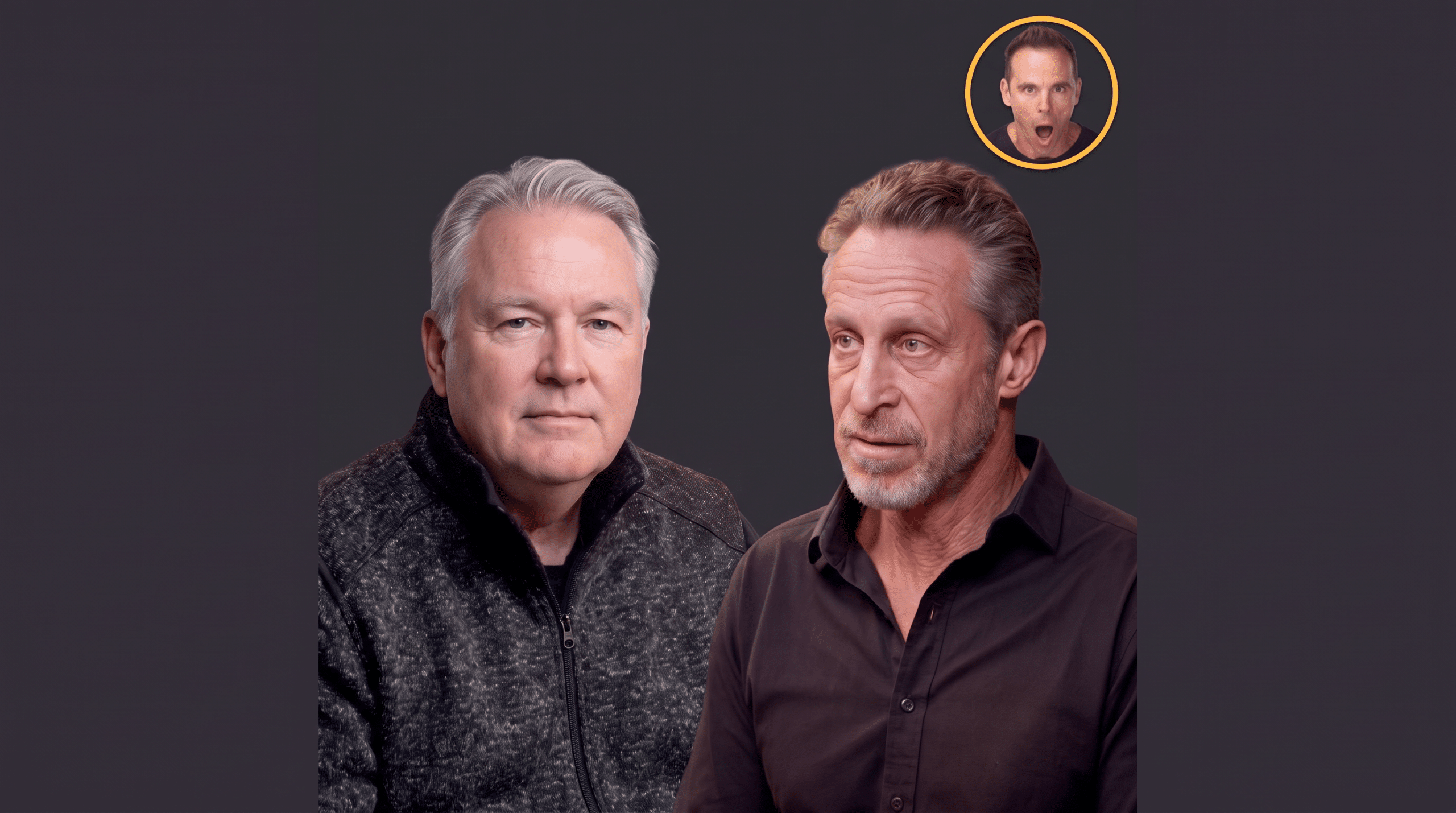
Jeffrey Bland sits across from Mark Hyman with a kind of quiet intensity that belies his 79 years.
His biological age? 62.
His testosterone levels rival those of men half his age, and his inflammation markers are virtually undetectable.
The father of functional medicine has spent five decades transforming his own body into a living laboratory for longevity, and what he’s discovered could reshape how we think about aging, immunity, and chronic disease.
Jump to:
- The Man Who Made His Body a Science Experiment
- Why Your Immune System Holds the Key to Everything
- The Elimination Diet That Changes Everything
- Three Pillars That Changed Medicine
- The Linus Pauling Connection
- Food as Information for Your Genes
- Training the Innate Immune System
- The Ancient Grain With Modern Science
- Measuring What Matters
- The Paradigm Shift Happening Now
- Looking Forward
- Sources
The Man Who Made His Body a Science Experiment
Bland didn’t stumble into his remarkable health by accident. As a pioneering nutritional biochemist, he’s measured his clinical chemistries more than perhaps any human alive, tracking decades of data on how lifestyle and diet affect biomarkers.
The results speak volumes. At an age when most people are managing multiple chronic conditions, Bland’s bloodwork resembles that of someone in their 40s.
It’s about how do you maximize the genetic potential that lies within your genome to be the best person you can be?
Both his father and grandfather died at 73. Bland has not only surpassed that milestone but done so while launching a startup company called Big Bold Health, focusing his energy on immune system rejuvenation rather than retirement.
Why Your Immune System Holds the Key to Everything
After 40 years studying root causes of disease, Bland landed on something fundamental: the immune system regenerates completely every 120 days.
Every single minute, your body produces over 2 million new white blood cells.
The critical question? Are these new cells better or worse than the ones they’re replacing?
For most people over time, the answer is worse. This process, called immunosenescence, means the immune system ages faster than the calendar suggests.
Do you realize that when you are ill and your immune system is activated that 50% of your metabolic energy is being consumed by your immune system? If you have impaired mitochondrial function, your immune system is tired. It’s worn out.
This connection between mitochondrial health and immune function explains why America fared so poorly during COVID-19. Despite representing just 4% of the world’s population, the United States accounted for 16% of cases and deaths.
The culprit wasn’t age alone but immunosenescence, with Americans arriving at the pandemic already inflamed and immunologically compromised.
The Elimination Diet That Changes Everything
Dr. Mark Hyman recounts one of functional medicine’s most powerful interventions: what he calls the “10-Day Detox Diet,” though he prefers thinking of it as an addition diet.
Remove inflammatory foods. Add nutrient-dense whole foods.
The results? On average, participants see a 70% reduction in symptoms from all diseases within just 5 days.
Migraines vanish. Joint pain disappears. Digestive issues resolve. Depression lifts. One participant’s symptom score plummeted from 132 to 30 in a workshop setting.
It sounds like snake oil, but the shocking truth is it actually works. And we don’t completely know how it works.
A man with rheumatoid arthritis approached Hyman after trying the protocol, stunned that his condition had simply resolved.
The Science Behind the Transformation
Back in 1991, Bland published groundbreaking research examining this phenomenon. His study followed 80 people, with 50 on an intervention program high in phytochemicals but free of common allergens, gluten, sugar, and dairy.
The treatment group experienced about 60% symptom reduction versus controls.
The research measured gut permeability using the lactulose-mannitol test and assessed liver detoxification pathways. It revealed something revolutionary: the gut connects to the immune system, which connects to the liver, which speaks to the brain through circulating messenger substances.
This early work laid the architectural foundation for functional medicine as a systems biology approach to healthcare.
Three Pillars That Changed Medicine
Bland and his colleagues developed three clinical tools that have become cornerstones of functional medicine practice:
The 4R (Now 5R) Program for Gut Restoration
Remove pathogens and irritants. Replace digestive enzymes. Reinoculate with beneficial bacteria. Repair the gut lining.
This protocol addresses the root of inflammation, since most of the immune system resides in the gut. When the gut microbiome becomes imbalanced and the intestinal barrier “leaky,” foreign antigens from food and bacteria trigger widespread havoc.
Bland was teaching about dysbiosis and leaky gut as far back as 1985, decades before mainstream gastroenterology acknowledged these concepts.
Metabolic Detoxification
The liver processes molecules from the gut through Phase 1, Phase 2, and Phase 3 detoxification pathways, converting them into non-toxic byproducts for excretion.
Understanding how nutrients and phytochemicals regulate these pathways proves critical in our increasingly toxic world. We face mounting environmental chemicals alongside internal toxins from dysfunctional microbiomes and metabolic waste.
Pharmacogenomics finally brought detoxification into mainstream acceptance when doctors recognized that genetic variations affect how people metabolize drugs.
Mitochondrial Resuscitation
In 1990, Bland introduced physicians to mitochondrial bioenergetics, focusing on the energy powerhouses of cells.
Cells working hardest for us contain the most mitochondria. Cardiac cells are 70% mitochondria by volume. Brain neurons pack densely with these organelles.
What happens when mitochondria grow tired or dysfunctional?
Researchers now connect mitochondrial deficits to psychiatric illnesses, autism, dementia, Parkinson’s disease, diabetes, obesity, and cancer. Harvard’s Chris Palmer pioneered understanding how mitochondrial energy problems manifest as conditions like schizophrenia, bipolar disorder, and depression.
The Linus Pauling Connection
Bland’s journey took a pivotal turn in 1981 when two-time Nobel Prize winner Linus Pauling walked into his medical laboratory in Bellevue, Washington.
Jeff, I’ve listened to a couple of your lectures. I’ve read your research papers. I’d really like to have you come and spend a sabbatical year or two with us at our institute.
Those two years at the Linus Pauling Institute near Stanford proved life-changing. Pauling had founded orthomolecular medicine, using nutrition to optimize biochemical reactions in the body.
As Bland prepared to leave, Pauling asked a question that would define the next chapter: “Do you think your classroom is big enough?”
Bland made a decision that shocked his parents. He resigned his tenured faculty position to start a venture teaching doctors how to apply nutritional medicine.
His father came out of retirement to handle business matters. His mother became copy editor. His wife managed corporate development. Together, they built what would become the functional medicine movement.
Food as Information for Your Genes
Recent research reveals something extraordinary about how diet shapes health: phytochemicals function as genetic regulators, communicating directly with our DNA through the epigenome.
Think of genes as piano keys, fixed and unchangeable. The epigenome is the piano player, capable of creating infinite variations from those same keys. Food provides the sheet music.
What’s changed most dramatically in modern diets? We’ve added simple, high-glycemic starches and sugars while eliminating the natural pigments from vegetables—thousands of polyphenols and flavonoids with unique biological activities.
Food companies compensate by adding artificial dyes to make products visually appealing. We’re attracted to these colors because historically, brightly pigmented foods signaled beneficial phytochemicals.
The Mediterranean Research Revelation
Bland recently traveled to Greece, Portugal, and Morocco, studying traditional diets and meeting researchers behind the landmark PREDIMED study.
This Spanish clinical trial followed 7,000 people—an enormous undertaking for nutritional research. Participants received either a liter of olive oil weekly or a large daily handful of nuts, compared against a low-fat diet, all while following a base Mediterranean dietary pattern.
The results cut across all disease categories. Hundreds of papers analyzing the data show positive benefits for brain function, musculoskeletal health, arthritis, diabetes, and cardiovascular disease.
A recent study published in Nature examined Tanzanians eating traditional African diets versus those consuming westernized food. Same genes, drastically different outcomes. The westernized diet group showed inflammatory gene expression, elevated lipoproteins indicating cardiovascular risk, and insulin resistance.
Traditional diet adherents maintained healthy immune function and metabolic profiles.
Training the Innate Immune System
Scientists long believed the immune system divided into two parts: the adaptive system producing antibodies with memory effects, and the innate system providing first-line defense without learning capacity.
The innate immune system was considered “dumb”—whatever genetic programming you inherited determined its function forever.
Everything changed within the last decade.
Research now shows the innate immune system can be taught, trained, and improved. This matters enormously because innate immunity concentrates in mucosal surfaces—the gut, lungs, and nasal passages where the body first encounters foreign material.
When innate defenses fail, whatever slips through gains access to the adaptive immune system. Overwhelmed adaptive immunity produces the cytokine storms that killed COVID-19 patients in their own fluids.
You can fairly quickly train the innate immune system to be more resilient. It doesn’t take months.
How? Polyphenols play a principal role, priming innate immunity and regulating genes associated with immune defense.
This discovery elevates the flavonoid family—long relegated to a footnote in nutrition textbooks—to therapeutic significance.
The Ancient Grain With Modern Science
Bland’s current work with Big Bold Health centers on Himalayan tartary buckwheat, a 3,500-year-old plant from the Tartar district of northern China.
Despite its name, this flowering plant bears no relation to wheat. Tibetan yak herders traditionally eat roasted buckwheat called tsampa for breakfast. Bhutanese farmers call it black buckwheat and credit it with their population’s good health outcomes.
Colonial Americans brought tartary buckwheat to North America because it thrived without irrigation or fertilizer. Bugs avoid it naturally due to high phytochemical content that acts as a built-in pesticide.
Over time, American farmers replaced it with wheat, soy, and corn. The crop disappeared domestically.
Now modern science reveals why traditional cultures prized this food. Tartary buckwheat contains exceptionally high levels of immune-regulating phytochemicals, with research showing it can impact biological age and immune age markers in just 90 days.
Measuring What Matters
Traditional medicine waits for disease to manifest before intervening. Functional medicine detects dysfunction decades earlier along the continuum leading to pathology.
New biomarkers make this possible. David Furman’s work on immune age documents the “immunome”—genetic expression changes across immune system components correlated with chronic disease risk.
A recent major paper identified PTA 217, a biomarker for Alzheimer’s detectable decades before symptoms appear, when intervention can still modify disease trajectory.
Alzheimer’s represents inflammation of the brain. Amyloid plaques, targeted by billions in research dollars, are downstream effects of the body attempting to manage inflammation, not the root cause.
Through companies like Function Health, people now access comprehensive biomarker testing unavailable in conventional care. With over 20 million data points from 180,000 members, patterns emerge revealing how lifestyle modifications change disease risk markers in real time.
The Paradigm Shift Happening Now
Bland spent decades being criticized for his view that personalized medicine represented healthcare’s future. Critics called it unscalable, idealistic, impossible.
The digital revolution proved them wrong.
Combining AI with wearable device data, comprehensive biometrics, and regenerative agriculture creates a system where individual health improvements align with planetary wellbeing.
We’re entering a world where we’re moving from analog medicine to digital medicine.
The Norman Rockwell doctor with his notepad gives way to AI-enabled practitioners navigating massive individual data sets—hundreds of biomarkers, thousands of metabolites, petabytes of microbiome information, millions of genomic variants.
Machine learning synthesizes this data into actionable insights, creating true personalized lifestyle medicine at scale.
From week to week, the technology improves. Academic medical centers now establish departments of metabolic and nutritional psychiatry. Cleveland Clinic invites lectures on new mental health approaches. Mayo Clinic receives major grants studying ketogenic diets for schizophrenia and bipolar disorder.
Ideas dismissed as heresy five years ago now drive mainstream research.
Looking Forward
At 79, Jeffrey Bland continues pushing boundaries, asking questions that reshape how we understand health and disease.
His work reveals that chronic illness isn’t inevitable. Biological aging can be slowed or even reversed. The immune system can be rejuvenated rather than merely “boosted.”
Food functions as medicine when we understand it as information—specific molecular languages communicating with our genes to activate healing systems built into our biology.
The inflammation driving modern chronic disease epidemics—affecting even teenagers and young adults—responds to intervention. We possess more control than previously imagined, not through pharmaceuticals alone but through leveraging the body’s innate wisdom.
As Bland and his colleagues demonstrate daily, the paradigm shift isn’t coming. It’s here. Those practicing from old models work with artifacts. The future belongs to those asking different questions and getting different answers—looking at trajectories rather than diagnoses, prognosis rather than pathology.
Nature has been trying to teach us these lessons all along. We’re finally learning to listen.
Sources
- PREDIMED Study – New England Journal of Medicine: https://www.nejm.org/doi/full/10.1056/NEJMoa1800389
- Netea et al. on trained immunity – Nature Reviews Immunology: https://www.nature.com/articles/s41577-020-0285-6
- Tanzania diet study – Nature: https://www.nature.com/articles/s41586-023-06042-4
- Bruce Ames triage theory – Proceedings of the National Academy of Sciences: https://www.pnas.org/doi/10.1073/pnas.0608757103