One man. No horse. One hundred miles of brutal Sierra Nevada terrain.
In 1974, a little-known woodcutter from California’s Gold Country did something that many believed was physically impossible — and in doing so, accidentally invented an entire sport.
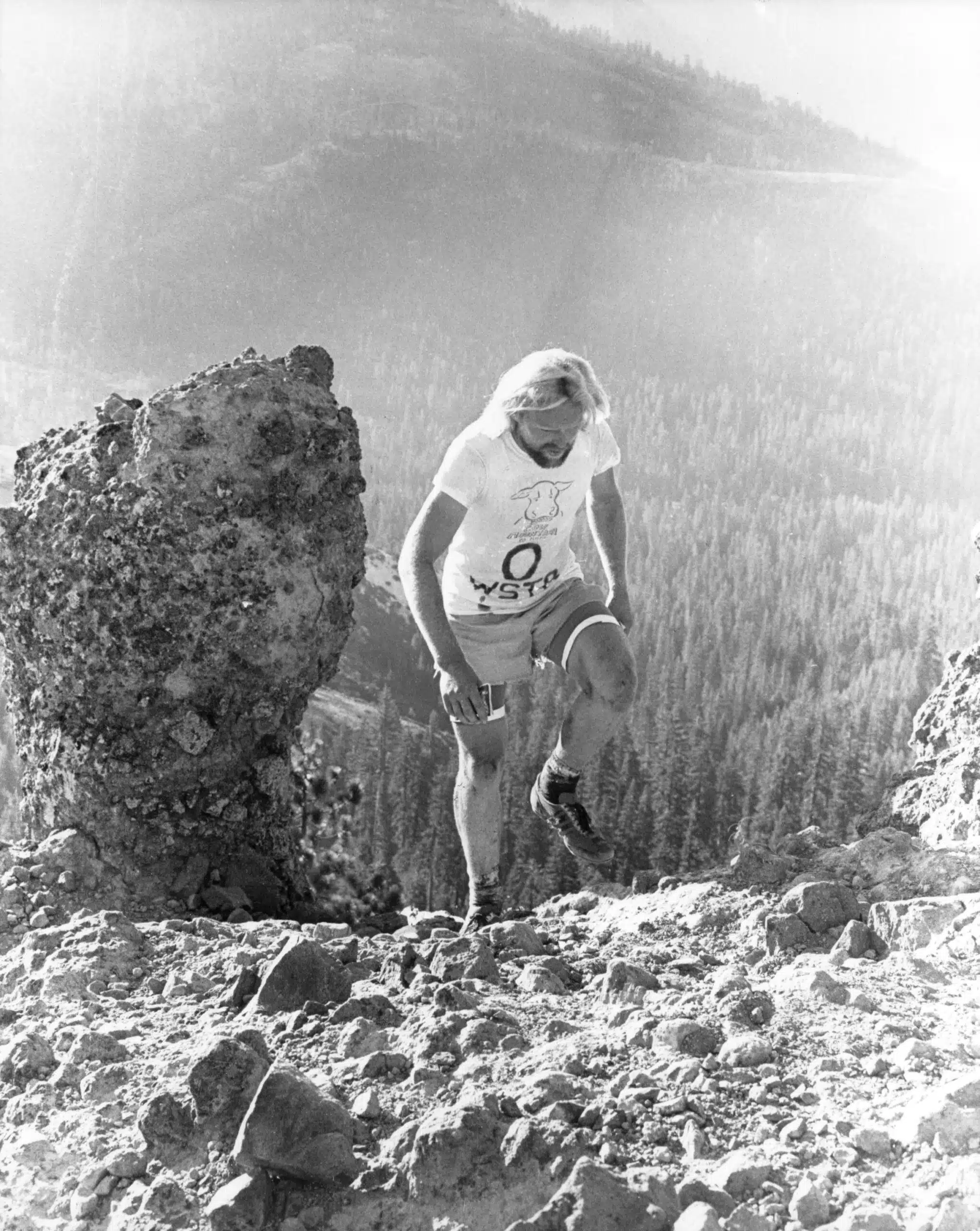
His name was Gordy Ainsleigh, and the story of how he stumbled to the starting line of a horse race in sneakers is equal parts reckless, inspiring, and utterly unforgettable.
Fifty years later, the ripple effects of that single act of defiance are still being felt across the world of endurance athletics.
Jump to:
A Horse Race With No Horse
The Western States Endurance Run had been a fixture of Northern California since the 1950s — but it was strictly for horses.
The course stretched nearly 100 miles from Lake Tahoe to the foothill town of Auburn, cutting through some of the most punishing terrain in the Sierra Nevada. Competitors had less than 24 hours to complete it. On horseback, it was already considered an extreme test of endurance.

If you want something simple that actually works, this is one of the most effective tools I’ve used to build strength, conditioning, and endurance without needing a full gym setup.
- Full-body training with one weight using swings, squats, and presses
- Solid cast iron build that feels stable and lasts for years
- Comfortable grip that makes high-rep workouts easier to handle
On foot? Most people thought it simply couldn’t be done.
Ainsleigh was 29 years old, stood 6’4″, and weighed over 200 pounds. He had run track in school but was never considered a standout athlete. By most conventional measures, he was not the man to rewrite the history of human endurance.
The Misfit Who Found His stride
Long before he was a legend, Ainsleigh was just a kid who didn’t quite fit in.
In an interview with WBUR, he traced his relationship with running all the way back to a painfully relatable childhood moment — one that shaped everything that came after.
I remember this one day — I think it was second grade. I came out on the playground with a bag lunch. Grandma had packed the lunch, and I just couldn’t see anybody I could go up to and say, ‘You want to have lunch?’ I panicked. And I just felt like I couldn’t breathe. And I just dropped my lunch, and I ran home for lunch.
That instinct — to run when the world felt too heavy — never left him.
By the time he was a shaggy-haired woodcutter living in Gold Country, running had become his identity, his therapy, and eventually, his calling.
If you want something simple that actually works, this is one of the most effective tools I’ve used to build strength, conditioning, and endurance without needing a full gym setup.
- Full-body training with one weight using swings, squats, and presses
- Solid cast iron build that feels stable and lasts for years
- Comfortable grip that makes high-rep workouts easier to handle
Mile 55: A Dead Horse and a Near-Quit
The 1974 attempt nearly ended in disaster.
Temperatures climbed into triple digits as Ainsleigh pushed deeper into the canyons. His body was shutting down. The heat was suffocating. Around mile 55, he pulled into a checkpoint and told a friend exactly what he was thinking.
There’s a dead horse in the canyon, and that could be me. I’m going to quit.
He didn’t quit.
Fueled by nothing more than canned peaches and creek water, Ainsleigh kept moving — one foot in front of the other, mile after brutal mile. What drove him forward in those final hours remains one of the most compelling questions in ultrarunning lore.
The Finish Line Somersault Heard Around the World
With only minutes to spare before the 24-hour cutoff, Ainsleigh arrived in Auburn.
His finishing time: 23 hours and 42 minutes.
If you want something simple that actually works, this is one of the most effective tools I’ve used to build strength, conditioning, and endurance without needing a full gym setup.
- Full-body training with one weight using swings, squats, and presses
- Solid cast iron build that feels stable and lasts for years
- Comfortable grip that makes high-rep workouts easier to handle
In a moment of pure, exhausted euphoria, he dove into a somersault as he crossed the finish line — a spontaneous celebration that somehow perfectly captured the absurdity and joy of what he had just accomplished.
He had done the impossible. And the world of endurance sport would never be the same.
From One Man to a Global Movement
The year after Ainsleigh’s solo run, another runner showed up to attempt the course on foot.
By 1978, dozens of runners were lining up to take on the Western States 100. Word had spread that a human being could cover the distance — and suddenly, a new breed of athlete emerged to test that idea to its limits.
Today, the Western States 100-Mile Endurance Run is widely regarded as the world’s most prestigious ultramarathon trail race. Elite runners from across the globe compete for entry, with finishing times that would have seemed like science fiction to anyone watching Ainsleigh shuffle into Auburn back in ’74.
The sport he accidentally sparked has exploded into a global phenomenon, with hundreds of ultramarathon events now taking place on every continent — including Antarctica.
If you want something simple that actually works, this is one of the most effective tools I’ve used to build strength, conditioning, and endurance without needing a full gym setup.
- Full-body training with one weight using swings, squats, and presses
- Solid cast iron build that feels stable and lasts for years
- Comfortable grip that makes high-rep workouts easier to handle
The Legend at 74 — Still Running
Here’s the part that might be most astonishing of all.
Gordy Ainsleigh is now 74 years old. And he is still running 100-milers.
He has watched with quiet satisfaction as the sport he helped bring to life has produced athletes of a caliber that would have been unimaginable to anyone in the 1970s — runners with professional coaching, advanced nutrition science, and cutting-edge gear behind them.
Ainsleigh had canned peaches and a stubborn refusal to stop moving.
Sometimes, that really is enough.