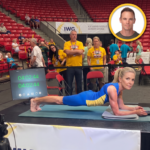
Popular fitness YouTuber Jesse James West recently attended the Enhanced Games, a controversial new sporting competition where every athlete is openly using performance-enhancing drugs.
What he discovered challenges everything mainstream sports culture has taught us about steroids.

From billionaire-backed medical protocols to athletes making more in one day than their entire Olympic careers, the Enhanced Games represents either the future of competitive sports or a dangerous experiment—depending on who you ask.
West went behind the scenes to investigate whether these “superhuman athletes” are genuinely thriving or simply pawns in a billionaire’s game.
Jump to:
- Athletes Openly Embrace Steroid Use
- Unexpected Side Effects—Or Lack Thereof
- Life-Changing Prize Money Motivates Athletes
- Medical Protocols Exceed Olympic Standards
- Safety Protocols Address Mortality Concerns
- Founder Defends Enhanced Competition Model
- World Records Prove Elusive Despite Enhancement
- Long-Term Health Risks Remain Unknown
Athletes Openly Embrace Steroid Use
Walking into the arena, West encountered something unprecedented in professional sports: complete transparency about drug use.
Former Olympic swimmer James Magnussen, who went viral for photos showing his enhanced physique, was among the first athletes West met.
I am on PEDS. I’m James Magnussen. I was actually the first enhanced athlete. You probably saw me go viral online for that picture behind the blocks.
Nearly every competitor West approached admitted to using various substances, including testosterone, growth hormones, and cutting-edge peptides recently approved in medical markets.
One athlete described his protocol matter-of-factly, listing testosterone as his base along with “a bunch of new peptides that are coming onto the market here in the US.”
Female Athletes Join Enhanced Competition
Women competing in weightlifting, track, and swimming events also spoke openly about their enhancement protocols.
One female athlete revealed she’d been enhanced for only six weeks total, while another had been on her protocol for four months.
I feel healthier and happier and I look better.
Interestingly, athletes aren’t required to use performance enhancers to compete. Natural athletes can participate, though competitors admitted those choosing to remain unenhanced would likely struggle to win.
Unexpected Side Effects—Or Lack Thereof
West expected to hear horror stories about steroid-related health disasters. Instead, athletes reported surprising benefits.
The biggest side effect that my health is improving day by day. This is the healthiest I’ve ever been in my life. My current biological age is 23.
Another competitor claimed to have grown taller by an inch or two, crediting specific compounds in his protocol.
However, conversations with veteran World’s Strongest Man competitors revealed darker realities about enhancement use over time.
Neurological Enhancements Carry Real Risks
One strongman competitor described his experience with Adderall, which escalated from 5mg to 120mg doses.
I’d be leaned over my counter bawling to my wife who’s taking care of our children. I’m literally sobbing thinking like, ‘What if I can’t pay our mortgage? What if I can’t compete in strongman again?’ And it’s like, ‘I’ve never been anxious in my life. Nothing is wrong. What’s your problem?’
Another athlete recalled going into “a sweat coma” from inexperienced enhancement use early in his career, describing the experience as constantly feeling like being on pre-workout supplements.
Life-Changing Prize Money Motivates Athletes
Financial incentives drive much of the Enhanced Games’ appeal to elite athletes.
Every competitor earns a minimum $100,000 salary, regardless of performance. Athletes who break world records receive an additional $1 million bonus per record.
One athlete explained his maximum earning potential reached $2.5 million if he broke two world records and won both his events.
Living in Ireland was struggling. I lived off of 20 grand a year, you know.
This compensation model stands in stark contrast to Olympic athletes, who receive no payment from the International Olympic Committee for competing.
Billionaire Backing Funds Enhanced Games
German billionaire investor Christian Angermayer serves as the primary financial engine behind the Enhanced Games.
When West asked athletes about the wealthy backers, they confirmed billionaires were funding the operation but emphasized their commitment to athlete health and safety.
Medical Protocols Exceed Olympic Standards
Perhaps most surprisingly, Enhanced Games athletes receive more comprehensive medical care than Olympic competitors.
West met with medical professionals who walked him through their athlete evaluation process, which includes extensive questioning about sport, weight, body composition, and athletic history.
Each athlete undergoes approximately $45,000 to $60,000 worth of medical testing, including:
- Heart scans with contrast dye
- Brain imaging
- Lung scans
- Joint-specific ultrasounds
- Weekly blood work
- Regular physical examinations
This monitoring continues for five years post-competition.
Athletes Report Better Care Than Olympics
Multiple competitors told West their medical oversight with the Enhanced Games far surpassed anything they received as Olympic athletes.
Took me 3 years to get an MRI. I was asking and asking and asking.
Another athlete emphasized the responsiveness of Enhanced Games medical staff compared to Olympic support systems.
When anything we need here at the Enhanced Games, we literally just they’re like, ‘Yep, no problem. Here you go. Done.’
One competitor completed a two-week comprehensive medical evaluation with the Enhanced Games—testing he never received during his Olympic career.
Safety Protocols Address Mortality Concerns
West directly asked medical staff how they ensure no athlete deaths occur.
Doctors explained their risk mitigation strategy focuses on three key factors: verifying baseline health, using only FDA-approved substances at clinical doses, and continuous monitoring.
Nobody in history has died from a TRT dose of testosterone, ever.
Medical staff emphasized athletes make informed decisions after months of education, distinguishing this model from involuntary experimentation.
Founder Defends Enhanced Competition Model
In his interview with billionaire founder Christian Angermayer, West confronted the controversy head-on.
When asked if he was creating the Enhanced Games for money or to change sports’ future, Angermayer’s response was surprisingly direct.
Both. If I wouldn’t make money, it wouldn’t happen next year. Because somebody needs to pay that. My investors give me money because they hope I make more money for them.
Angermayer defended his business model by criticizing Olympic organizations for treating athletes “like slaves” while his competition pays substantial salaries and prize money.
Redefining Cheating In Sports
West challenged Angermayer on why Enhanced Games shouldn’t be considered cheating when Olympic doping results in disqualification.
Angermayer argued doping only constitutes cheating within contracted agreements. Since Enhanced Games athletes sign contracts permitting FDA-approved substances, using those substances isn’t cheating within their framework.
Whatever is approved by the FDA is fair game. And whatever is not approved is not fair game.
This distinction separates the Enhanced Games from traditional sports organizations that prohibit performance-enhancing drugs regardless of medical approval status.
World Records Prove Elusive Despite Enhancement
Despite the pharmaceutical advantages, Enhanced Games athletes struggled to break world records during the inaugural event.
Competition after competition ended with athletes falling just short—sometimes by hundredths of a second—of record-breaking performances.
Angermayer acknowledged the pressure, admitting “we need a world record” for the event to be considered successful.
Finally, in the final event of the night, swimmer Kristian Colomeus posted a time of 20.81 seconds, securing the Enhanced Games’ first world record.
Athletes still earned hundreds of thousands of dollars and frequently achieved personal bests, even when world records remained out of reach.
Long-Term Health Risks Remain Unknown
Despite comprehensive medical protocols and athletes reporting feeling healthier, West concluded with caution about long-term implications.
While current safety measures appear thorough, the Extended Games model is too new to understand decade-long health outcomes for enhanced athletes.
One athlete’s statement captured both the promise and uncertainty of the Enhanced Games.
This is going to change my life for the good, for sure. It’s a big help for me and my family.
West’s final assessment acknowledged the Enhanced Games impressed him with athlete treatment quality while maintaining concerns about risks that won’t be fully understood for years.
Until significantly more research exists on long-term enhancement protocols, West advised viewers to “stay natural, stay positive.”
Whether the Enhanced Games represents sports evolution or a dangerous experiment, one thing remains clear: this controversial competition has permanently altered conversations about performance enhancement in athletics.