Sleep disruptions during the night remain one of the most frustrating health challenges people face. When eyes snap open at 3:00 a.m., a cascade of anxiety often follows.
But according to sleep expert Dr. Michael Breus, waking at this hour is not only common—it’s practically universal.
Understanding why it happens, and more importantly, what to do about it, can transform those frustrating hours into manageable moments.
Dr. Breus recently shared his insights on the science behind middle-of-the-night awakenings and offered practical strategies that challenge conventional wisdom.
Jump to:
- The Core Temperature Connection
- The Anxiety Amplification Effect
- The Controversial “Don’t Pee” Rule
- Clock-Watching Creates Catastrophe
- The 4-7-8 Breathing Technique
- Why Box Breathing Falls Short
- When Breathing Doesn’t Work: The Backup Plan
- The Cortisol Question
- Liver Glycogen and Middle-of-the-Night Waking
- The Eight-Hour Sleep Myth
- The Danger of Sleep Trackers
- The Most Important Sleep Tip: Wake Consistency
- The 3-2-1 Sleep Rule
- Mouth Taping: A Dangerous Trend
- Sleep Apnea Solutions Beyond CPAP
- Chronotypes and Individual Sleep Needs
- The Bottom Line on 3:00 a.m. Awakenings
The Core Temperature Connection
Dr. Breus points to core body temperature as the primary culprit behind 3:00 a.m. awakenings for most people. The body follows a predictable thermal pattern throughout the night.
Core temperature rises until approximately 10:30 p.m., then begins dropping. This drop signals the brain to release melatonin, the hormone that initiates sleep.
Your core body temperature continues to drop, drop, drop. But there’s a problem is after a while, you get really, really cold. And if you don’t heat your body up, you go hypothermic and you die, which is also a problem.
Somewhere between 1:00 and 3:00 a.m., depending on individual circadian rhythm, the body reverses course and begins warming itself. This warming phase moves sleepers into lighter stages, making arousal easier.
Most people simply roll over and return to sleep. Others find their minds suddenly alert—and that’s when trouble begins.
The Anxiety Amplification Effect
According to Dr. Breus, falling asleep requires three conditions: lower anxiety, lower temperature, and lower heart rate. Waking at 3:00 a.m. and becoming frustrated sabotages all three.
What do you think happens when 3:00 in the morning and you’re pissed off that you’re up at 3:00 in the morning? Well, your anxiety’s through the roof, your heart rate’s through the roof, and your temperature’s through the roof.
The brain is biologically predisposed toward negativity during nighttime hours. Historically, a 3:00 a.m. disturbance signaled danger—a predator, a fire, an intruder.
This evolutionary wiring means thoughts automatically skew negative, making it harder to dismiss worries about work, relationships, or tomorrow’s obligations.
The Controversial “Don’t Pee” Rule
Dr. Breus offers advice that surprises many: don’t get up to urinate unless absolutely necessary.
What most people do is they wake up at 3:00 and they’re like, “I’m up, I might as well go pee.” Right? They don’t actually have to pee.
Moving from lying to sitting to standing causes heart rate, body temperature, and cortisol to spike—exactly the opposite of what sleep requires. For side sleepers, pressure on the bladder can create a false sensation of urgency.
Dr. Breus recommends rolling onto the back and counting to 20. If the urge persists, visit the bathroom. If not, stay put.
This simple test can prevent unnecessary sleep disruption.
Clock-Watching Creates Catastrophe
Checking the time amplifies anxiety instantaneously. The moment someone sees “3:14 a.m.” on their phone, mental calculations begin: Only two hours and 46 minutes until the alarm. I’ll be exhausted tomorrow.
Dr. Breus advises charging phones across the room with the ringer on high for emergencies. This eliminates the temptation to check notifications or scroll—both of which activate the brain further.
The 4-7-8 Breathing Technique
When monkey mind takes over—ruminating about grocery lists, workplace tensions, or relationship conflicts—Dr. Breus turns to a specific breathing pattern developed by Dr. Andrew Weil.
The 4-7-8 breathing method involves:
- Inhaling slowly through the nose for 4 counts
- Holding the breath for 7 counts
- Exhaling gently for 8 counts
This technique lowers heart rate to approximately 60 beats per minute—the threshold required for entering unconsciousness. The extended exhale activates the parasympathetic nervous system, signaling the body to relax.
You cannot count and worry at the same time. It’s too much of a cognitive load. It’s actually impossible to do.
Dr. Breus recommends visualizing each number during the counting process. This mental visualization prevents anxious thoughts from intruding. Twenty complete cycles typically suffice, though most people fall asleep before finishing.
For those struggling with the full 4-7-8 pattern initially, he suggests starting with 4-5-6 breathing, then progressing to 4-6-7, and finally reaching the full protocol.
Why Box Breathing Falls Short
Box breathing—inhaling, holding, exhaling, and holding again for equal counts—can paradoxically increase alertness rather than promote sleep.
The problem lies in the exhale duration. With 4-7-8 breathing, the exhale exceeds the hold time, activating the parasympathetic nervous system. Box breathing lacks this critical component, making it better suited for pre-workout activation than nighttime relaxation.
When Breathing Doesn’t Work: The Backup Plan
If 4-7-8 breathing fails to induce sleep, Dr. Breus offers additional strategies. The key is maintaining a positive mindset and avoiding frustration.
Getting out of bed becomes necessary only when anger or anxiety spikes significantly. At that point, having a predetermined quiet spot with a chair, lamp, and boring book provides an escape without overstimulation.
Non-sleep deep rest—modernly known as yoga nidra—offers another option. Lying in corpse pose provides rejuvenation even without true sleep. Dr. Breus estimates one hour of yoga nidra equals approximately 20 minutes of sleep in restorative value.
For persistent mental chatter, he suggests counting backward from 300 by threes. The mathematical complexity occupies the mind completely while inducing boredom—a perfect combination for sleep.
The Cortisol Question
Cortisol spikes have become a popular explanation for nighttime awakenings across social media. Dr. Breus confirms that cortisol fluctuations occur naturally during sleep for virtually everyone.
Every single human on Earth has a cortisol spike almost every night, okay? It’s okay. And most people sleep through it.
The spike may relate to exercise intensity, food choices, or other daytime factors. However, worrying about cortisol often causes more problems than the cortisol itself.
When people wake and immediately attribute it to cortisol, they trigger additional stress—raising cortisol further. This creates a self-fulfilling cycle of sleeplessness.
Dr. Breus notes that eating high-sugar foods before bed can affect both insulin and cortisol levels. These spikes may disrupt sleep architecture. For persistent night snackers, he has found berberine supplementation helpful in managing blood sugar fluctuations that might otherwise trigger awakenings.
Liver Glycogen and Middle-of-the-Night Waking
Another physiological factor involves liver glycogen depletion. As glycogen stores drain overnight, the body experiences what amounts to a metabolic shock—suddenly running out of readily available glucose.
This phenomenon affects certain populations more than others. People with fatty liver disease and athletes who haven’t adequately replenished glycogen may experience this more acutely.
For athletes and highly active individuals, consuming a small amount of carbohydrates in the evening may prevent these middle-of-the-night disruptions. Dr. Breus notes this approach works particularly well for people training intensively.
The Eight-Hour Sleep Myth
Dr. Breus offers what he considers his most liberating message: the eight-hour sleep rule is largely a myth.
I have I think I’ve given people more solace by letting them know that 8 hours is a myth than almost any other thing I’ve ever said. For a majority of my life I’ve slept between 6 and 1/2 and 7 hours. I’m the sleep doctor, okay?
Sleep architecture varies nightly based on physical exertion, emotional stress, and recovery needs. The brain scans the body before sleep, determines what repair is necessary, and creates a customized sleep structure accordingly.
Rigid adherence to arbitrary sleep duration targets creates unnecessary anxiety. The better metric? How did you feel when you woke up?
The Danger of Sleep Trackers
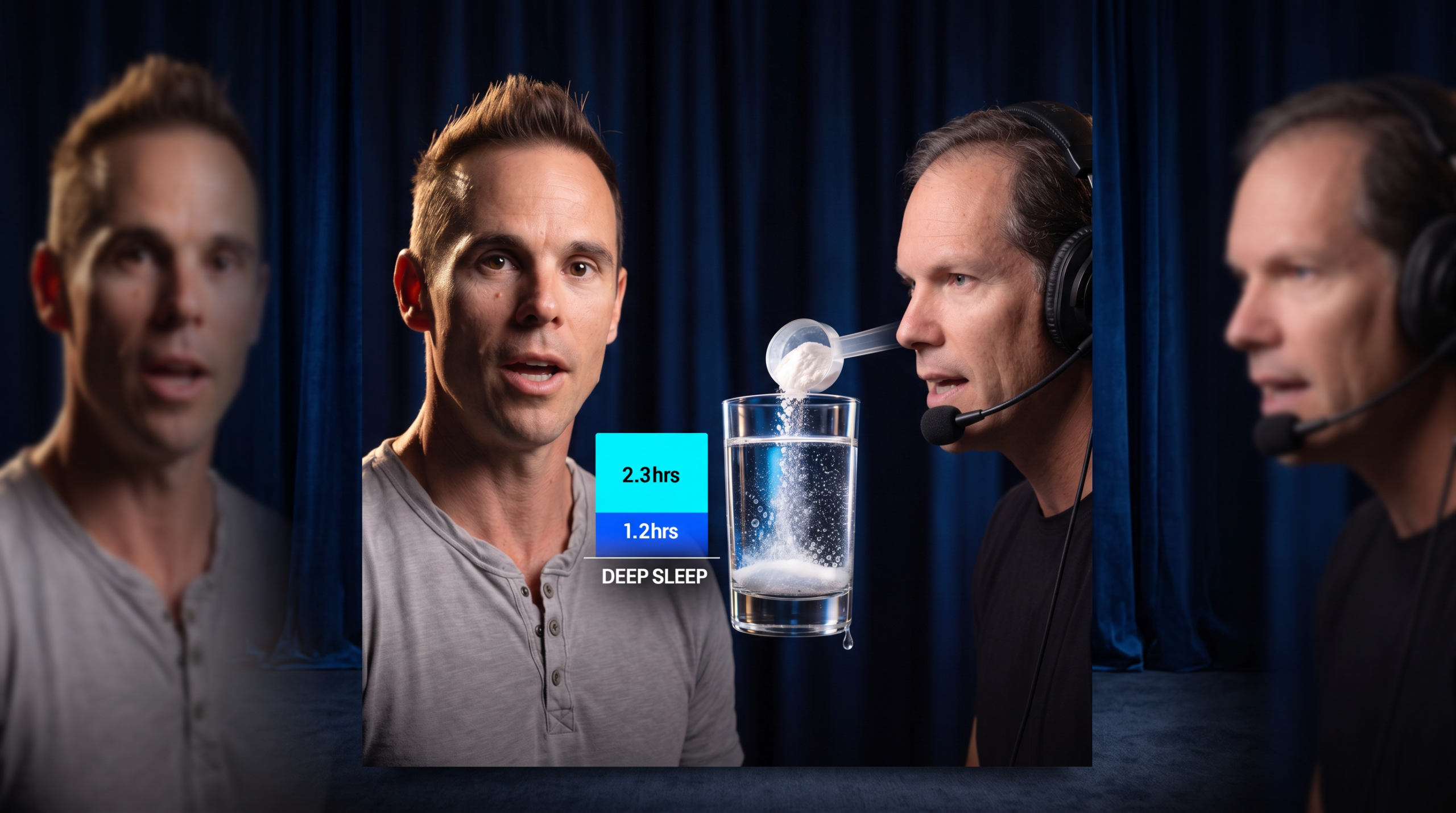
Wearable sleep technology provides useful data but can backfire when users obsess over metrics. Dr. Breus encounters countless patients panicked about getting only 14 minutes of deep sleep.
These devices offer estimates, not diagnostic measurements. No consumer tracker has received medical diagnostic approval. Focusing excessively on granular metrics often triggers what’s now called orthosomnia—anxiety caused by sleep data itself.
Dr. Breus recommends checking tracker data once weekly to identify trends rather than daily fluctuations. A single night of low deep sleep means nothing; a consistent pattern over time warrants attention.
He prefers the Oura Ring for sleep tracking because its temperature monitoring provides more reliable sleep insight than heart rate variability alone.
The Most Important Sleep Tip: Wake Consistency
According to Dr. Breus, the single most powerful sleep intervention is deceptively simple: wake at the same time seven days per week.
When morning sunlight hits the eyes, specialized melanopsin cells signal the brain to shut off melatonin production. Simultaneously, the brain sets a timer called the melatonin phase response curve.
Approximately 14 hours later, melatonin production resumes—based on wake time, not bedtime.
The consistency by which you wake up directly determines the consistency in which your body naturally produces melatonin assuming you haven’t done anything to change that course of action.
Weekend sleep schedule disruptions create social jet lag—staying up late Friday, sleeping in Saturday, repeating Sunday. This pattern explains why Mondays feel brutal: circadian rhythms remain misaligned.
The 3-2-1 Sleep Rule
For general populations not engaged in intense athletic training, Dr. Breus recommends following a simple pre-sleep protocol:
- 3 hours before bed: Stop consuming food and fluids
- 2 hours before bed: Stop all work-related activities
- 1 hour before bed: Stop screen exposure
This gradual wind-down allows body temperature to drop naturally, work-related stress to dissipate, and melatonin production to proceed uninterrupted by blue light exposure.
Mouth Taping: A Dangerous Trend
Dr. Breus calls mouth taping “probably the stupidest idea on earth” and notes that people have died from the practice.
While 94% of people naturally sleep with mouths closed when nasal passages are clear, mouth breathing during sleep often indicates an underlying issue—frequently sleep apnea.
If you want to tape your mouth shut, do it to your heart’s content, but go get tested for sleep apnea first.
Taping the mouth shut masks symptoms without addressing root causes. For someone with undiagnosed sleep apnea, mouth tape eliminates a backup breathing route, potentially leading to dangerous oxygen deprivation.
The risk multiplies when alcohol is involved. Drinking increases snoring and relaxes throat muscles, worsening apnea. A person who tapes their mouth after drinking may unknowingly create a life-threatening situation.
Sleep Apnea Solutions Beyond CPAP
Many people avoid sleep apnea testing because they fear being prescribed a CPAP machine. Dr. Breus emphasizes that multiple treatment options exist beyond continuous positive airway pressure devices.
Oral appliances, surgical interventions, and positional therapy all offer alternatives. He personally uses both a CPAP machine at home and an oral appliance when traveling.
Even more promising: a pharmaceutical treatment called AD109 is expected to launch in early 2025. This medication combines an anti-muscarinic agent with a norepinephrine agonist to strengthen throat musculature and reduce tissue size.
Early data suggests it reduces apnea events by 50%, offering a non-device alternative for millions of sufferers.
Chronotypes and Individual Sleep Needs
Dr. Breus emphasizes that genetically predetermined sleep schedules—chronotypes—play a larger role in middle-of-the-night awakenings than most realize.
“Early birds” and “night owls” represent opposite ends of the chronotype spectrum. Societal demands often force people to sleep on schedules misaligned with their biological preferences.
This misalignment contributes significantly to sleep disruption. Someone naturally inclined toward late sleep but forced to wake early for work may experience frequent 3:00 a.m. awakenings as their body protests the imposed schedule.
The Bottom Line on 3:00 a.m. Awakenings
Nearly everyone wakes briefly between 1:00 and 3:00 a.m. due to natural temperature fluctuations. The difference between a minor disturbance and chronic insomnia lies in the response.
Stay in bed unless genuinely needing the bathroom. Avoid looking at the clock. Practice 4-7-8 breathing. Maintain positive thoughts.
These simple interventions address the underlying physiology—lowering heart rate, reducing anxiety, and allowing core temperature to stabilize—without pharmaceutical intervention.
Sleep is not a performance metric to be optimized obsessively. It’s a biological process that varies naturally based on daily demands. Releasing the pressure to achieve perfect sleep often proves the most effective intervention of all.