Matt Fraser — five-time CrossFit Games champion — is often described as the fittest man in history. His programming, training intensity, and technical execution offer a masterclass in intelligent fitness.
But when elite athletes like Fraser start tossing around terms like “sandbag cleans or d-ball” and delve into training volumes that make strongmen sweat, even experienced lifters might raise an eyebrow.
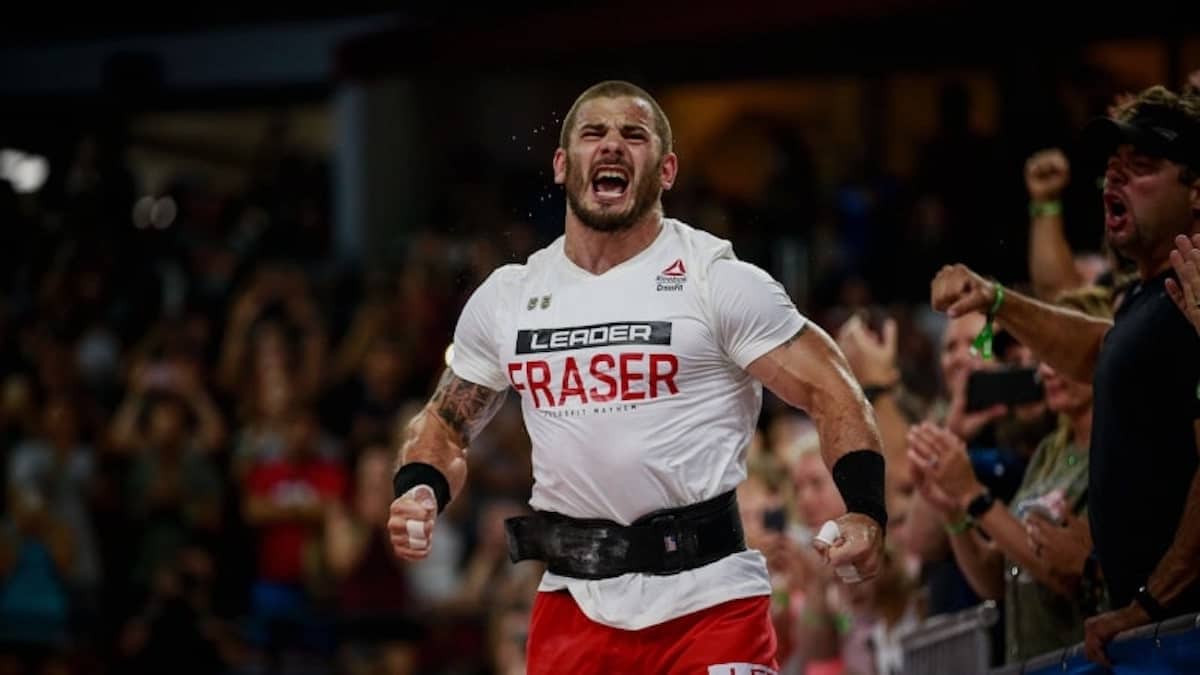
In a recent breakdown by Dr. Mike Israetel of Renaissance Periodization, we got an in-depth, hilarious, and brutally honest look at Fraser’s “HWPO” (Hard Work Pays Off) programming.
The video offers insights beyond fitness hype, revealing how science and smart structuring come together in a workout that appears overwhelming, yet purposeful.
If you’ve been curious about how CrossFit’s elite actually structure their training — and whether or not you need to cycle d-ball to keep up — here’s what you need to know.
Jump to:
Key Takeaway: Intensity Isn’t Everything — Structure Is
Fraser’s training looks extreme on the surface. But each element, from warm-up to bonus cardio, is carefully considered. The real lesson? Training volume and intensity must match intent and fitness goals. It’s about more than doing more. It’s about doing what makes sense.
Warm-Up with Purpose
It all kicks off with a structured warm-up:
- 15 calories on the ski erg — an excellent upper body warm-up that activates large muscle groups, boosts coordination, and elevates heart rate.
- Half-kneeling single-arm dumbbell presses — light, controlled, and focused on activation, not exhaustion.
This isn’t just fluff. Fraser uses each movement to prime muscles and joints for heavier lifts to come. Dr. Mike emphasized the difference between using these exercises as prep versus relying on them for your entire workout — a mistake common in Hollywood-style training.
Volume Pressing: Push Press with Intention
The workout moves into push presses with sets of 10 and 8 at intentionally lighter loads. The goal? Perfect technique, particularly in transferring leg drive smoothly into the overhead press.
According to Dr. Mike:
“The leg drive to shoulder transition is the most important part of the push press… Without that coordination, you’re missing the point of the movement.”
In CrossFit competition, efficient overhead movements are vital. Practicing power generation from the legs — not just grinding through a strict press — is how you win reps, and ultimately points, on the scoreboard.
Main Workout: 5 Rounds of Aerobic Power
The center of this session is a grueling 5-round metcon featuring:
- 8 sandbag or d-ball cleans
To prevent a blazing-fast first round followed by a rapid decline in performance, Fraser programs a Tabata bike buy-in. This pre-fatigues the athlete and forces them to pace correctly. Dr. Mike lauded this design as a “very CrossFit flex” — starting the main workout already out of breath to make sure it stays aerobic-centric.
Then, there’s a bike buy-out: 20 all-out calories at the very end. By that point, your lungs are your limiting factor, not your muscles. This reinforces paced, endurance-focused training — essential for high-level competition.
Accessory Work: Volume Meets Purpose
The final third of the workout includes:
- Strict pull-ups – 4 sets of 20 (band-assisted if needed)
- Reverse hypers – for spinal decompression, posterior chain hypertrophy, and injury resilience
The programming intention is clear. These aren’t “afterthought” exercises. They’re high-volume movements placed after metabolic conditioning to optimize muscle adaptation without interfering with energy systems during the metcon. It’s a move grounded in solid exercise science.
About Strict Pull-Ups
Some raised eyebrows when Fraser admitted he uses a Green Rogue band to complete the sets. But as Dr. Mike notes, the goal is training stimulus, not ego lifting. Better to use assistance to get the volume in than cheat the reps or limit adaptation.
And despite jokes about Alex Jones claiming to do 100 pull-ups straight through, the reality is that pull-up volume like Fraser’s builds grip, back, and shoulder capacity critical for CrossFit events.
Why Reverse Hypers Work
Reverse hypers are especially helpful for athletes who load their lower back heavily and often. This movement promotes spinal movement, strengthens the glutes and hamstrings, and helps reduce low-back pain over time.
“Sedentary people have chronic lower back issues, then avoid movement. That’s backwards,” said Dr. Mike. “We need to promote low-intensity, full-range motion under smart control for long-term spine health.”
Bonus Session: Zone 2 Conditioning
If the “regular” workout wasn’t enough, Fraser’s program often adds 30–40 minutes of zone 2 aerobic work — either on a bike or a run — targeting around 150–155 beats per minute.
This isn’t just punishment. It’s smart programming. Zone 2 cardio improves mitochondrial efficiency, endurance, and overall recovery capacity — all cornerstones of elite CrossFit performance. And separating it into a second session allows recovery between systems (and yes, a snack beforehand).
Key Takeaways for Everyday Athletes
- Don’t skip structure. Every piece of Fraser’s programming is intentional — from warm-up to bonus cardio.
- Volume matters most when it fits the goal. Light loads for volume improve technique and aerobic capacity better than grinding out reps with poor form.
- Zone 2 cardio helps everything. Build your aerobic base. It translates to better lifts, better recovery, and better body comp.
- Warm-ups and accessories count. Don’t overlook smaller movements. They prep joints, build durable muscle, and reduce injury.
- Scaling is smart. Band-assisted pull-ups or light dumbbells? If it helps you recover and progress, it’s a win.
So… Do You Need D-Ball to Make Gains?
No. No you don’t.
Although “d-ball” might have casually popped up in joking conversation, the real power of Fraser’s programming has nothing to do with substances. It’s about progression, intention, intensity management, and consistency fueled by smart science — not shortcuts.
Fraser’s HWPO system is a reminder that elite performance is built from decades of discipline, not just daily grinds. And while sardine parties may or may not be real, there’s one undeniable reality: CrossFit takes insane training to reach excellence — but it’s mapped intelligently from the ground up.
Bottom line: Don’t just chase what looks hard. Chase what works. And structure your training like a champion.