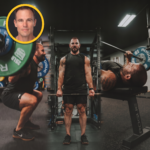
Jake Dearden may only be 25, but he’s already considered one of the top names in the booming sport of Hyrox.
The former ultramarathon runner turned functional fitness athlete has quickly made a name for himself on the global stage—despite setbacks, injuries, and a fast-growing spotlight.

With a relentless drive to improve himself and inspire others, Jake’s journey from civil engineering to elite Hyrox competitor offers valuable insight into the mental resilience, training strategies, and recovery wisdom needed to perform at the highest level.
In this article, we dive into Jake’s training philosophy, what it takes to recover from injuries like herniated discs, how he balances strength and endurance, and why sleep and mindset might be the most underrated performance enhancers of all.
Jump to:
Training for a Sport That Demands Everything
Hyrox is not your average fitness race. It combines eight 1km runs with eight functional workouts, including sled pushes, wall balls, and farmer’s carries—all designed to test both mental grit and physical robustness.
“It’s an endurance race at heart, but it requires strength,” Jake explained. “That’s why I think it appeals to so many people. You’re not just going to the gym for aesthetics, you’re training for performance.”
From Ultrarunning to Elite Hyrox Competitor
Before he entered the Hyrox arena, Jake was no stranger to pushing limits. He’d completed ultramarathons, ran a sub-2:30 Berlin Marathon, and even attempted 10 marathons in five days for charity.
These grueling endurance efforts helped him build the mental strength he now channels into Hyrox—but it came at a cost.
“I was running through pain. Teaching my body to ignore the warning signs,” he said. “That led to my biggest injury: two slipped discs in my back.”
Reframing Injuries as Opportunities
Jake’s career nearly ground to a halt when a last-minute decision to compete after a four-hour drive resulted in a devastating spine injury.
“I couldn’t walk or work for a month,” he recalled. “But every injury is a chance to reassess. That injury made me change not just my training, but my whole life.”
From that moment, his focus shifted to mastery, sustainability, and recovery.
When Setbacks Happen, Shift the Focus
Instead of pushing through pain, Jake now sees setbacks as signals and pivots accordingly. “Whenever I get injured, I go from trying to compete to trying to get healthy,” he said. “It becomes my mission to heal, not chase results.”
That healing journey included a wild challenge: completing 11 full Hyrox simulations in 11 days—using them as measured recovery benchmarks instead of full-out efforts.
Sleep as a Competitive Advantage
Jake’s recovery strategies rely heavily on one thing most athletes overlook: sleep.
“Sleep is the only time you actually recover,” he explained. “I aim for eight hours minimum. Leading into a competition, I shoot for 9 hours per night.”
According to his Whoop data, he averages 7.5 to 8 hours a night, and prioritizes sleep hygiene leading into events—sometimes even “sleeping in” during his taper to maximize recovery.
“It’s hard, especially when everyone thinks grinding means waking up at 5 a.m. But sleeping longer is another form of working hard.”
Fueling for Performance—Not Just Completion
Jake’s nutrition strategy depends on the event format. For ultramarathons, he prefers whole foods like sandwiches as long as he can tolerate them, before switching to gels near the end.
For Hyrox, the fueling window is much shorter and more targeted.
- Carb load in the 24–48 hours prior
- Avoid eating 3 hours before go-time
- Consider a quick carb source (like a gel) mid-race only if needed
“High intensity requires carbs,” he emphasized. “Fat just can’t be converted fast enough for the demands of Hyrox.”
Simple Carb Strategy
Rather than switching up his diet completely before a race, Jake keeps things consistent—just with bigger portions.
“Stick to what your body knows. If you normally eat chicken and rice, double the rice, not the whole meal. It’s about predictable digestion.”
Adapting Training to Stay Healthy
Jake’s current focus is balancing volume with recovery to stay injury-free. That means smarter programming and better respect for warning signs.
“You’ve got to fight the urge to do more. Just because you can train twice a day doesn’t mean you should,” he said.
Instead of blindly stacking strength and cardio sessions, he now works with data and his coaching team to design training around feeling and performance—not ego.
Data-Driven Recovery Decisions
Using a Whoop strap, he tracks sleep, heart rate variability (HRV), strain, and recovery—making adjustments when he trends into the red or orange zones.
“It gives me a third voice in the room. If recovery is low for a few days, I don’t power through—I investigate why.”
Why Hyrox Resonates with the Masses
The Hyrox formula—accessible movements, a race-style format, and a community-centric vibe—is part of what makes it appealing to everyday participants, not just elite performers.
“There’s no gatekeeping,” Jake said. “You don’t need to be an athlete to enter. The stations are simple with low skill entry, so anyone can learn and improve.”
He believes that accessibility, coupled with the group environment, is the future of fitness.
Building a Career Around Purpose
Almost all of Jake’s content across social media reflects two things: a love for the process and a desire to inspire.
“Fitness changes your whole life,” he said. “If my journey can inspire one person to give it a go or to keep going, then it’s all worth it.”
He documents not just the wins but the difficulties, hoping to show the full picture of what this lifestyle truly involves.
What’s Next for Jake?
After rehabbing a current calf injury, Jake’s eyes are firmly set on the next Hyrox major in Hamburg, where elite athletes compete for World Championship qualifying spots.
“I’m just at the beginning,” he said. “I still have a long way to go—and I want to do it the right way: strong, healthy, and consistent.”
That means not just training harder, but recovering smarter, fueling better, and using every setback as an opportunity for growth.
Because for Jake Dearden, fitness isn’t just about competition—it’s a door to everything else in life.