When retired NFL All-Pro center Jason Kelce linked up with hypertrophy coach Dr. Mike Israetel for a chest, shoulder, and triceps workout, what followed was equal parts sweat, science, and sarcasm.
In a video now burning up YouTube, Kelce put his post-football fitness goals into high gear, diving headfirst into a bodybuilding-style session built around long-term joint health, aesthetic muscle gains, and just the right amount of painful pump.
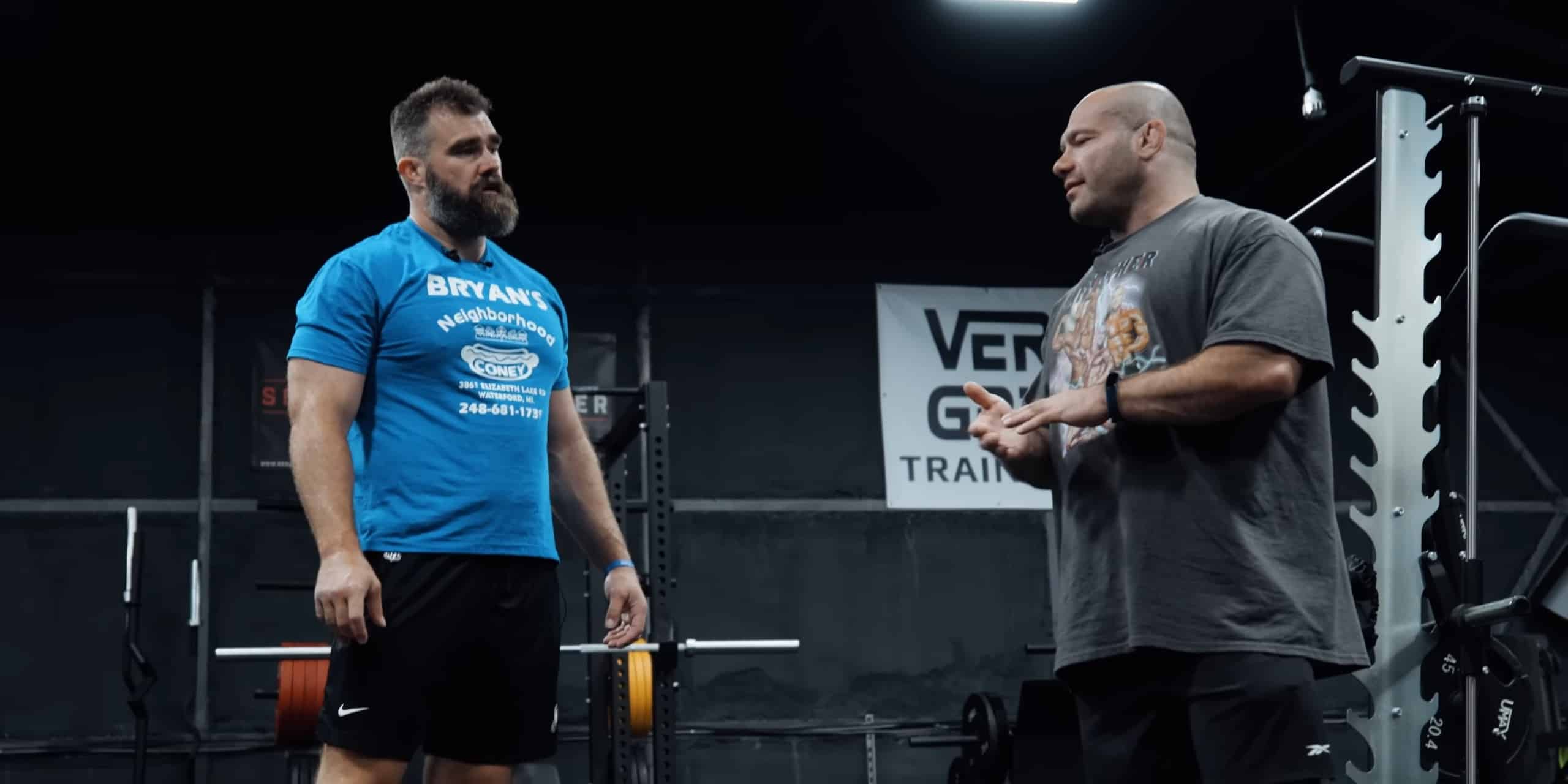
But under the jokes and jabs was a smartly designed workout plan catering to athletes transitioning to post-career strength training—and anyone trying to preserve size without wrecking their joints.
Here’s what everyday lifters can learn from the session—and why this workout style may be just what your training needs.
Jump to:
The Goal Post-Football: Strong, Lean, and Still Big
After retiring from an NFL career spanning 13 years as a center for the Philadelphia Eagles, Kelce isn’t interested in becoming small and wiry. In his own words, “I would like to lose weight but also remain big.” The new mission: shed fat, maintain size, and maximize long-term joint health.
Though Kelce has dropped 30 pounds since hanging up the cleats and currently weighs around 266 lbs, he’s still figuring out what his ideal “aesthetic” endpoint looks like. There’s no set scale number—just a balance between function, form, and fitness longevity.
Strength and Size Still Matter
Kelce revealed that even in retirement, the drive to stay strong is hard to shake. While he wants to look swole, he also still wants to squat heavy—”for football vibes and mental wellness,” as he put it, reinforcing the emotional connection athletes have with strength.
A Chest-Shoulder-Triceps Workout That Hits Different
The workout, created by Dr. Mike and guided by principles in the RP Hypertrophy app, centers on:
- Moderate weights and reps to avoid burnout or injury.
- Maximized range of motion—especially in the stretched position—to stimulate muscle growth while improving joint tolerance.
- Control and intent on every rep, rather than ego lifting.
This isn’t about ego reps or slamming weights around. It’s a bodybuilding-style plan fine-tuned for durability, hypertrophy, and mental satisfaction.
The Workout Breakdown
Here’s a simplified version of the session that had even a gridiron warrior like Kelce struggling to lock out his final push-up.
1. Incline Bench Press
- 3–4 sets of 8–12 reps
- Controlled descent, full range of motion
- “Warm-ups are critical,” Dr. Mike reminds. Start with light sets.
Fast-twitch athletes like Kelce may fatigue faster. Dr. Mike explained that because of fewer capillaries and higher metabolite buildup, explosive lifters fade quickly: “When they get close to failure, it’s over—no grinding left.”
2. Inverted Skull Crushers (Bodyweight Triceps Extension)
- Use Smith machine or rack bar adjusted to appropriate height
- Aim for 10–15 challenging reps
- Progress by lowering bar or increasing reps
These hit the triceps hard—without a single dumbbell or cable machine. “Your arms are full of fluid—beautiful,” Dr. Mike quipped after Jason finished fighting through a brutal set.
3. Deficit Push-Ups
- Hands elevated on blocks or dumbbells
- Full chest depth with rigid body
- Follow Maya Rep style—get a total rep target across short-rest sets
This was a highlight of the session, showcasing the Myo-Reps technique—a format where you hit near-failure, rest briefly, then repeat until a total rep target is hit. Total pump, time-efficient, and perfect for minimizing joint wear.
4. Dumbbell Lateral Raises
- As many reps as possible (AMRAP) with good form
- Hit a controlled lateral raise to fatigue shoulders with slow negatives
- Bonus: Static holds and “Combine Reaches” for burnout
Shoulders are fatigue-resistant and recover quickly, which makes them ideal for daily volume work if desired. One extended set with strategic rest-pause repping and static holds ended the session on a high (and painful) note.
Muscle Growth Without Crushing Your Joints
This style of training—for size and resilience—is perfect for ex-athletes or lifters aged 30+ who’ve racked up injuries. The secret?
- Deep range of motion focused on stretch-mediated hypertrophy
- Moderate loads that enable full control and muscular tension
- Carefully chosen exercises that limit joint strain
“You can do less leg training and still get really strong legs,” says Dr. Mike, highlighting a key fact: smart programming = functional gains without overuse wear-and-tear.
How Often Should You Train Like This?
Kelce admitted that 6-day routines became unrealistic fast. “Three to four days a week is a sweet spot,” he says, allowing time for work, family life, and recovery.
That’s more than enough frequency for hypertrophy—especially with push-pull-focused splits designed around upper-body emphasis and minimalist strength maintenance in the lower body.
The Hotel Gym Dilemma: Solved
What happens when big dudes like Kelce try to train in a travel gym with nothing but 20 lb dumbbells and frightened cardio queens?
“This kind of training lets you train anywhere,” says Dr. Mike. Push-ups, inverted skull crushers, and lateral raises with built-in intensity strategies can stimulate growth even with low weight.
Use tempo, supersets, Myo-Reps, and high-rep sets to make up for lack of gear. A 45-minute session focused on effort and form beats a 2-hour gym talk session every time.
Takeaways You Can Apply Today
Whether you’re an 8x Pro Bowler or just a weekend warrior, here’s what Jason Kelce’s training pivot teaches us:
- Train for how you want to look and feel now, not how you used to perform.
- You can look big and feel healthy; you just need smart volume, stretch-focused lifts, and joint-friendly movements.
- Don’t chase fatigue—chase effective reps at failure and recover appropriately.
- Use simple tools cleverly—bodyweight, dumbbells, bands can still build size.
Want to Train Like This?
The RP Hypertrophy app, which powered this session, offers templates that guide time-efficient, science-based hypertrophy routines. Whether you lift three or six times per week, it adapts to fit your volume and muscle focus needs.
And if you’re juggling work, kids, or travel + fitness, the Kelce-style system offers hope: You don’t need to wreck yourself to stay strong, look jacked, and love training again.
As Jason said, “This is all very beneficial… and my forearms are fried.”
Isn’t that the dream?