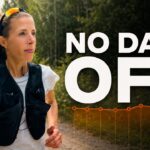
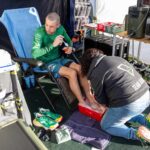
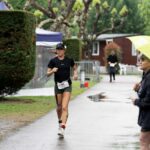
One of track and field’s most decorated American athletes nearly died on an infield in North Carolina this past June — and the full story is only now coming to light.
Jenny Simpson, the 2011 world 1,500-meter champion and three-time Olympian, suffered a cardiac arrest on June 16 at a community mile event in Raleigh, requiring more than 20 minutes of CPR, multiple defibrillator shocks, and two hospital transfers before she was out of danger.
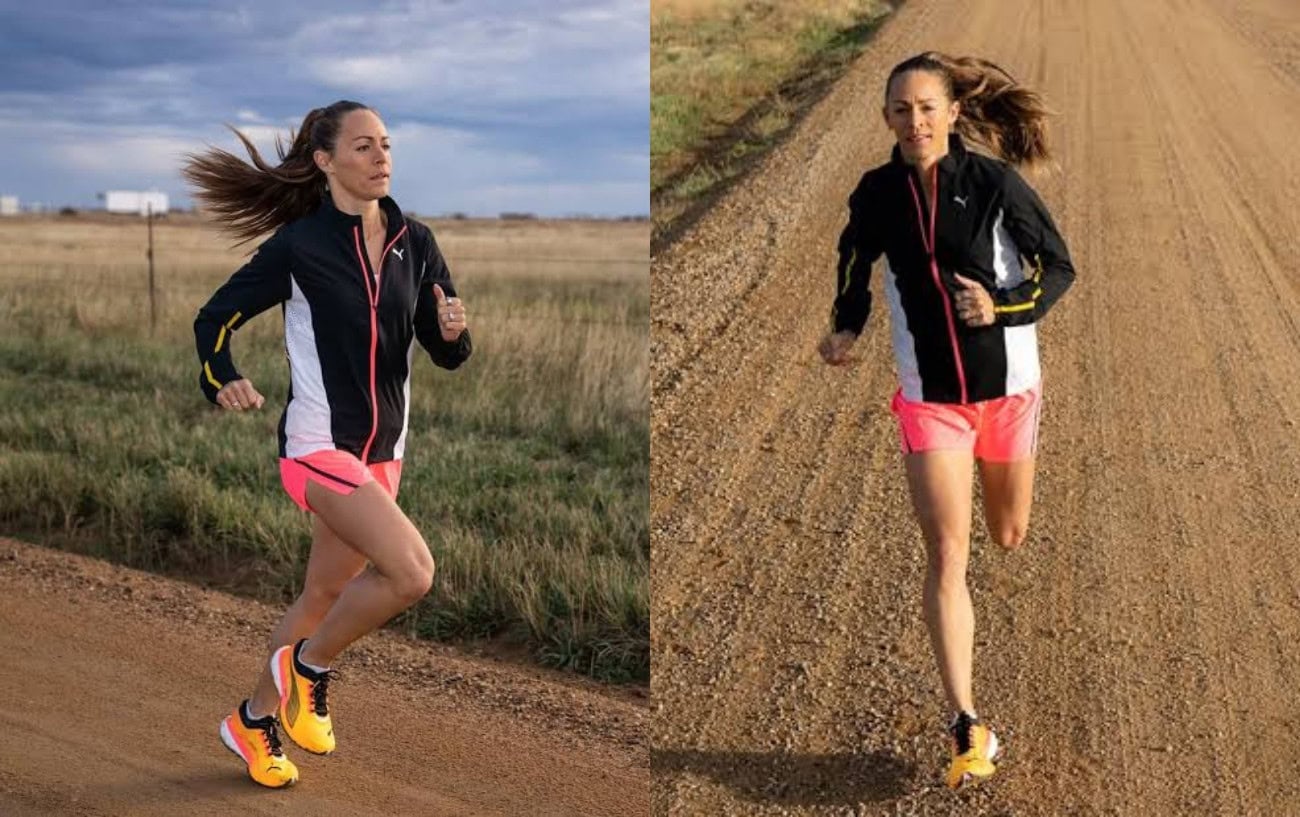
For months, the details were sparse — but that changed on September 7, when Simpson opened up completely on The Rich Roll Podcast, walking listeners through a survival story that is as harrowing as it is remarkable.
What she revealed raises urgent questions about cardiac safety, bystander response, and what happens when a lifelong runner discovers her heart has been quietly fighting a battle she never knew about.
Jump to:
20 Minutes of CPR and a Defibrillator From a Parking Lot
The rescue was far more dramatic than anything previously reported.
Simpson received CPR for over 20 minutes on the infield, was shocked multiple times at the scene, then shocked at least three more times in the ambulance — and her heart stopped again after she arrived at UNC Rex Hospital.

If you want something simple that actually works, this is one of the most effective tools I’ve used to build strength, conditioning, and endurance without needing a full gym setup.
- Full-body training with one weight using swings, squats, and presses
- Solid cast iron build that feels stable and lasts for years
- Comfortable grip that makes high-rep workouts easier to handle
She was eventually transferred overnight to Duke University Hospital on life support. She has no memory of June 16 whatsoever, and recalls nothing from the five days that followed.
Critically, the defibrillator that first revived her didn’t belong to the ambulance crew. It was sitting in a car in the parking lot, owned by Joey Pointer — the Fleet Feet CEO who had hired Simpson in February — and his wife, Ivy.
The Pointers carry their own defibrillator because their child has congenital heart disease. Joey ran to retrieve it, and Ivy was among the bystanders performing chest compressions. Without that device — and without those bystanders acting immediately — Simpson would almost certainly not have survived.
A Heart Condition With No Genetic Red Flags
Simpson was diagnosed with arrhythmogenic right ventricular cardiomyopathy, or ARVC — a disease that gradually replaces muscle in the heart’s right ventricle with fatty, fibrous scar tissue, disrupting the electrical signals that regulate the heartbeat.
Since June, she has undergone heart surgery and now lives with an implanted pacemaker and defibrillator. Her team at Duke will image her heart every six months to monitor which direction the disease is heading.
ARVC is typically inherited, which made Simpson’s case particularly unusual. She was tested for known genetic markers. So were both of her parents. Not one of them showed a mutation.
If you want something simple that actually works, this is one of the most effective tools I’ve used to build strength, conditioning, and endurance without needing a full gym setup.
- Full-body training with one weight using swings, squats, and presses
- Solid cast iron build that feels stable and lasts for years
- Comfortable grip that makes high-rep workouts easier to handle
This places her in what researchers call the “gene-elusive” category — diagnosed with the disease but carrying no identified mutation to explain it. According to the European Heart Journal, gene-elusive ARVC patients tend to have exercised at roughly five times the intensity of those carrying a known desmosomal mutation prior to diagnosis.
Simpson addressed that connection directly, and with precision.
Running didn’t cause it but it revealed it.
As for competing again — the answer is almost certainly no. When heart rate climbs, the right ventricle dilates, and more of the affected tissue becomes exposed to the electrical current. The mechanical risk is simply too great.
Simpson said it is “unlikely” she will ever run again.
Her Message Has Nothing to Do With Screening
Given her platform, many might expect Simpson to launch a campaign pushing athletes toward cardiac screening. She’s taking a different approach entirely.
Teaching runners to identify ARVC is not her mission, she explained, because vanishingly few athletes have it — and it’s notoriously difficult to detect even when doctors are looking.
If you want something simple that actually works, this is one of the most effective tools I’ve used to build strength, conditioning, and endurance without needing a full gym setup.
- Full-body training with one weight using swings, squats, and presses
- Solid cast iron build that feels stable and lasts for years
- Comfortable grip that makes high-rep workouts easier to handle
What she wants to change is simpler, and far more urgent: whether an ordinary person standing nearby will choose to act.
Resist the temptation to adopt fear.
The statistics she’s responding to are sobering. Of the more than 350,000 Americans who go into cardiac arrest outside a hospital each year, only around 40 percent receive CPR from a bystander, according to the American Heart Association. Just 9.1 percent of adults treated by emergency crews for a non-traumatic arrest survive to leave hospital.
At marathons and half-marathons between 2010 and 2023, cardiac deaths roughly halved compared to the prior decade — while the actual arrest rate stayed flat. Researchers credit that improvement not to better athlete screening, but to CPR training and on-course defibrillators.
Simpson said too many bystanders freeze, waiting for someone qualified to arrive. Those first minutes don’t just determine survival — they determine brain function, kidney health, and lung capacity.
The people on that Raleigh infield didn’t just keep her alive. They kept her whole.
The End of a Career That Rewrote the Record Books
Simpson’s athletic legacy was already cemented long before June 16.
If you want something simple that actually works, this is one of the most effective tools I’ve used to build strength, conditioning, and endurance without needing a full gym setup.
- Full-body training with one weight using swings, squats, and presses
- Solid cast iron build that feels stable and lasts for years
- Comfortable grip that makes high-rep workouts easier to handle
She claimed the world 1,500-meter title in 2011 with a time of 4:05.40, took Olympic bronze at Rio in 2016 clocking 4:10.53, and won the Fifth Avenue Mile a record eight times — a mark that still stands. She officially retired at the 2024 New York City Marathon.
She hasn’t called a race since her cardiac arrest. Her husband, Jason, has deferred his Leadville entry to next year as their lives recalibrate around a new reality.
The next MRI will be the first to indicate which direction her disease is progressing — a result the couple is waiting on with everything that implies.
Simpson survived something that kills the overwhelming majority of people it touches. She did so because strangers ran toward her instead of waiting. That, more than any screening protocol or medical advance, is the story she wants told.