A 330-kilometer mountain race through the Italian Alps. Three days with barely any sleep. And a finish-line moment that rewrote history.
In the early hours of Wednesday morning, Jiaju Zhao crossed the finish line in Courmayeur to become the first non-European winner of the Tor des Géants — one of the most brutal ultramarathons on the planet — since the race launched back in 2010.
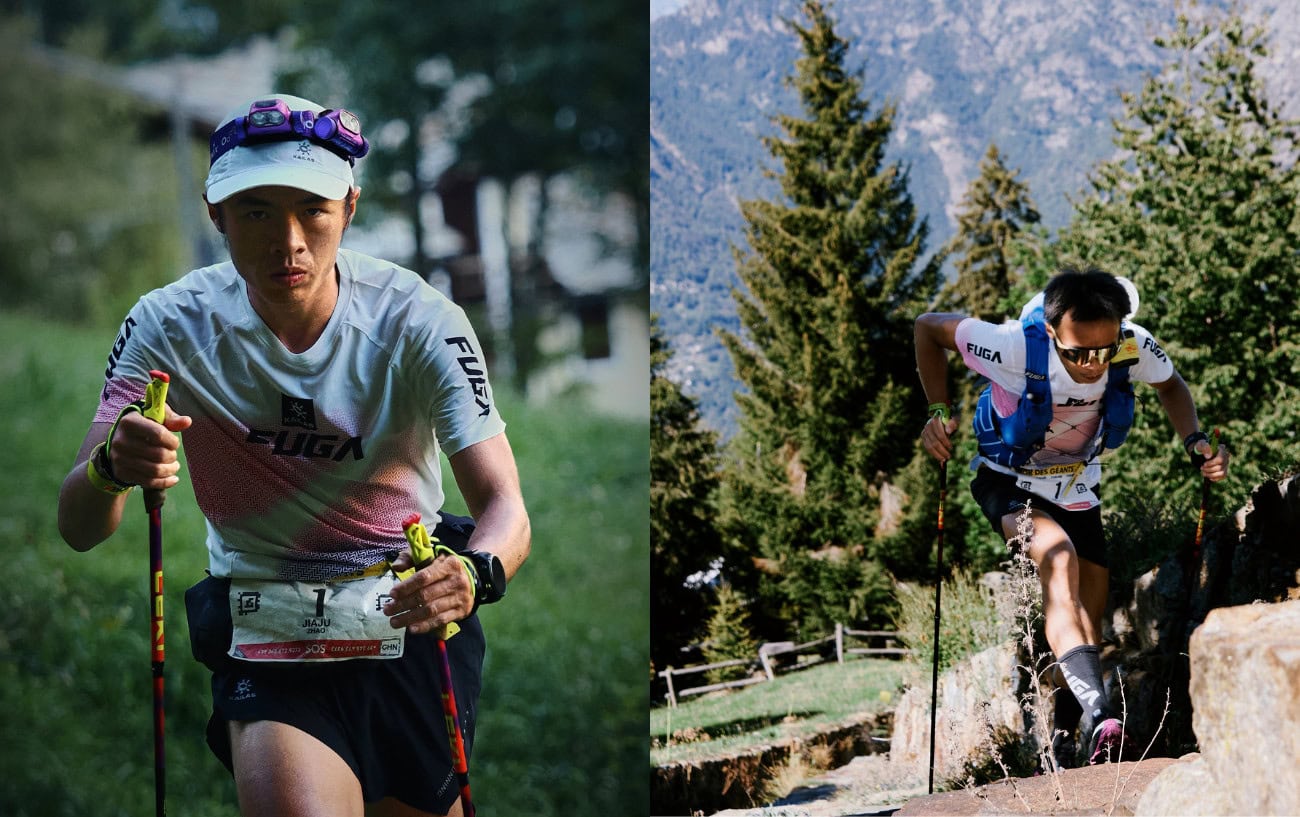
His finishing time of 65:55:22 didn’t just earn him the title. It shattered the course record by 13 minutes.
But the story of how he got there — running on fumes, hallucinating on mountain climbs, and sleeping in 10-minute bursts — is the part that will leave you speechless.
Jump to:
A Record Nobody From China Had Ever Claimed
The Tor des Géants has been running since 2010, and every single winner before Zhao came from Italy, Spain, France, or Switzerland.
The best any Chinese athlete had ever placed was sixth — a result Zhang Weiqiang posted just last September, which Xinhua News Agency described as an Asian record at the time.
Zhao didn’t just inch past that benchmark. He blew straight past it, leading the race for almost its entire duration across a savage 330-kilometer loop through the Alps.
The previous course record, set by Victor Richard just last year, fell by a full 13 minutes.
The One Moment He Lost the Lead
Zhao held first place almost from the gun — right up until the point his body demanded something it could no longer ignore.
At kilometer 203, he arrived at the Gressoney life base, 35 hours and 42 minutes into the race. He stopped for roughly 50 minutes, with only about 20 of those spent actually sleeping.
It was enough. German runner Jonathan Schindler slipped past while Zhao was inside — the first time since the race began that Zhao wasn’t leading.
Everything Zhao slept after that moment came in 10-minute increments, grabbed at checkpoints along the route.
The Headlamp That Sealed It
By the third night, Zhao had reclaimed the lead. Then came a moment that crystallized exactly what was at stake.
At Ollomont I thought the others were far away, then they told me Jonathan was 19 minutes back. Last night I saw his headlamp in the distance. There were less than 50 kilometers to go, I felt good, and I decided to speed up.
Schindler never closed that gap. He crossed the line second in 66:55:06, nearly an hour behind Zhao, despite a strategy built entirely on rest.
Schindler had deliberately slept through both nights on the theory it would leave him stronger in the final stretch. It almost worked.
In the end I hoped to catch him before Bosses, but he was too strong.
Running on Virtually No Sleep — And What That Actually Does to the Body
The Tor des Géants has a 150-hour cutoff and no mandatory rest requirements. That means sleep is a personal gamble every competitor makes for themselves.
At the front of this year’s field, almost everyone chose to sleep as little as humanly possible. Katharina Hartmuth — who finished third overall and broke the women’s course record with a 67:10:09 — ran three days on roughly 15 minutes of total sleep.
Zhang Weiqiang, third among the men in 71:53:56, reportedly managed just 45 minutes across the entire race.
Research offers a complicated picture of what this does physiologically. One study found that sleep-deprived runners on a treadmill actually showed improved running economy — but their time to exhaustion at hard efforts dropped by 13.2 percent.
Efficiency goes up. The ability to suffer goes down. Over 330 kilometers, that tradeoff becomes something altogether more dangerous.
“It Even Seemed to Me That Everything Was Swaying”
By the time Zhao reached Courmayeur at 3:55 a.m. Wednesday, the cost of what he’d done was written all over him.
I seem more dead than alive.
He described pain throughout his entire body, and a terrifying stretch near a summit where exhaustion blurred into something stranger — half asleep on his feet, he said “it even seemed to me that everything was swaying.”
Then came a declaration that will sound familiar to anyone who has ever pushed themselves past every rational limit.
This is the last time I participate in races over 168 kilometers.
Whether that holds remains to be seen. Zhao said something similar after his first attempt at this very race — which ended early at the Gressoney life base.
A Promise Made at the Hardest Moment
That first DNF at Gressoney wasn’t the end of the story. It became the beginning of one.
The day after Gressoney I said I would return to win. Many can say it, but not everyone can do it.
He arrived in Courmayeur this year just 17 days after running the OCC — a 60K race he completed in 8:31:40, placing 253rd, essentially using it as a training run. He finished 10th at UTMB last year in 21:19:47 and said he did nothing specifically targeted at a race this distance.
And yet.
China’s Ultrarunning Moment
Zhao’s win didn’t arrive alone. Zhang Weiqiang — whose sixth-place finish last year was celebrated as an Asian record — came back to obliterate his own benchmark, finishing fourth overall after taking two hours and 40 minutes off his previous time.
Zhang Huiping claimed second among the women in 80:35:31, giving China a sweep of podium positions that would have seemed unthinkable when the race began 15 years ago.
Next year I will be here again.
As of Thursday morning, just 46 of the 1,117 starters had crossed the finish line. Another 375 had abandoned the attempt entirely. The race closes Saturday at 6 p.m., and hundreds more are still out there on the mountain — chasing their own version of what Jiaju Zhao just proved is possible.