Something extraordinary just happened in the Italian Alps — and the ultrarunning world is still catching its breath.
In the early hours of Wednesday morning, German athlete Katharina Hartmuth crossed the finish line of the Tor des Géants, one of the most brutal endurance races on the planet, and rewrote the history books in a way nobody saw coming.
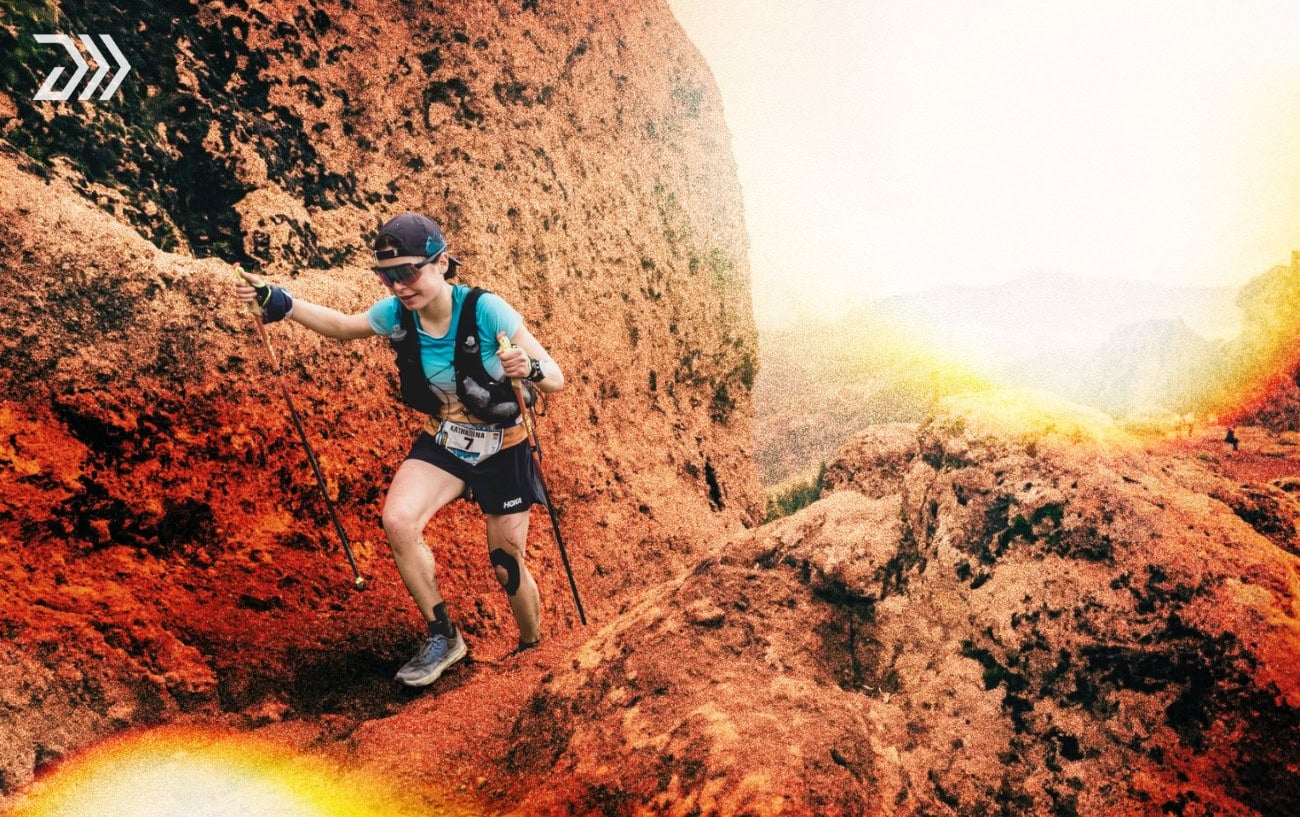
She didn’t just break her own women’s course record — she obliterated it by 12 hours.
And she did it on roughly 15 minutes of sleep across three days.
Jump to:
Third Place Overall. First Woman. Fifteen Minutes of Sleep.
Hartmuth finished the 330-kilometer race through the Italian Alps in 67 hours, 10 minutes, and 9 seconds — placing third overall in a field that includes some of the best endurance athletes on earth.
That’s not a typo. Third. Overall.

If you want something simple that actually works, this is one of the most effective tools I’ve used to build strength, conditioning, and endurance without needing a full gym setup.
- Full-body training with one weight using swings, squats, and presses
- Solid cast iron build that feels stable and lasts for years
- Comfortable grip that makes high-rep workouts easier to handle
In the 15 previous editions of the Tor des Géants, no woman had ever stood on the overall podium. Hartmuth didn’t just crack that ceiling — she walked through it like it wasn’t there.
The race began in Courmayeur on Sunday morning and involves a staggering 24,000 meters of climbing through the Alps. Hartmuth spent the majority of it in contention for the outright win, trading positions near the very front of the race.
Yesterday I realized I was under 75 hours, then under 72, then under 70. I couldn’t believe it.
That disbelief makes sense when you understand just how fast she was moving. She finished just 15 minutes and three seconds behind Swiss runner Jonathan Schindler, who took second place.
A Record That Was Already Historic — Then She Did It Again
Hartmuth already held the women’s course record heading into this race, but the gap she carved out this time is in a different category entirely.
When Sabrina Verjee set the previous mark of 80:19:38 in 2022, it was considered a serious leap forward — about five hours faster than what came before it. Hartmuth then improved on Verjee’s time by just under 69 minutes in 2024, becoming the first woman ever to finish under 80 hours at the event.
That was already a landmark achievement. Wednesday made it look like a warm-up.
If you want something simple that actually works, this is one of the most effective tools I’ve used to build strength, conditioning, and endurance without needing a full gym setup.
- Full-body training with one weight using swings, squats, and presses
- Solid cast iron build that feels stable and lasts for years
- Comfortable grip that makes high-rep workouts easier to handle
Her new time of 67:10:09 is the sixth-fastest finish in the entire history of the Tor des Géants — regardless of gender. It would have been good enough to win 12 of the 15 previous editions of the race outright.
Only four men have ever gone faster: Franco Collé in 2021 and 2023, Victor Richard this year, and Wednesday’s winner Jiaju Zhao along with Schindler. That’s it. That’s the entire list.
How the Men’s and Women’s Records Compare Now
The pace at which the women’s record has moved is unprecedented compared to the men’s side.
Over the past three years, the men’s record improved by a total of just under 44 minutes. Hartmuth alone took 12 hours and 31 seconds off her own women’s mark in a single race.
Heading into the weekend, the two standing course records were 13 hours and two minutes apart. After Wednesday? That gap is now 1 hour, 14 minutes, and 47 seconds.
Let that sink in for a moment.
If you want something simple that actually works, this is one of the most effective tools I’ve used to build strength, conditioning, and endurance without needing a full gym setup.
- Full-body training with one weight using swings, squats, and presses
- Solid cast iron build that feels stable and lasts for years
- Comfortable grip that makes high-rep workouts easier to handle
Day One Fine, Day Two Blistered — Legs Never Quit
Hartmuth described the physical reality of racing across nearly three sleepless days with characteristic directness. She felt good on day one, sore and covered in blisters by day two — but at no point did her body stop responding when she asked it to move.
Fifteen minutes of sleep across 67-plus hours of racing. That detail alone deserves a moment of silence.
Her performance also slots neatly into a growing body of evidence suggesting women may have a physiological edge over men in very long-duration endurance events. A lab study of performance-matched trail runners found that women lost just 1.1 percent of uphill speed over a three-hour treadmill test while men lost 9.9 percent.
The Tor des Géants runs for the better part of three full days. The implications of that data point are hard to ignore.
A Year of Record-Breaking That Set This Moment Up
Wednesday’s finish didn’t arrive out of nowhere. Hartmuth has been on a relentless tear through the world of ultrarunning over the past couple of years.
She placed third at UTMB in Chamonix last August, finishing more than 90 minutes ahead of Courtney Dauwalter in 10th — a result that turned heads across the sport. April brought a win at the Madeira Island Ultra-Trail.
If you want something simple that actually works, this is one of the most effective tools I’ve used to build strength, conditioning, and endurance without needing a full gym setup.
- Full-body training with one weight using swings, squats, and presses
- Solid cast iron build that feels stable and lasts for years
- Comfortable grip that makes high-rep workouts easier to handle
Then, this past July, she ran the Bob Graham Round in 14:11:58, setting the women’s record on one of Britain’s most storied mountain challenges — paced over a section of the route by Beth Pascall, whose record she was in the process of breaking.
Every result has built toward something. Wednesday felt like the crescendo.
China’s First Tor des Géants Champion Makes History Too
While Hartmuth’s performance captured the imagination, the men’s race produced its own historic moment. Jiaju Zhao of China won in 65:55:22, setting a new men’s course record and becoming the first Chinese winner of the Tor des Géants — and the first champion from outside Europe in the event’s history.
His backstory is equally compelling. According to his sponsor Kailas, Zhao was delivering food in eastern China as recently as 2014 before turning professional three years later. During the race itself, he spent just 50 minutes total in aid stations and didn’t stop running at all until 35 hours and 42 minutes had elapsed.
He arrived in Courmayeur fresh off a win at China’s Chongli 168 in July, and the combination of momentum, pacing discipline, and sheer endurance delivered him a course record in his Tor des Géants debut.
Most competitors are still out on the course. Runners have 150 hours to complete the race, with the finish in Courmayeur closing Saturday at 6 p.m. — meaning the story of this edition is still being written, one step at a time, somewhere deep in the Alps.
If you want something simple that actually works, this is one of the most effective tools I’ve used to build strength, conditioning, and endurance without needing a full gym setup.
- Full-body training with one weight using swings, squats, and presses
- Solid cast iron build that feels stable and lasts for years
- Comfortable grip that makes high-rep workouts easier to handle