For decades, the fitness world has warned against letting knees travel past toes during squats, lunges, and other lower-body exercises.
But Ben Patrick, better known as the Knees Over Toes Guy, is challenging that belief.
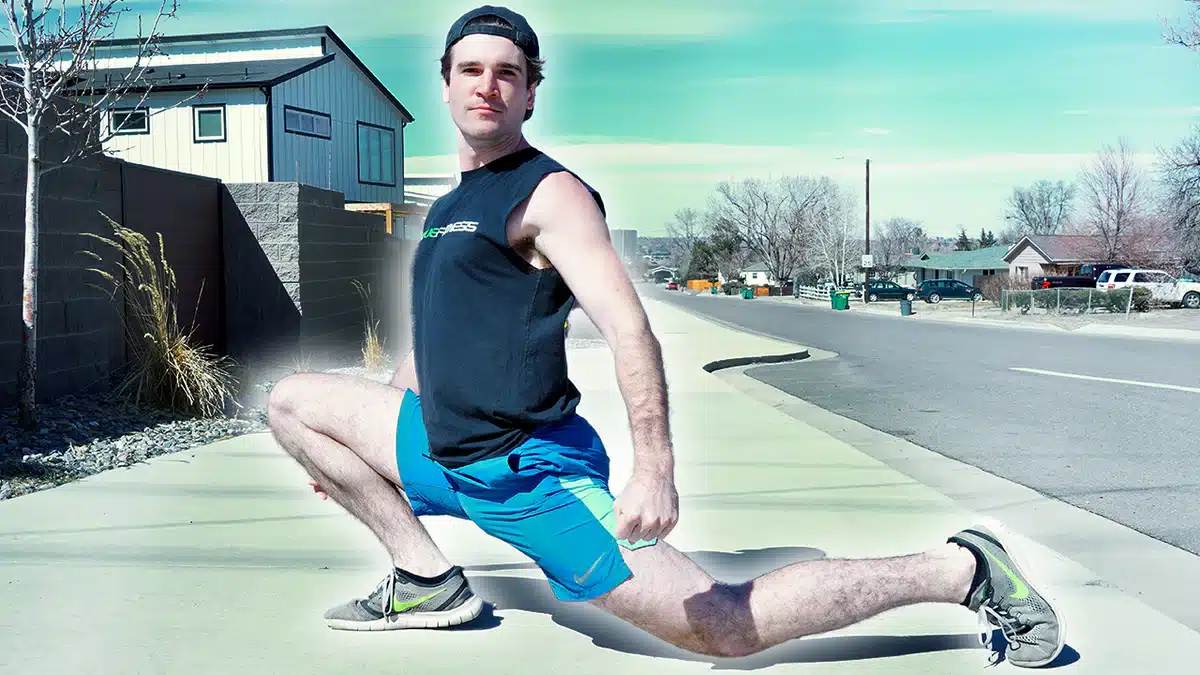
His unconventional training philosophy suggests that strengthening joints through full range of motion can reduce pain and prevent injuries—a claim that has gained millions of followers, including professional athletes and physical therapists.
For endurance athlete Wes Judd, Patrick’s method wasn’t just a curiosity—it was a last resort. After battling chronic pain, sciatica, and a torn hip labrum, Judd had tried everything from rest to physical therapy, with no success.
Desperate for relief, he committed to 16 weeks of Patrick’s training program. The result? His pain disappeared, and his athletic performance improved.
But does Knees Over Toes training hold up to scientific scrutiny? And can it really help others avoid injuries and stay pain-free?
Jump to:
- Who Is the Knees Over Toes Guy?
- The Myth of “Knees Should Never Go Past Toes”
- Judd’s 16-Week Experience With Knees Over Toes Training
- The Science Behind Strengthening Joints Through Full Range of Motion
- The Limitations of Knees Over Toes Training
- Key Lessons From Knees Over Toes Training
- Final Thoughts: Can Knees Over Toes Training Help You?
Who Is the Knees Over Toes Guy?
Ben Patrick’s rise to fitness fame is deeply personal. A lifelong basketball player, he struggled with severe knee pain from an early age, earning the nickname “Old Man” from teammates. After undergoing three knee surgeries before the age of 20, he was told he would never play pain-free again.
Determined to prove his doctors wrong, Patrick discovered the work of Canadian strength coach Charles Poliquin, who emphasized training muscles at their deepest range of motion. By adopting these methods, Patrick not only eliminated his pain but also improved his speed and jumping ability. At 23, he even earned a full-ride basketball scholarship to Eastern Florida State College.
Now, Patrick runs Athletic Truth Group (ATG), an online fitness program with millions of followers. His training philosophy is built on a simple but controversial idea: the best way to protect joints is to strengthen them in the positions where they are most vulnerable.
The Myth of “Knees Should Never Go Past Toes”
One of the core beliefs of traditional strength training is that allowing the knees to move forward past the toes during squats or lunges puts excessive strain on the joint. But according to many physical therapists, this advice is outdated and overly cautious.
“Tendons, cartilage, ligaments—all those things will toughen up to load,” says Erik Meira, a rehab specialist who works with NBA and NFL athletes. He explains that joints need to be exposed to stress to grow stronger—not unlike muscles during resistance training.
Patrick’s method applies this principle across the body, not just to the knees. His training programs include movements that target the ankles, hips, lower back, shoulders, and elbows, all designed to gradually build strength in positions that are typically avoided.
“Knees over toes has been vilified for a long time as causing pain to the front of the knee,” Meira adds. “The reality is it will cause pain if you’re not conditioned to take that kind of load. But the best way to condition yourself is to get used to positions like that.”
Judd’s 16-Week Experience With Knees Over Toes Training
After years of unsuccessfully treating his chronic pain, Judd decided to follow Patrick’s training program through the ATG app. The progression was structured into three phases:
- Zero Phase: Bodyweight exercises designed to reintroduce movement patterns and strengthen mind-muscle connections.
- Dense Phase: Adding light weights and higher repetitions to condition the joints.
- Back-Specific Training: Focused on lower back strength, particularly through back extensions.
At first, some movements felt uncomfortable—especially exercises that placed his back in a stretched, vulnerable position. But by starting with small, controlled movements and progressively increasing the range of motion, he noticed a surprising shift:
“My sciatica went away. Gone, vanished,” Judd wrote. “The insidious nerve pain that for years—literally years—I tried to roll, massage, stretch, and rest away, finally disappeared. All it needed, it turned out, was to get stronger.”
This aligns with research on graded exposure therapy, which suggests that introducing mild stress to an injured area can reduce fear and improve pain tolerance.
“The biggest mistake people make in the gym is assuming a degree of fragility to their body,” says Mike Israetel, a fitness researcher with a doctorate in exercise science.
The Science Behind Strengthening Joints Through Full Range of Motion
Patrick’s approach is rooted in a growing body of evidence suggesting that static stretching isn’t enough to improve mobility or prevent injury. Instead, strength training that incorporates deep joint positions under load may be more effective.
Matt Klein, a rehabilitation and movement science professor, explains:
“Tendons take up to nine months, if not more, of consistent loading to heal and grow stronger. But patients can have an acute decrease in pain [when they start training the injured joint], and that’s not because the tendon has changed. That’s because their perception of pain—a fear response—has changed.”
This explains why many endurance athletes struggle with chronic injuries—they often avoid strength training or limit movements to “safe” positions, unintentionally weakening the very structures that need to be resilient.
The Limitations of Knees Over Toes Training
While Patrick’s training has helped thousands, including Judd, it’s not a one-size-fits-all solution.
- Some exercises—like deadlifts—still caused pain for Judd, despite modifying them.
- Experts recommend getting a proper diagnosis before starting any new training program.
- Not everyone will respond to the same movements in the same way.
“I think [Patrick] is helping a lot of people,” says Klein. “But I also think it can hurt a lot of people. Athletes should take time to pursue an accurate diagnosis to ensure they’re treating the right thing.”
Key Lessons From Knees Over Toes Training
Even after two years, Judd continues to incorporate many of Patrick’s exercises into his routine. His biggest takeaways?
1. Strength Training Is Essential for Longevity
Lifting weights isn’t just for bodybuilders—it’s a necessary tool for staying pain-free as an athlete.
2. Balance Matters
Many athletes train their quads but neglect their hamstrings, or work their calves but not their tibialis anterior. Balancing both sides of every joint is crucial for injury prevention.
3. Resting Too Much Can Worsen Pain
Avoiding movement altogether can weaken tissues and make pain worse over time. Instead, reducing the load and gradually increasing movement is often the best approach.
“The biggest mistake I see with athletes is resting for wellness,” says Meira. “Being overprotective is often what gives us issues.”
4. Mobility Should Come From Strength, Not Just Stretching
Static stretching alone isn’t enough. Instead, strengthening muscles through a full range of motion is key to maintaining mobility and joint health.
Final Thoughts: Can Knees Over Toes Training Help You?
Four years after starting Patrick’s program, Judd is still running, winning races, and setting PRs—all without pain.
For those struggling with chronic injuries, Patrick’s method offers a compelling alternative to traditional rehab approaches. But, as with any program, it’s essential to listen to your body, progress gradually, and seek expert guidance when needed.
At its core, the Knees Over Toes philosophy is about more than just knee health—it’s a mindset shift toward strengthening the body in ways that support longevity and resilience.