For decades, fitness enthusiasts have debated whether weightlifting or bodyweight training is the superior method for building strength, muscle, and overall fitness.
Is lifting heavy the key to peak performance, or can bodyweight exercises provide similar—if not better—results?
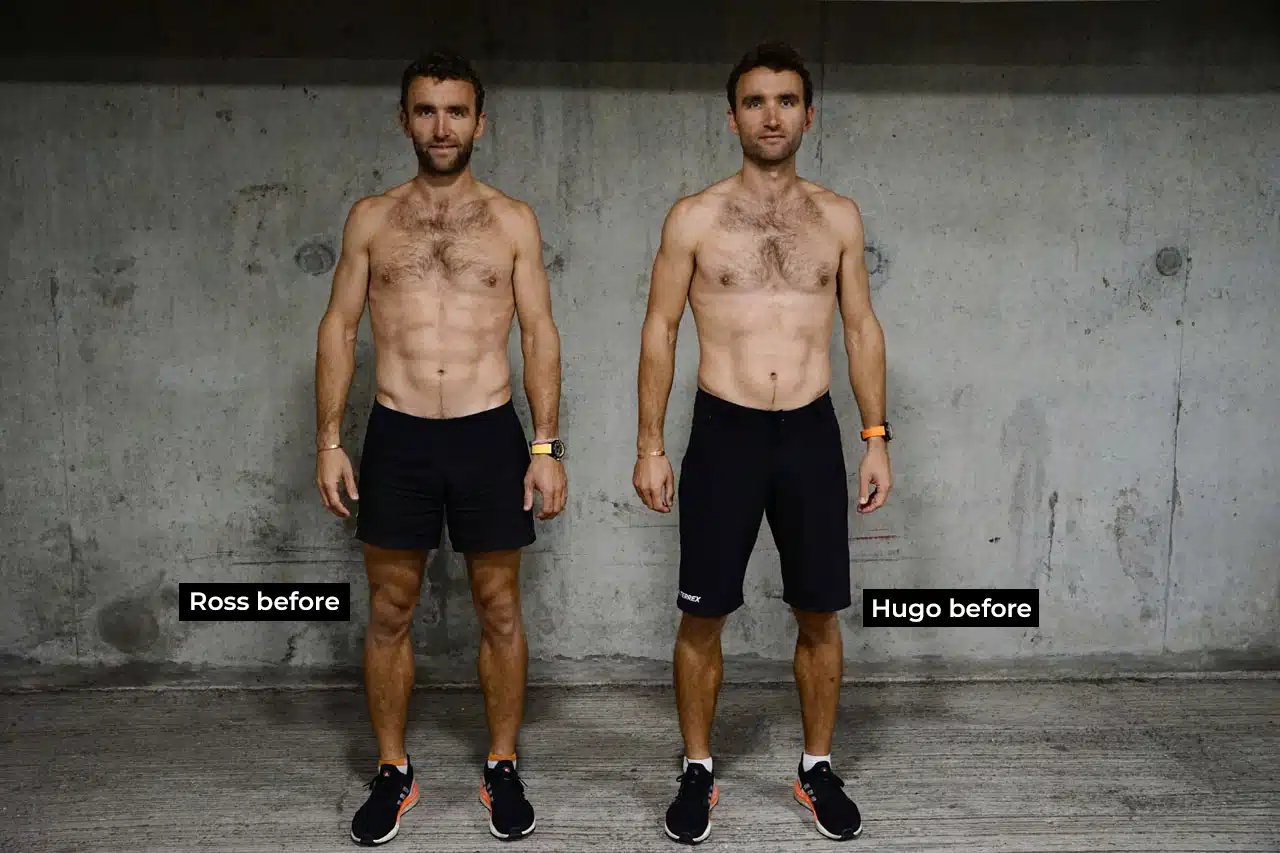
To put this question to the test, identical twins Ross and Hugo Turner embarked on a 12-week fitness experiment.
One trained exclusively with weights, while the other focused on bodyweight exercises. Their findings provide compelling insights into the effectiveness of both training methods.
Jump to:
The Turner Twins’ 12-Week Experiment
The Turner twins, known for their extreme endurance challenges, designed parallel training plans to fairly compare weighted and bodyweight workouts.
- Hugo (Weight Training): Focused on heavy compound lifts like deadlifts, squats, and dumbbell chest presses.
- Ross (Bodyweight Training): Performed exercises such as press-ups, pull-ups, lunges, and plyometric movements.
Both trained five times a week for 12 weeks, maintained identical nutrition plans, and followed the same recovery protocols. At the end of the program, they underwent a comprehensive strength and conditioning assessment, revealing both expected and surprising results.
Strength Gains: Why Weight Training Still Reigns Supreme
Hugo’s weight training program resulted in significant muscle growth and strength gains. By the end of the experiment, he weighed over 87kg—his heaviest in a decade—and shattered multiple personal records.
- 150% increase in press-ups, despite not practicing them directly.
- 185% increase in pull-up performance, solely from weighted training.
- Higher overall strength and muscle mass, proving that progressive overload with weights is highly effective.
According to strength coach Richard Tidmarsh, weightlifting’s ability to overload muscles leads to continuous strength development, even improving performance in bodyweight exercises.
“You get yourself strong so that when you haven’t got weights, you feel light,” says Tidmarsh.
The Downsides of Heavy Lifting
While weightlifting delivered impressive results, it also came with drawbacks. Hugo experienced increased muscle soreness, reduced flexibility, and lower VO2 max levels due to carrying extra muscle mass.
“My lower back is still sore, and my flexibility is terrible,” Hugo admitted.
Tidmarsh warns that intensive weight training without proper recovery can lead to chronic inflammation, joint issues, and even tendonitis.
“Even if you want a great set of pecs and biceps, you still want to be a functional human being at the end of it,” he adds.
The Case for Bodyweight Training: Strength, Mobility, and Longevity
In contrast, Ross’s bodyweight training approach yielded notable strength improvements and enhanced overall fitness.
- Increased flexibility and mobility, leading to fewer aches and pains.
- Improved posture and core strength, making movements feel more fluid.
- Surprising strength gains: His bench press jumped from 60kg to 100kg and his deadlift increased from 90kg to 120kg, despite not lifting weights.
Research supports these results. A 2018 study in the Journal of Strength and Conditioning Research found that participants training with press-ups gained similar strength as those using the bench press.
“Your body is still a resistance,” Tidmarsh explains. “The key is using time under tension, progressive overload, and gymnastic holds.”
He points to gymnasts as proof of bodyweight training’s effectiveness, stating:
“If I had to choose between a 100kg bench press and the ability to do an iron cross, I know which one I’d pick.”
Finding the Right Balance: A Hybrid Approach Wins
While weights build muscle efficiently, bodyweight training enhances mobility, flexibility, and injury prevention. The best approach? A combination of both.
Ross and Hugo now integrate bodyweight sessions into their routine to maintain long-term health and function.
“Long-term, our bodies will feel much better if we include bodyweight training,” Hugo admits.
Tidmarsh agrees, suggesting a mixed routine that incorporates weight training for strength and bodyweight exercises for mobility and endurance.
A Balanced Training Plan: Combining Weights & Bodyweight
To get the best of both worlds, try Tidmarsh’s 60-minute hybrid workout:
- Mobility & Activation (20 min) – Yoga-style stretches and movement drills.
- Strength Training (20 min) – Heavy compound lifts (deadlifts, squats, presses).
- Bodyweight Giant Sets (20 min) – High-tension exercises like negative press-ups, pull-ups, and core holds.
Final Verdict: Should You Choose Weights or Bodyweight?
There’s no need to pick one over the other.
- If your goal is maximum strength and muscle growth, lifting weights is more efficient.
- If you prioritize mobility, injury prevention, and long-term function, bodyweight training is crucial.
- For overall fitness, combining both methods is the smartest approach.
“Strength from weights gives you the power, while bodyweight training keeps you moving pain-free,” Tidmarsh concludes.
So, why not take the best of both worlds? Lift heavy, move freely, and train smarter. 💪🔥