Marathon brain sounds terrifying, but is it real?
On a recent episode of The NeuroExperience, neuroscientist Louisa Nicola put that question to exercise physiologist Brady, a VO2 max specialist who ran a marathon just six days earlier.
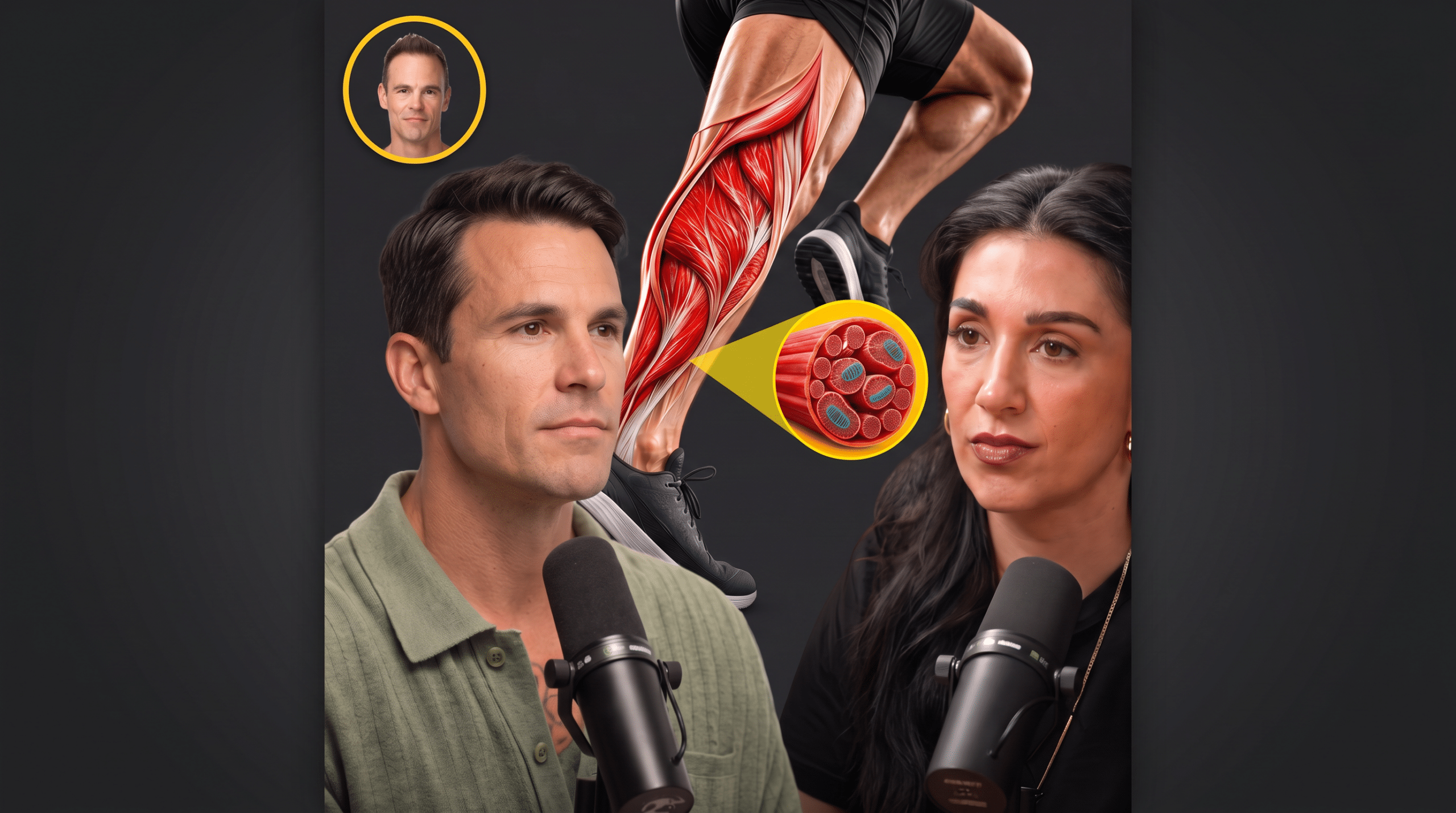
Viral headlines claim 26.2 miles strips protective insulation from your brain.
Truth: partly yes, with a twist that should calm nerves.
Stick around for a surprising post-workout window, the ideal interval format, and one weekly session worth protecting.
Jump to:
- What Marathon Brain Really Does to Your Myelin
- VO2 Max Is Far More Than Heart and Lungs
- Your Brain May Decide Whether You Get Fitter
- The Interval Format That Works Best
- Finding Your Bottleneck
- Ways to Amplify Training
- Is Anyone Truly a Non-Responder?
- Sleep Timing Beats Sleep Perfection
- One Framework for the Next Decade
What Marathon Brain Really Does to Your Myelin
Researchers scanned marathon runners with MRI before the race, 48 hours after, and two months later.
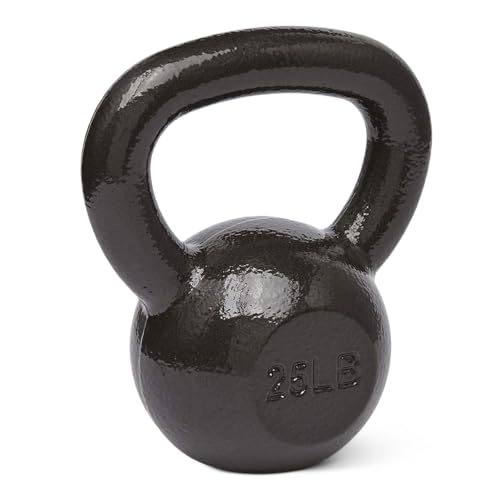
If you want something simple that actually works, this is one of the most effective tools I’ve used to build strength, conditioning, and endurance without needing a full gym setup.
- Full-body training with one weight using swings, squats, and presses
- Solid cast iron build that feels stable and lasts for years
- Comfortable grip that makes high-rep workouts easier to handle
They showed that up to two months after the marathon, they actually had reduced levels of myelin in the brain.
Myelin is the fatty coating that speeds neural transmission. Runners showed roughly a 20% reduction.
Brady is upfront about limitations.
It was a very small study and a small amount of runners, but still kind of interesting findings.
The Cognitive Fallout Is Temporary
A follow-up study checked whether thinking suffered too.
- Neural signaling: preserved
- Higher-level cognition: modestly impaired for about a month on the Stroop test versus controls
- Recovery: back to normal within a month or two
Marathons will not permanently shrink your brain. That would contradict everything known about exercise and brain health.
People who exercise, who actually do aerobic exercise, have larger brains, more gray matter than people who don’t.
A Fuel Shortage Theory
Researchers speculate that late-race glucose depletion forces the brain to burn fatty acids from myelin.
If glucose runs low late in that marathon, your body needs an energy source.
Speculative is the key word. Nobody has yet proven this mechanism, and studies testing fueling strategies are missing.
If you want something simple that actually works, this is one of the most effective tools I’ve used to build strength, conditioning, and endurance without needing a full gym setup.
- Full-body training with one weight using swings, squats, and presses
- Solid cast iron build that feels stable and lasts for years
- Comfortable grip that makes high-rep workouts easier to handle
Brady’s practical, hypothesis-level tips:
- Fuel adequately before and during the race
- Consider omega-3s in the months beforehand (he doubled his DHA and EPA dose)
- Skip heavy drinking at the finish-line party
- Rest your brain afterward
Nicola wondered whether ketones might spare myelin. Brady called it “an interesting hypothesis” that still needs testing.
VO2 Max Is Far More Than Heart and Lungs
VO2 max is the top rate at which your body absorbs oxygen and converts it into ATP. Think of an oxygen cascade with several links:
- Lungs pull in oxygen
- Heart pumps oxygenated blood
- Blood vessels deliver it
- Capillaries pass it to muscle
- Mitochondria produce energy
Your ability to use oxygen is literally just fundamental to life, to doing things.
Brady says everyday living requires roughly 15 to 20 ml/kg/min. Dip below, and even routine tasks feel like maximal efforts, which is how frailty begins.
The Number to Chase
Average 65-year-old women land around 20 to 30. Average is not the goal.
Strive for 50 at 50. That’s a really, really good goal to shoot for.
Women typically run about 10 points lower, so 40 to 50 at age 50 works as a target. Brady cited a recent study of lifelong female masters athletes whose VO2 max sat 10 to 15 points above sedentary peers at every age, though it still declined.
If you want something simple that actually works, this is one of the most effective tools I’ve used to build strength, conditioning, and endurance without needing a full gym setup.
- Full-body training with one weight using swings, squats, and presses
- Solid cast iron build that feels stable and lasts for years
- Comfortable grip that makes high-rep workouts easier to handle
His advice: start investing in that VO2 max bank account early.
Your Brain May Decide Whether You Get Fitter
Working muscles release myokines, signaling molecules that tell the brain to adapt. In mice, blocking specific brain regions erased endurance gains.
Mouse findings do not automatically transfer to people. Brady stressed this himself, though many brain-body mechanisms overlap across species.
The mouse data pointed to the first one to two hours after exercise as the critical window. His takeaway: downshift before diving into demanding mental work.
Just give your body like 30 to 45 minutes to sort of just downshift.
Options include non-sleep deep rest or a yoga-style savasana. Doomscrolling is out.
The Interval Format That Works Best
The Norwegian 4×4 is among the most heavily researched protocols, benefiting everyone from people with diabetes to trained athletes. Its secret is duration.
If you want something simple that actually works, this is one of the most effective tools I’ve used to build strength, conditioning, and endurance without needing a full gym setup.
- Full-body training with one weight using swings, squats, and presses
- Solid cast iron build that feels stable and lasts for years
- Comfortable grip that makes high-rep workouts easier to handle
You’re spending four minutes at 90% of your max oxygen consumption, which is basically you’re just pushing up against that ceiling for the entire time.
Tabata rounds and one-minute sprints end before your heart rate peaks. Intervals of two to eight minutes, repeated four to eight times, target VO2 max best.
No lab? Aim for 85 to 90% of max heart rate, or rely on perceived exertion, which tracks surprisingly well.
Finding Your Bottleneck
Cardiac output limits VO2 max in younger and elite athletes. Among older or untrained adults, muscle oxygen extraction and mitochondrial function may matter more.
One rough clue: lactate climbing during very easy effort may signal poor fat burning. “Mitochondrial dysfunction” is a broad, often abused term, though, so treat any home test as a hint rather than a diagnosis.
Ways to Amplify Training
- Heat exposure: sauna or hot baths after training may boost hemoglobin mass and VO2 max, mimicking some altitude effects
- Post-exercise ketones: early studies suggest gains in VO2 max and blood vessel function
- Iron awareness: runners destroy red blood cells with each footstrike, so iron status deserves attention
- Basics: sleep, protein, and carbohydrates after workouts
Heat and ketone findings are still emerging, so consider them add-ons rather than replacements for training.
Is Anyone Truly a Non-Responder?
Some people see no VO2 max gain after eight weeks of intervals. Brady is skeptical of the label.
If you want something simple that actually works, this is one of the most effective tools I’ve used to build strength, conditioning, and endurance without needing a full gym setup.
- Full-body training with one weight using swings, squats, and presses
- Solid cast iron build that feels stable and lasts for years
- Comfortable grip that makes high-rep workouts easier to handle
I don’t believe that non-responders to training actually exist.
Something always adapts, even if the one metric measured stays flat. Genetics and blood markers like IGF-binding protein appear linked to trainability.
Still, you are not born a non-responder. A bigger training dose usually produces results.
Sleep Timing Beats Sleep Perfection
Brady sees consistency overtaking duration as sleep science’s biggest theme. Six to nine hours is a workable range, so stop agonizing over seven versus eight.
Going to bed at the same time every day and especially waking up at the same time every single day, that just really is going to synchronize your circadian rhythms.
A steady exercise schedule may also help anchor your body clock when traveling.
One Framework for the Next Decade
Brady champions high-intensity intervals while arguing the zone 2 craze got overblown. Exercise snacks like stair sprints still count, but they will not carry you alone.
If you’re really saying, I’m going to have a VO2 max of 50 at age 50, just doing the exercise snack stuff isn’t going to cut it.
His closing prescription adds one long, easy session to your hard intervals.
If you want something simple that actually works, this is one of the most effective tools I’ve used to build strength, conditioning, and endurance without needing a full gym setup.
- Full-body training with one weight using swings, squats, and presses
- Solid cast iron build that feels stable and lasts for years
- Comfortable grip that makes high-rep workouts easier to handle
Make sure that at least once a week you are going and doing a workout that is between 60 and 90 minutes.
Low-intensity sessions build fat metabolism and mitochondrial function while bathing the brain in extended blood flow. Outdoors beats the treadmill.