For years, the 500-pound deadlift remained an elusive milestone—a weight that felt almost insurmountable.
Today, that same weight serves as little more than a warm-up, manageable for 12-plus reps on any given training day.
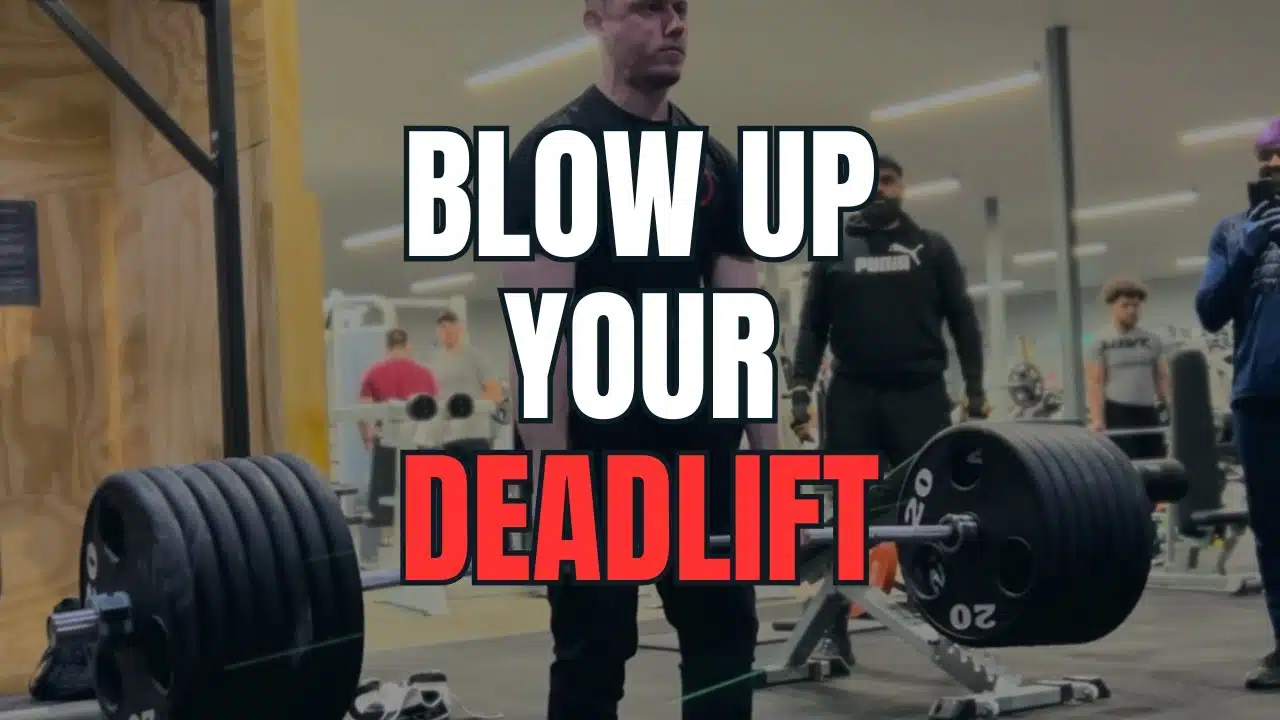
The journey from struggling with five plates to confidently pulling 661 pounds at around 200 pounds bodyweight wasn’t just about getting stronger—it was about training smarter.
What follows is a distillation of over a decade of trial, error, and coaching hundreds of lifters to massive deadlift numbers, breaking down exactly what works and what’s holding most people back.
Jump to:
- The Plateau That Lasted Years
- The Common Mistakes Keeping You Weak
- Why Twice Per Week Changes Everything
- Less Volume Than You Think
- The Intensity Mistake That Ruins Progress
- Technical Mastery: The Five-Step Setup
- Smart Accessory Selection
- Pro Tips From Years in the Trenches
- Ready-Made Program Templates
- The Path Forward
The Plateau That Lasted Years
Progress came relatively quickly at first. Hitting 405 pounds within about a year of lifting felt like natural progression. Five plates followed within two years.
Then came the wall. Three to four years stuck at the same weight, attempting it over ten times with repeated failures.
I got stuck at five plates for years. I think literally like three, four, five years. And I tried it like 10 plus times and I kept failing it.
The pattern became frustratingly familiar: build up to a peak weight, capture it once, then spend months unable to replicate that performance. Sound familiar?
The Common Mistakes Keeping You Weak
Most intermediate lifters follow a predictable path to stagnation. They deadlift once per week with crushing intensity, running generic programs that promise results but deliver burnout.
The technique feels inconsistent week to week. Recovery never quite catches up.
Then there’s the accessory work—bent-over rows, Romanian deadlifts, stiff-legged deadlifts, good mornings—all piling stress onto an already fried lower back.
The result? Constant fatigue without adaptation.
Why Twice Per Week Changes Everything
After coaching close to a thousand lifters, including multiple six and seven-plate deadlifters, one pattern emerges consistently: two deadlift sessions per week is the sweet spot.
The transition should be gradual. Start with one regular deadlift session and one Romanian deadlift day.
For the primary day, perform a top set at RPE 5-9, followed by two or three back-off sets at 60-70% intensity. The Romanian deadlifts bridge the gap—just one to three sets of 5-8 reps to maintain skill without excessive fatigue.
The problem with only deadlifting once a week like how you do right now, it’s really really hard to do enough deadlifting to get really good at the movement.
When you only lift once weekly, adaptations fade between sessions. You’re constantly rebuilding rather than building forward.
Once comfortable with this split, progress to more specific variations: pause deadlifts, deficit deadlifts, or banded variations on the secondary day.
Less Volume Than You Think
Contrary to popular belief, massive deadlift volumes aren’t necessary for strength gains. Five to ten working sets per week is sufficient for most lifters.
A minimal effective approach might look like this:
- Primary day: One top set plus two back-down sets
- Secondary day: Two sets of Romanian deadlifts
That’s five total sets. If it drives progress, don’t add more.
Think of training volume as medication. A doctor prescribes the minimum effective dose—enough to heal without causing harmful side effects. Training works identically.
We want to do just enough volume that we can accumulate sufficient stimulus to get stronger, but we don’t want to do so much volume that we accumulate the negative effect of fatigue that masks our performance.
Start with five sets weekly. If strength increases consistently and recovery feels manageable, stay there. Only increase volume when progress stalls and recovery feels complete.
The Intensity Mistake That Ruins Progress
This might be the most critical insight: you’re probably training way too heavy.
Heavier doesn’t equal better. It equals more stress, and stress must be managed carefully.
Consider this example: at a 661-pound max, secondary deadlift sessions used only 165-170 kilos (roughly 365-375 pounds)—approximately 55-60% of the one-rep max.
Now, why was I doing it that light? Because I determined that that weight was enough stimulus for my primary heavy day here to get stronger.
If lighter weights produce strength gains, why add unnecessary fatigue with heavier loads? The weight on the bar doesn’t matter—the stress response does.
Optimal intensity distribution looks like this:
- Top sets: RPE 5-8 (leaving 2-5 reps in reserve)
- Volume work: 60-75% of estimated 1RM for sets of 4-6 reps
- Never train to failure
That volume range leaves 5-10+ reps in reserve. It might feel light initially, but if it produces adaptation, the absolute load is irrelevant.
Why Failure Training Is Counterproductive
Training to failure on deadlifts offers minimal additional stimulus while generating disproportionate fatigue. It’s simply not a worthwhile trade-off.
Multiple 600+ pound deadlifts were achieved without ever approaching failure in training. In one training block, the heaviest pre-max work was 250 kilos for a triple at RPE 6-7, yet a 300-kilo pull followed successfully.
Technical Mastery: The Five-Step Setup
With programming variables optimized, technique becomes the force multiplier. The Starting Strength five-step deadlift setup provides an excellent framework—simple, repeatable, efficient.
One additional cue proves invaluable: align your knees with the inside pits of your elbows. This alignment ensures proper hip height, preventing the common fault of hips shooting up prematurely.
When positioned correctly, hips and knees extend simultaneously rather than sequentially.
Master the Slack Pull
Too many lifters yank the bar, letting it control them rather than the reverse. The solution is learning to remove slack before the actual pull.
Pulling slack just means bending that bar upwards as much as you can without the plates leaving the floor.
Apply upward tension until the bar bends slightly and the weight feels ready to leave the floor—about 90% of maximal force. Then simply push your feet through the floor for the remaining 10%.
The bar should feel like it’s quivering, begging to be lifted.
Sumo Versus Conventional: Keep It Simple
Forget complex analyses of limb ratios, hip anatomy, and biomechanical angles. Ask two questions:
- Which stance feels strongest?
- Which allows more training volume without excessive fatigue?
The stance that permits the most productive training over time is the correct choice. For some, that’s conventional. For others, sumo. There’s no universal answer.
Smart Accessory Selection
Accessories should target genuine weaknesses, not randomly selected exercises that look impressive. Most lifters struggle with start position, making pause deadlifts exceptionally valuable.
Pause one inch off the floor for a full second. This reinforces proper positioning because maintaining a pause in poor position is nearly impossible—you’ll naturally self-correct.
Other high-value variations include:
- Romanian deadlifts: Teaches hip hinge, bridges frequency gaps
- Mini-band deadlifts: Encourages explosive pulls and thoracic extension
- Regular deadlifts: When technique is solid, more practice beats variety
Chest-Supported Back Work Changes Everything
Here’s the pro tip that might matter most: perform all back accessories chest-supported. This spares the lower back for actual deadlifting.
Build your accessory program around:
- Wide overhand-grip row: Targets upper back, traps, rhomboids
- Narrow neutral-grip row: Emphasizes lats
- Wide-grip pulldown: Upper lat fibers
- Narrow-grip pulldown: Lower lat fibers
- Two bicep movements: One with shoulder flexion (preacher curl), one with extension (incline curl)
- Hamstring isolation: Seated or lying curls
Train these movements for 2-3 sets of 4-10 reps at RPE 8-10. Push them hard—they’re hypertrophy-focused, not technical practice.
Pro Tips From Years in the Trenches
Keep the lower back fresh. Eliminate bent-over rows, heavy good mornings, and other non-supported lower back work. Your deadlift provides sufficient spinal loading.
Even squat volume may need adjustment. Long-femured lifters who fold over significantly might benefit from more machine-based leg work like hack squats or leg presses.
Build Resilience in Vulnerable Positions
If lower back tweaks plague your training, incorporate resilience work like Jefferson curls. Training positions you feel vulnerable in builds tolerance and reduces injury risk.
Stronger spinal flexion equals greater durability when form breaks down under maximal loads.
Lighter Is Often Better
The most productive training blocks featured surprisingly light weights. Primary days used top triples at RPE 5-7, volume work at 60% for sets of four, and secondary days stayed extremely light.
When I was at my strongest and I was very close to a 700 lb deadlift, I was doing my volume work on my primary day between 405 and 455 for sets of four.
At that point, 405 pounds could be lifted for 30+ reps. Yet sets of four at that weight drove progress toward 700 pounds.
Your body doesn’t recognize the plates on the bar—only the adaptive stress. If light weight produces gains, it’s definitionally heavy enough.
Ready-Made Program Templates
Two free programs synthesize these principles for immediate implementation.
Version A: Transitioning to Twice Weekly
Tuesday (Primary):
- Conventional or sumo deadlift: 1 top set of 2 reps at RPE 5 (progress to RPE 9 over weeks)
- Back-off sets: 3 sets of 4 reps at 60% estimated 1RM
Friday (Secondary):
- Romanian deadlift: 2 sets of 5-7 reps at RPE 7-8
Accessories (both days): Wide-grip row, neutral-grip row, pulldowns, hamstring curls, bicep work—all for 2-3 sets at RPE 9-10.
Version B: Experienced Twice-Weekly Lifters
Tuesday: Same as Version A (can add a fourth back-off set or increase percentage to 63-65%)
Friday:
- Pause deadlift (1″ off floor): 1 set of 4 reps at RPE 6
- Regular deadlift back-offs: 3 sets of 6 reps at 16% less than pause weight
Accessories: Identical to Version A
The Path Forward
Building a 500-pound deadlift—or making it feel like a warm-up—requires patience with lighter loads, strategic frequency increases, and ruthless prioritization of recovery.
The principles are simple: train twice weekly, keep volume moderate, intensity submaximal, and accessories targeted. Protect your lower back. Build your back bigger.
Most importantly, abandon the belief that heavier training equals faster progress. Find your minimum effective dose, ride it until it stops working, then adjust minimally.
The barbell doesn’t care about your ego. It responds to intelligent stress management and consistent execution.