Strong, mobile hips aren’t just nice to have—they’re essential for moving well, squatting deep, and keeping pain at bay.
But modern life quietly steals that mobility from us.
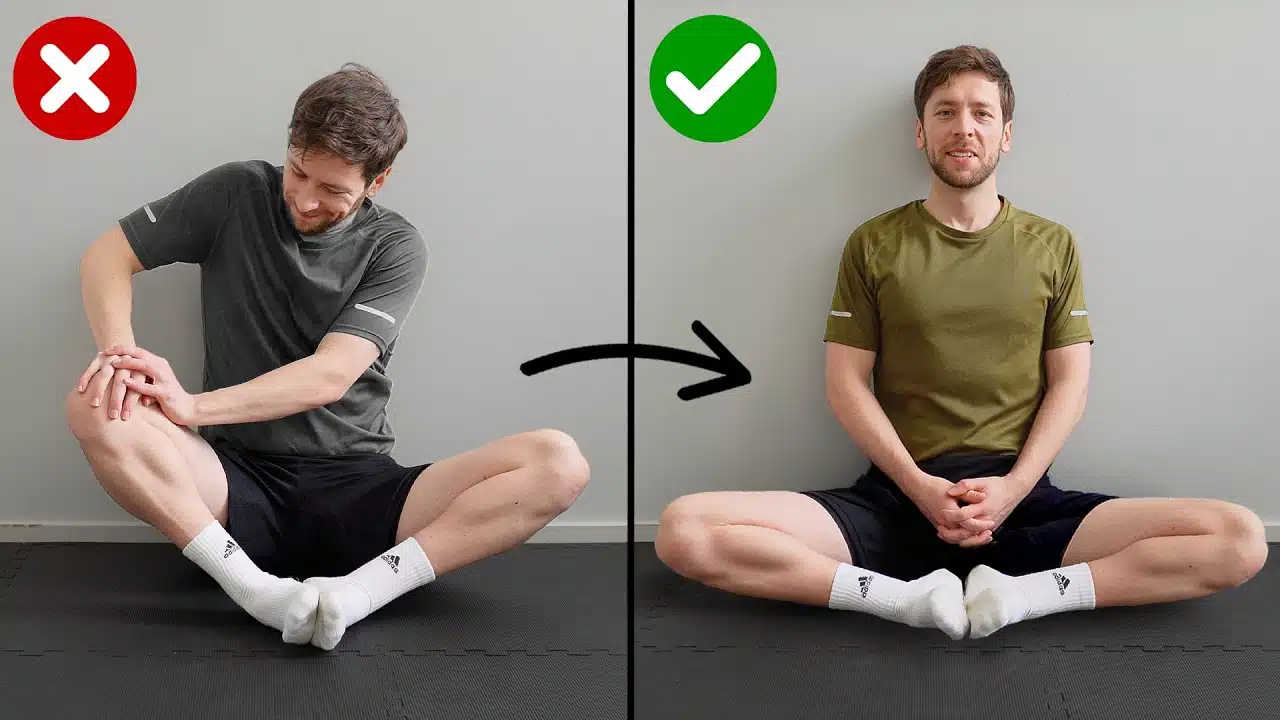
Hours spent sitting, moving only in straight lines, and rarely accessing the full range hips were built for leaves most people stiff, blocked, and frustrated.
In a recent video, mobility expert and coach breaks down exactly why hips get stuck—and shares two powerful drills that restore strength and freedom of movement for the long haul.
Jump to:
Why Your Hips Feel Locked Up
Hips have three primary jobs: flexion, external rotation, and internal rotation.
When these ranges aren’t used regularly, the body loses access. Stiffness sets in as a natural consequence of underuse.
Most people respond with hip flexor stretches, 90/90 positions, or endless glute stretches. But these are band-aid solutions to a deeper issue.
“The truth is those are really just band-aid solutions to a much bigger problem,” he explains in the video.
Real change requires active loading and controlled movement through the ranges hips have lost.
Drill #1: Hip Airplanes for Rotation
Hip airplanes address rotation head-on by loading the hip with bodyweight and moving deliberately through external and internal rotation.
This isn’t passive stretching—it’s rotation in a real-world setting.
By actively loading the hip with our body weight and moving through external and then internal rotation, we’re actually practicing rotation in a real world setting.
Done correctly, you’ll feel a strong stretch mixed with muscle tension. On the outside of the hip during internal rotation. On the inside of the leg during external rotation.
How to Perform Hip Airplanes
- Stand next to a chair or wall for balance support
- Shift weight onto one leg
- Rotate the lifted hip through its full range—first externally, then internally
- Focus entirely on hip movement, not staying upright without support
- Move slowly and with control
Just 10 reps per side, once daily, is enough to create meaningful change.
No need to overdo it. Consistency wins over volume here.
Drill #2: Deep Lunge Lifts for Hip Flexion
Even with great rotation, tight or underactive hip flexors will still cause pinching, discomfort, or that frustrating “block” when trying to move deeper.
Deep lunge lifts solve this by loading the hip in a stretched position, creating both lengthening and strengthening at the same time.
To effectively open up the front of the hip and actually create lasting change, we need to once again load the hips and put them in a stretched position.
How to Perform Deep Lunge Lifts
Beginner variation:
- Start with a shorter stance
- Use hands for support on the floor or a bench
- Straighten the back leg to feel a strong stretch through the front of the thigh and lower abdomen
- Perform 10 reps for 2 sets
Progression:
- Gradually lengthen your stance as comfort improves
- Keep tension manageable and controlled—don’t force impossible ranges
- Eventually progress to hands-free execution
That stretching and strengthening effect running from upper thigh to lower abdomen? That’s exactly what creates lasting change.
Bonus Move: Hip CARs for Long-Term Health
Hip CARs—Controlled Articular Rotations—are among the best movements for building strength, control, and keeping hips pain-free over time.
They activate deep hip stabilizers that are crucial for mobility and resilience.
How to Perform Hip CARs
- Start in an all-fours position
- Lift one leg out to the side, then back, then down
- Complete 10 controlled circles
- Pause and reverse direction: back, out to the side, down
You should feel a light burn in the side of the glute. That’s the target sensation.
Two Common Mistakes to Avoid
Mistake #1: Moving from the back or torso
All movement should originate from the hip. Keep your core engaged and back as still as possible.
Mistake #2: Not pushing the range
Push as far as you can comfortably. Opening up the hip fully is what unlocks new range and builds lasting mobility.
Really trying to open up your hip will help you unlock that new range and build lasting mobility.
The Complete Hip Mobility Protocol
This isn’t about throwing random stretches at stiff hips and hoping something sticks.
It’s a systematic approach that addresses the root causes of hip stiffness.
Step 1: Restore rotation with hip airplanes
Hips that can’t rotate will always feel blocked. This drill brings rotation back.
Step 2: Work extension and strength with deep lunge lifts
Unlock tight hip flexors while simultaneously building strength in stretched positions.
Step 3: Add hip CARs as a bonus
Keep hip joints healthy and moving well for the long term by activating deep stabilizers.
How Often Should You Do These Drills?
Daily practice is fine, but two to three times per week is more than enough for most people to see real improvements.
Consistency matters more than frequency. Small, regular doses of quality movement beat occasional marathons every time.
Why This Approach Works
These drills work because they respect how the body adapts.
Active loading teaches the nervous system that new ranges are safe. Controlled movement builds strength simultaneously with flexibility. And real-world positions ensure improvements transfer to daily life.
Passive stretching has its place, but it won’t create lasting change on its own. Mobility requires movement, not just stretching.
For anyone who sits frequently, struggles with deep squats, or simply wants hips that feel strong and free, these two drills—plus the bonus hip CARs—offer a clear, actionable path forward.
No gimmicks. No shortcuts. Just smart, evidence-informed movement that works.
Skimlinks Test