Building an impressive back doesn’t require fancy equipment or a gym membership.
According to fitness expert and movement specialist, the pull-up remains one of the most effective exercises for developing a wide, chiseled back—but only if done correctly.
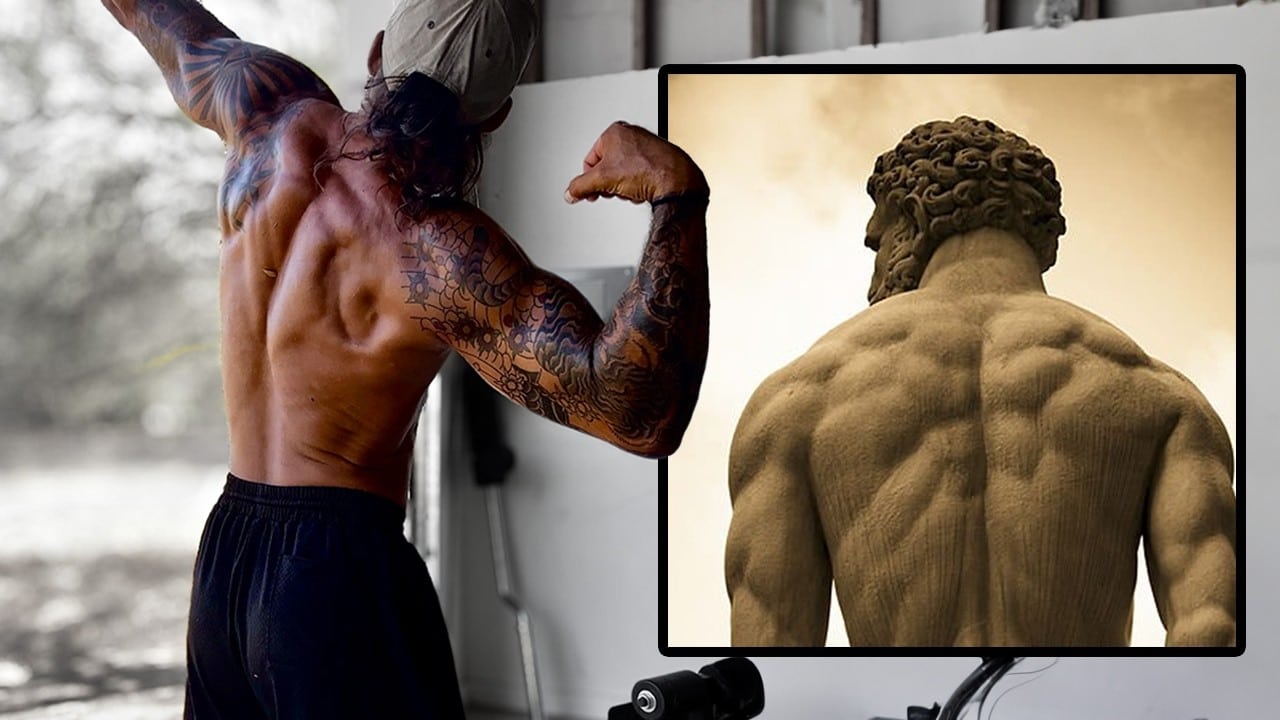
Most people sabotage their progress by prioritizing quantity over quality, swinging their legs and hunching their shoulders just to hit arbitrary rep counts.
Here’s what actually works, backed by years of coaching experience and the physiques of calisthenics athletes and climbers who’ve mastered bodyweight training.
Jump to:
Why Pull-Ups Trump Traditional Back Exercises
Deadlifts get all the glory when it comes to back development. But pull-ups offer something fundamentally different: relative strength.
This type of strength—the ability to control and move your own bodyweight—has been linked to better long-term health outcomes compared to raw absolute strength. It’s the difference between lifting heavy objects and actually being able to move intelligently through space.
The fascination with upper body pulling strength is in our DNA. Some of my son’s first instincts were to grab something above them and pull themselves up.
Ancient civilizations understood this instinctively. Greeks, Romans, and Chinese warriors all incorporated suspended bars or ropes into their training.
Modern calisthenics athletes and rock climbers prove the concept works. Their backs rival—and often surpass—those built in traditional weight rooms, developed primarily through hanging and pulling movements.
The Quality Control Problem
Most gym-goers believe they’re entitled to 10 pull-ups simply because they’ve been training for a while. This assumption destroys progress.
Ten quality pull-ups represents genuine achievement, especially for anyone weighing more than 150 pounds. Yet countless people claim this number while performing what amounts to elaborate kipping movements with minimal back engagement.
This was me back in the day. I’d do about five or six good pull-ups and then I do the rest by swinging my legs and hunching my shoulders at the top.
Everything changed with standardized form: no leg movement, squeezing back muscles at the top, dead hang at the bottom.
My back gains went through the roof when I standardized my form.
Realistic Strength Benchmarks
Forget what you see on social media. Here are honest targets based on clean execution:
- 5 clean reps: Your foundational goal that establishes genuine pulling strength
- 10 clean reps: Nobody will mistake you for someone who doesn’t train seriously
- 15 clean reps: Places you in the top 1% of athletes, with visible back development including the coveted “Christmas tree” lower back definition
Context matters enormously. A 200-pound athlete performing 10 strict pull-ups demonstrates significantly more relative strength than a 150-pound person hitting the same number.
While elite calisthenics athletes can perform 30+ reps, they typically weigh considerably less. For average gym-goers, 15 quality reps represents exceptional achievement.
The Active Hang: Your Missing Link
Point A is a dead hang. Point B is chin clearing the bar. Simple enough, right?
Not quite. The active hang might be the most overlooked aspect of proper pull-up execution.
This position preloads the lats and shoulder blade stabilizers, ensuring proper muscle recruitment throughout the movement. Gymnasts and climbers do this naturally, but desk workers lose this neurological connection entirely.
How to Establish an Active Hang
- Shoulders pulled down and back (depressed and retracted)
- Core engaged and braced
- Body tension maintained from fingertips to toes
With practice, this position becomes automatic. Your nervous system learns to recruit the right muscles without conscious thought.
Owning the Top Position
Getting your chin over the bar isn’t enough. The top position requires full lat and upper back engagement.
Chest open, shoulders down, core still engaged. This is a position to own, not just touch and abandon.
To really get good at pull-ups, pause at the top of each rep.
The Eccentric Advantage
Rushing through pull-ups creates two problems: limited muscle growth and increased injury risk.
Elbows and shoulders bear the brunt of poor form and forced reps. Slow, controlled descents protect joints while maximizing hypertrophy.
Eccentric contractions—the lowering phase—are where most muscle building occurs. This portion of the movement also offers the greatest control, allowing you to reinforce proper motor patterns with each rep.
Count to three on every descent. Feel the lats engage throughout the entire range of motion. This discipline separates people who build impressive backs from those who merely accumulate random reps.
Programming for Consistent Progress
Complexity isn’t necessary. Consistency is.
One submaximal set daily equals seven sets weekly—enough volume to drive adaptation without accumulating excessive fatigue. For those preferring fewer training days, two to three sets performed several times weekly produces similar results.
Advanced trainees can push toward 10 sets per week as recovery capacity improves.
What If You Can’t Do Five Pull-Ups Yet?
Use resistance bands to achieve a minimum of five quality reps per set. Apply the same programming approach, gradually reducing band assistance as strength develops.
The band is a tool, not a crutch. Your goal remains performing unassisted pull-ups with impeccable form.
The Long Game
Wide backs don’t materialize overnight. They emerge from thousands of reps performed over years.
Slow, steady progress always wins out.
Establishing one place to hang—a doorway bar, tree branch, or playground equipment—provides everything needed to develop an impressive physique without stepping into a gym.
Pull-ups demand more than brute strength. They require intelligence: better shoulder blade connection, integrated core stability, developed stabilizer muscles, and precise coordination.
Master these elements through consistent, quality practice. The aesthetic results follow naturally.