A viral fitness post recently claimed that cutting carbs could slash muscle growth by more than four times—even when protein intake stays high.
The post, from account ‘fitlabx,’ cited a 2021 study suggesting low-carb diets force the body to burn amino acids for energy instead of using them to build muscle.
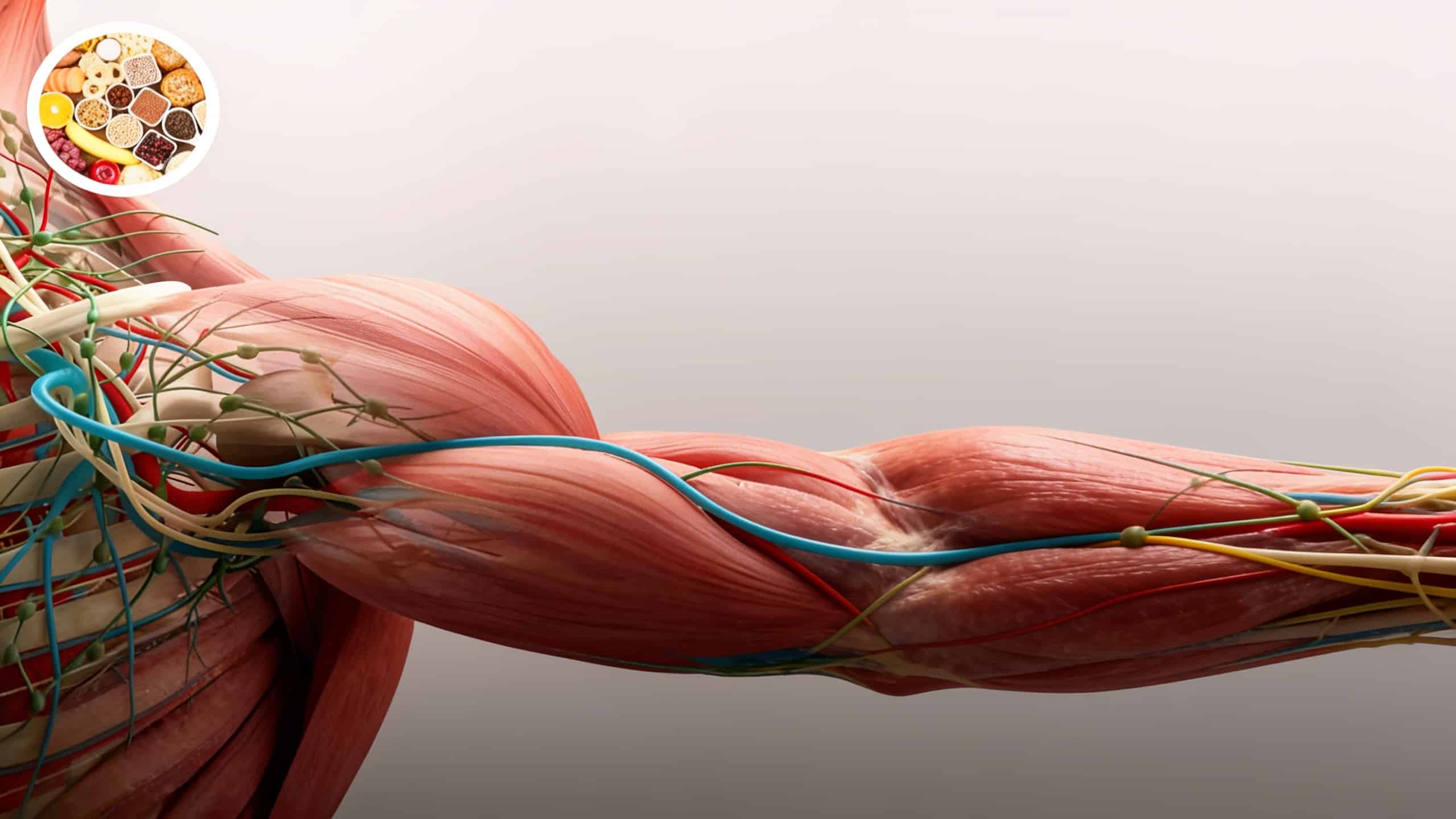
It’s a bold claim that’s sparked heated debate across fitness communities.
But does the science really back up such a dramatic warning, or is this another case of cherry-picked research being blown out of proportion?
Jump to:
- What the Original Study Actually Found
- The 2026 Meta-Analysis That Changes Everything
- The Performance Problem Nobody’s Talking About
- How Carbs Support Muscle Growth (Beyond Direct Synthesis)
- The Metabolic Adaptation Counterargument
- Breaking Down the “4X Less Muscle Growth” Claim
- What Sports Nutritionists Actually Recommend
- The Bottom Line on Carbs and Muscle Growth
What the Original Study Actually Found
The study in question, published in January 2021 and identified by PMID 33530512, explored how carbohydrate restriction affects amino acid metabolism during resistance training.
Researchers proposed that when carbohydrate intake drops too low, the body increasingly oxidizes branched-chain amino acids (BCAAs) for energy. This metabolic shift theoretically leaves fewer BCAAs available to trigger muscle protein synthesis—the biological process that builds new muscle tissue.

If you want something simple that actually works, this is one of the most effective tools I’ve used to build strength, conditioning, and endurance without needing a full gym setup.
- Full-body training with one weight using swings, squats, and presses
- Solid cast iron build that feels stable and lasts for years
- Comfortable grip that makes high-rep workouts easier to handle
BCAAs, particularly leucine, play a critical role in activating mTORC1, a cellular signaling pathway that acts like a master switch for muscle growth. When carbs are scarce and glycogen stores run low, the body may prioritize burning these amino acids as fuel rather than shuttling them toward muscle building.
On paper, the mechanism sounds plausible. But a single study examining metabolic pathways doesn’t tell the whole story about real-world muscle growth.
The 2026 Meta-Analysis That Changes Everything
A comprehensive 2026 systematic review and meta-analysis published in Sports Medicine directly challenges the viral post’s central claim.
Researchers analyzed 11 randomized controlled trials comparing higher versus lower carbohydrate intakes during resistance training programs. Crucially, protein intake was matched between groups in all studies.
The results? No statistically significant difference in muscle hypertrophy between carb intake levels.
The pooled analysis revealed a standardized mean difference of just 0.15 with a p-value of 0.23—meaning any observed differences were likely due to chance rather than carbohydrate intake itself.
If you want something simple that actually works, this is one of the most effective tools I’ve used to build strength, conditioning, and endurance without needing a full gym setup.
- Full-body training with one weight using swings, squats, and presses
- Solid cast iron build that feels stable and lasts for years
- Comfortable grip that makes high-rep workouts easier to handle
The researchers concluded that carbohydrate intake is not an independent determinant of resistance training-induced muscle growth when total calories and protein requirements are adequately met. Translation: hit your protein targets and eat enough overall calories, and your carb intake probably won’t make or break your gains.
An Important Caveat About Ketogenic Diets
The meta-analysis excluded studies examining ketogenic diets—typically defined as carbohydrate intake below approximately 50 grams daily.
This exclusion matters because very-low-carb ketogenic approaches may operate under different metabolic rules than moderate low-carb diets.
Therefore, while moderate carb reduction doesn’t appear to hinder muscle growth, the jury remains partially out on extreme carbohydrate restriction.
The Performance Problem Nobody’s Talking About
Even if lower carb intake doesn’t directly impair muscle protein synthesis when protein is adequate, there’s another critical factor at play: training performance.
A 2023 study (PMID 37669420) found that athletes following low-carb diets experienced significantly reduced training volume and power output during strength sessions.
If you want something simple that actually works, this is one of the most effective tools I’ve used to build strength, conditioning, and endurance without needing a full gym setup.
- Full-body training with one weight using swings, squats, and presses
- Solid cast iron build that feels stable and lasts for years
- Comfortable grip that makes high-rep workouts easier to handle
This matters enormously because progressive overload—gradually increasing training volume, intensity, or weight—is arguably the single most important driver of muscle hypertrophy.
If cutting carbs means completing fewer reps, lifting lighter weights, or recovering more slowly between sessions, muscle growth will suffer regardless of what’s happening at the molecular level with amino acid oxidation.
Carbohydrates are the primary fuel source for high-intensity resistance training, and muscle glycogen depletion has long been associated with reduced performance capacity.
The indirect pathway matters just as much as direct biochemical effects. You can’t out-supplement poor training stimulus.
How Carbs Support Muscle Growth (Beyond Direct Synthesis)
Carbohydrates influence muscle building through multiple interconnected mechanisms:
- Insulin signaling: Carbs stimulate insulin release, which activates mTORC1 and has both anabolic (muscle-building) and anti-catabolic (muscle-protecting) properties
- Glycogen replenishment: Muscle glycogen stores fuel high-intensity contractions and support greater training volume
- Energy availability: Adequate carbs signal metabolic abundance, creating an internal environment conducive to tissue building
- Recovery enhancement: Faster glycogen restoration between sessions allows more frequent high-quality training
A 2022 review (PMID 35466234) noted that very-low-carb diets may blunt mTORC1 activity by reducing overall energy availability and insulin signaling—not just through amino acid oxidation.
The Metabolic Adaptation Counterargument
Advocates of ketogenic diets for strength training often point to metabolic adaptation as a key consideration.
If you want something simple that actually works, this is one of the most effective tools I’ve used to build strength, conditioning, and endurance without needing a full gym setup.
- Full-body training with one weight using swings, squats, and presses
- Solid cast iron build that feels stable and lasts for years
- Comfortable grip that makes high-rep workouts easier to handle
A commentary published in PMC (PMC1373635) argues that very-low-carb diets can actually spare muscle protein through metabolic adaptations that occur after several weeks of carbohydrate restriction.
The theory suggests that once fully keto-adapted, individuals develop alternative substrate utilization strategies. High protein intake during ketogenic diets may maintain muscle protein synthesis through increased amino acid availability, potentially offsetting the oxidation issue raised in the original study.
However, this adaptation period typically takes several weeks, and many people following low-carb approaches never reach full metabolic adaptation—they exist in a perpetual state of carbohydrate restriction without the compensatory benefits.
Breaking Down the “4X Less Muscle Growth” Claim
The viral post’s most sensational element—that low-carb diets produce over four times less muscle growth—deserves special scrutiny.
This specific quantitative claim doesn’t appear in the broader body of scientific literature, including the comprehensive 2026 meta-analysis that found no significant difference between carb intake levels.
Such a dramatic effect would represent one of the most powerful dietary interventions in sports nutrition history—yet it’s contradicted by pooled data from multiple randomized controlled trials.
If you want something simple that actually works, this is one of the most effective tools I’ve used to build strength, conditioning, and endurance without needing a full gym setup.
- Full-body training with one weight using swings, squats, and presses
- Solid cast iron build that feels stable and lasts for years
- Comfortable grip that makes high-rep workouts easier to handle
The discrepancy likely stems from several factors:
- Small sample size in the original study
- Short intervention duration before adaptation occurs
- Specific population characteristics not generalizable to all trainees
- Measurement methodology that may not reflect real-world muscle growth
- Cherry-picking a single finding from multiple measured outcomes
What Sports Nutritionists Actually Recommend
Exercise physiologists and sports nutritionists emphasize that the relationship between carbohydrates and muscle growth is nuanced—far more complex than social media soundbites suggest.
The evidence-based consensus points toward these practical takeaways:
- Protein sufficiency matters most: Adequate protein intake (roughly 1.6-2.2g per kg bodyweight daily) is the primary dietary determinant of muscle growth
- Total calories count: A modest caloric surplus supports optimal hypertrophy regardless of macronutrient distribution
- Individual variation exists: Some athletes thrive on lower carb intakes while others experience significant performance decrements
- Training quality trumps diet tweaks: Progressive overload and consistent high-quality training sessions drive growth more than macronutrient ratios
- Context determines requirements: Higher training volumes and intensities increase carbohydrate needs
For serious strength athletes and competitive bodybuilders, moderate to high carbohydrate intake remains the gold standard—not because carbs directly build muscle at the molecular level, but because they support the training intensity and volume that drive hypertrophy.
The Bottom Line on Carbs and Muscle Growth
The viral claim that low-carb diets cause four times less muscle growth oversimplifies complex science and contradicts comprehensive research.
While the 2021 study identifying increased amino acid oxidation during carbohydrate restriction describes a real metabolic phenomenon, the 2026 meta-analysis of 11 randomized controlled trials found no significant difference in actual muscle hypertrophy between higher and lower carb intakes when protein was adequate.
If you want something simple that actually works, this is one of the most effective tools I’ve used to build strength, conditioning, and endurance without needing a full gym setup.
- Full-body training with one weight using swings, squats, and presses
- Solid cast iron build that feels stable and lasts for years
- Comfortable grip that makes high-rep workouts easier to handle
The most likely scenario? Moderate carbohydrate reduction doesn’t dramatically impair muscle building for most people who eat enough protein and calories. However, very-low-carb ketogenic approaches may present more challenges, particularly for athletes pursuing maximum hypertrophy or high training volumes.
Rather than fixating on carbohydrate quantity, focus on training consistency, progressive overload, adequate protein intake, and sufficient total calories. Those fundamentals will determine success far more than whether carbs constitute 20% or 50% of daily intake.
For individuals following low-carb or ketogenic diets for health, preference, or body composition reasons: prioritize protein intake even more diligently, allow adequate adaptation time, and honestly assess whether training quality suffers.
Muscle growth isn’t impossible on lower carbs—but the evidence suggests you’re probably not leaving four times your potential gains on the table by cutting them.