Finding time for fitness can feel impossible when life gets hectic.
But what if three gym sessions per week could actually build a competitive physique—not just maintain what you’ve already got?
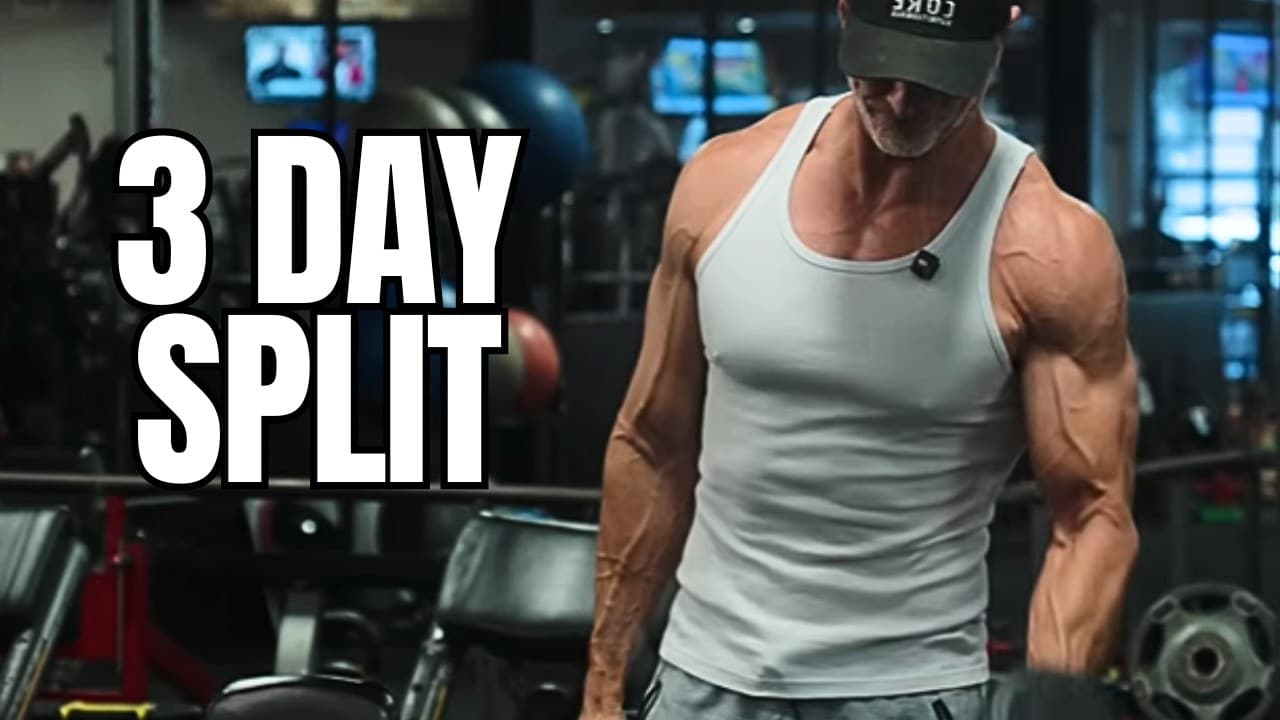
In a recent video, fitness coach Paul Revelia from Pro Physique tackled this exact question, sharing his proven strategy for maximizing muscle growth on a minimal time commitment.
His answer might surprise anyone who thinks more gym days always equals better results.
Jump to:
The Reality of Busy Schedules
Revelia doesn’t buy into the “we all have the same 24 hours” mentality. With three kids and a business to run, he understands that different life phases demand different approaches to training.
The key isn’t pretending everyone has identical circumstances—it’s working with what’s actually possible.

If you want something simple that actually works, this is one of the most effective tools I’ve used to build strength, conditioning, and endurance without needing a full gym setup.
- Full-body training with one weight using swings, squats, and presses
- Solid cast iron build that feels stable and lasts for years
- Comfortable grip that makes high-rep workouts easier to handle
What we really want to focus on is what we’re capable of doing, what’s possible for us and honestly, what we just want to do. You make things a priority that are important to you.
Revelia notes that many people training five or six days weekly aren’t maximizing those sessions anyway. Limited time often forces better focus and intensity.
Why Three Days Can Work Better Than Six
The secret lies in training frequency, not volume of gym days. With a properly structured three-day split, every major muscle group still gets hit twice weekly—a game-changer for growth.
Revelia discovered this approach in his 30s after working with coach Lane Norton. Switching from traditional body-part splits to twice-weekly frequency transformed his physique.
When I started training everything twice a week, it was like lighting a fire in my physique. I noticed my recovery improved, my strength improved, my density improved.
The Optimal Three-Day Split Structure
Day One: Full Upper Body
This session combines push and pull movements—shoulders, chest, back, and arms. It’s comprehensive and demanding, likely requiring around two hours to complete properly.
Training multiple major muscle groups in one session means longer workouts, but the trade-off allows fewer weekly gym visits.
Day Two: Full Lower Body
Squats, deadlifts, and other compound lower body movements take center stage. These exercises demand significant energy and recovery time between sets.
If you want something simple that actually works, this is one of the most effective tools I’ve used to build strength, conditioning, and endurance without needing a full gym setup.
- Full-body training with one weight using swings, squats, and presses
- Solid cast iron build that feels stable and lasts for years
- Comfortable grip that makes high-rep workouts easier to handle
Big compound lifts recruit massive amounts of muscle tissue, making them incredibly efficient for building strength and size.
Day Three: Power Combo Day
This session hits every major body part again with two exercises each:
- Two chest exercises
- Two shoulder exercises
- Two back exercises
- Two quad exercises
- Two hamstring exercises
- Glute-specific work for women
- Direct arm work for men (though compound movements already stimulate biceps and triceps)
The critical difference? This day emphasizes power training with lower reps (5-10 range) and heavier weights, contrasting with higher-volume work from earlier sessions.
Power and Hypertrophy Periodization
Revelia’s approach alternates between two rep ranges throughout the week. Power training (5-10 reps) builds neurological strength and teaches muscles to fire efficiently under heavy loads.
Hypertrophy training (10-20+ reps) creates metabolic stress and muscle damage that drives growth. Lower body exercises can handle even higher reps—sometimes 20-30—due to greater recovery capacity.
This type of alternation between training really allows you to train hard and recover. You’re also going to be hitting everything twice a week.
Using the same exercises on both training days enables accurate progress tracking. For instance, flat dumbbell press might be performed for 12-20 reps on Day One and 5-8 reps on Day Three.
If you want something simple that actually works, this is one of the most effective tools I’ve used to build strength, conditioning, and endurance without needing a full gym setup.
- Full-body training with one weight using swings, squats, and presses
- Solid cast iron build that feels stable and lasts for years
- Comfortable grip that makes high-rep workouts easier to handle
Tracking Progressive Overload
Progression happens on both ends of the spectrum. If 100-pound dumbbells move for 15 reps today, the goal is 16-17 reps next week. When 130-pound dumbbells go for six reps, aim for seven next session.
Once reaching 8-10 reps at a given weight, increase load. Reps might drop to four or five initially as the body adapts—that’s normal and part of neurological adaptation.
Track every major lift: squats, deadlifts, presses, rows, and pull-downs. Proper range of motion matters more than numbers on paper.
Nutrition Strategy for Longer Sessions
Extended training sessions demand intra-workout nutrition. Anything beyond 45-60 minutes benefits from carbohydrate supplementation during training.
Carbohydrates are protein-sparing—they prevent muscle breakdown while providing immediate energy. Halfway through a two-hour session, Revelia recommends:
- Fast-acting carbohydrates (simple sugars enter bloodstream quickly)
- Branch chain amino acids to support muscle preservation
- Additional caffeine for sustained energy and focus
Post-workout nutrition becomes equally critical. Planning a substantial meal immediately after training supports recovery and replenishes depleted glycogen stores.
If you want something simple that actually works, this is one of the most effective tools I’ve used to build strength, conditioning, and endurance without needing a full gym setup.
- Full-body training with one weight using swings, squats, and presses
- Solid cast iron build that feels stable and lasts for years
- Comfortable grip that makes high-rep workouts easier to handle
The Efficiency Mindset
Limited time forces intentionality. Revelia observes that knowing you have only 40 minutes creates laser focus.
You don’t realize how much you can get done in 40 minutes if you shut the hell up and go train and you push yourself between the weights, get some recovery and go.
Many five or six-day training programs include “fluff days” where intensity lags. Condensing training into three focused sessions often produces superior results compared to unfocused daily workouts.
Can You Really Build Competition-Level Physique?
Revelia’s definitive answer: absolutely yes. Building exceptional physiques on three weekly sessions requires commitment to intensity, proper programming, and adequate nutrition—but it’s entirely achievable.
The combination of twice-weekly muscle group frequency, power and hypertrophy periodization, and dialed-in recovery creates all necessary stimulus for growth.
Whether muscle-building or fat-loss phases, progress remains possible. Strength gains might slow during caloric deficits, but proper programming maintains muscle mass effectively.
This approach proves that quality trumps quantity when training variables align correctly. Three brutally effective sessions outperform six mediocre ones every time.
If you want something simple that actually works, this is one of the most effective tools I’ve used to build strength, conditioning, and endurance without needing a full gym setup.
- Full-body training with one weight using swings, squats, and presses
- Solid cast iron build that feels stable and lasts for years
- Comfortable grip that makes high-rep workouts easier to handle