Tracking macros can feel overwhelming at first, but it’s one of the most powerful tools for understanding what you’re actually eating.
In a recent video, fitness coach and content creator broke down the entire process—from weighing food to logging it in an app—and explained why this practice is so valuable, even if it’s not meant to last forever.
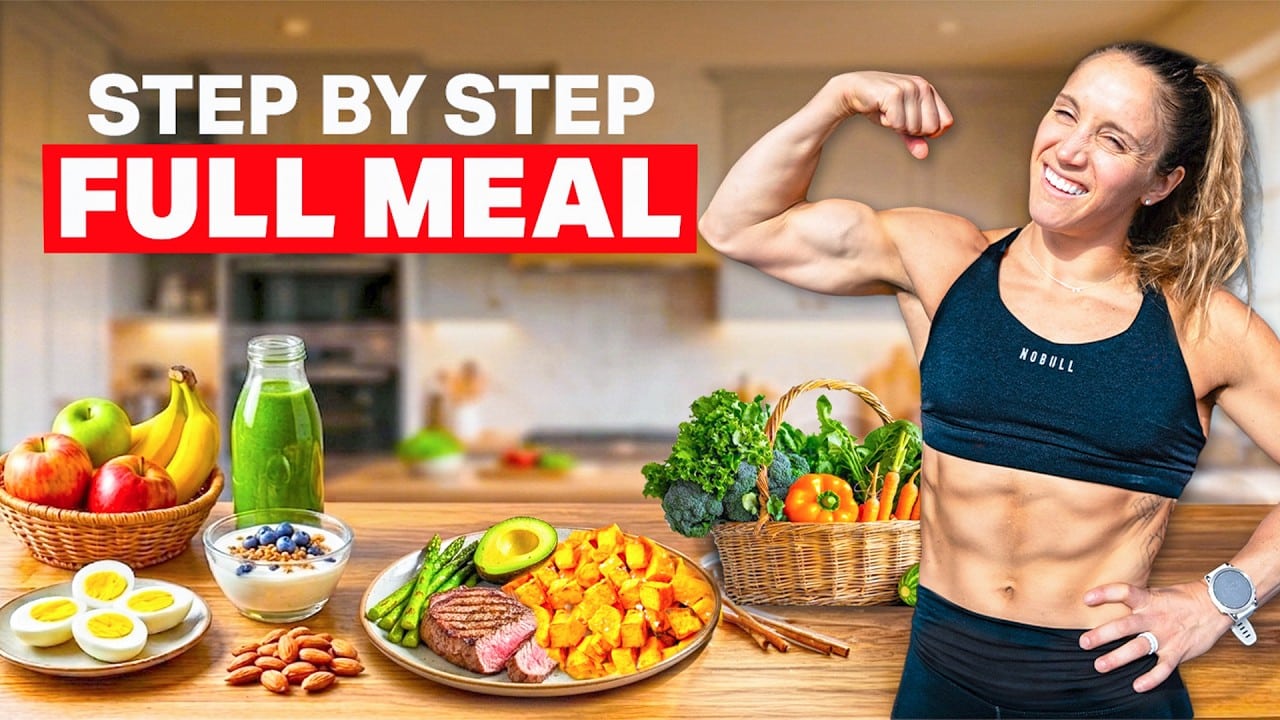
The demonstration centered around a simple, balanced meal: sweet potatoes, ground beef, asparagus, and avocado.
What seemed like a massive plate of food turned out to be just 457 calories with 40 grams of protein, 37 grams of carbs, and 17 grams of fat—a perfect example of how our eyes can deceive us when it comes to portion sizes and calorie content.
Jump to:
How to Use a Food Scale Properly
The process starts with a digital food scale, which can be purchased at any grocery store or ordered online for quick delivery.
Measuring in grams provides the most accuracy, though ounces work as well. The key step that many beginners miss is the “tare” function—zeroing out the scale after placing your plate on it so only the food weight is measured.
For the demonstration meal, 150 grams of sweet potatoes were added first. After hitting tare again, 120 grams of 93/7 lean ground beef were added next—the specific fat ratio matters when logging into tracking apps for accuracy.
Then came 50 grams of roasted asparagus, followed by another tare, and finally 50 grams of avocado for healthy fats.
You can see this is a giant dinner plate and it’s completely full.
The visual was striking—what looked like an enormous amount of food was actually under 500 calories.
Why We’re Terrible at Guessing Calories
Before revealing the numbers, viewers were challenged to guess the calorie and macro content of the plate.
Most people wildly miss these estimates, sometimes guessing as high as 800 calories or as low as 200.
Most people are honestly really bad at guessing when it comes to guessing our estimated calories, our estimated protein, and also our portion control.
This lack of accuracy isn’t a personal failing—it’s simply that humans aren’t naturally calibrated to estimate nutritional content. A palm-sized portion of beef might look like pure protein, but when logged, it often contains nearly equal amounts of fat depending on the cut.
Macro counting builds awareness around what’s actually on your plate, helping you understand food composition beyond just “healthy” or “unhealthy” labels.
The Volume Versus Calorie Revelation
One of the most eye-opening comparisons involved Oreos. That same 457-calorie plate could be replaced with just three or four cookies.
The cookies would provide zero protein, minimal fiber, and would cause blood sugar spikes followed by crashes—leaving you hungry again within minutes.
We could choose maybe a couple Oreos and get three Oreos or four Oreos for the entire size of this plate. And you know what’s going to happen when we eat those Oreos? They’re not going to satisfy us.
This creates a vicious cycle where another 500 calories get consumed shortly after, doubling total intake without ever feeling satisfied.
Volume eating—choosing foods that provide more physical bulk for fewer calories—becomes an obvious strategy once you see these comparisons side by side.
Building Balanced Meals That Actually Satisfy
Every meal should contain four components for optimal satiety and nutrition:
- Protein: Essential for muscle maintenance and the most satiating macronutrient
- Complex carbohydrates: Provide sustained energy and fiber
- Vegetables: Add volume, micronutrients, and additional fiber
- Healthy fats: Support hormone production and nutrient absorption
Meal prepping these components separately allows for mix-and-match flexibility throughout the day while maintaining consistent macro targets.
Cooking proteins, carb sources, and vegetables in batches means you’re not eating identical meals repeatedly, just rotating similar building blocks.
Removing Emotion and Food Labels
Macro counting shifts the focus from moral judgments about food to objective data.
Instead of labeling foods as “good” or “bad,” you’re simply working toward specific protein, carbohydrate, and fat targets that align with your goals.
We’re not looking at foods as good or bad. We’re trying to create these meals that are structured and well balanced.
This data-driven approach removes guilt and shame from eating decisions. A cookie isn’t “cheating”—it’s just a specific combination of macros that either fits your daily targets or doesn’t.
The emotional detachment makes sustainable eating patterns far easier to maintain than restrictive diet mentalities.
The Anti-Snacking Effect
An unexpected benefit of macro tracking is how effectively it eliminates mindless grazing.
When you have to pull out a scale, weigh two bites of peanut butter, and log it in an app, suddenly that handful of chips doesn’t seem worth the effort.
It’s like that’s a lot of effort for me to eat three or four chips. I don’t want to get the scale out.
This natural friction encourages sitting down for intentional, complete meals rather than constantly picking at food throughout the day.
For people who work from home with easy kitchen access, this awareness can be transformative—revealing snacking patterns you didn’t even realize existed.
Why You Shouldn’t Track Forever
Despite all these benefits, macro tracking is meant to be educational, not permanent.
The goal is reaching your target body composition or weight, then transitioning to maintenance where precise tracking becomes unnecessary.
The goal with tracking and macro counting is to help us reach a goal. So, we don’t want to be doing that long term and forever.
After weighing and measuring similar foods consistently for several weeks or months, visual estimation becomes remarkably accurate.
You’ll naturally recognize what a palm-sized portion of protein looks like, how much space one to two cups of carbohydrates occupy, approximately a fist of vegetables, and about a thumb’s worth of fats.
Building Long-Term Food Intuition
This learned intuition means you won’t need to carry a food scale to restaurants or family gatherings.
Life happens—social events, celebrations, spontaneous meals with friends—and pulling out tracking tools in these situations isn’t practical or enjoyable.
The education phase of macro counting provides the knowledge base to make reasonable estimates and maintain results without constant measurement.
Flexibility becomes possible while still maintaining body composition because you’ve internalized what appropriate portions actually look like.
Practical Tips for Getting Started
Beginning macro tracking doesn’t require expensive equipment or complicated apps.
- Purchase a basic digital food scale (most cost under $20)
- Download a free tracking app like MyFitnessPal or Cronometer
- Start by tracking just one meal per day to build the habit
- Focus on whole foods initially before worrying about fitting treats into macros
- Be patient with the learning curve—accuracy improves quickly with practice
Remember that consistency matters more than perfection. Being approximately correct every day beats being perfectly accurate occasionally.
The 457-calorie balanced meal demonstration proves that nutritious, satisfying eating doesn’t require deprivation or tiny portions—just awareness about what you’re actually consuming.