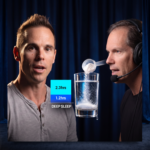
Sleep research has exploded in recent years, yet few voices carry more weight than Dr. Matthew Walker.
The UC Berkeley neuroscience professor recently sat down with Steven Bartlett on The Diary of a CEO podcast for a revealing 2-hour conversation that challenges common assumptions about sleep supplements and exposes surprising cardiovascular risks.
Walker, who directs the Center for Human Sleep Science at Berkeley and authored the bestselling book “Why We Sleep,” brought decades of research to the table—including insights that could reshape how people approach their nightly rest.
The November 17, 2025 episode covered everything from circadian rhythms to supplement effectiveness, delivering actionable science that goes far beyond “just get eight hours.”
Jump to:
The Sleep Expert’s Credentials Matter
Walker’s path to becoming one of the world’s most recognized sleep researchers spans continents and prestigious institutions.
After earning his PhD in Neurophysiology from the Medical Research Council in London, he served as a professor of psychiatry at Harvard Medical School before landing at UC Berkeley. His laboratory now focuses on how sleep affects memory consolidation, aging, metabolism, immunity, and mental health—research areas that impact virtually everyone.
With over 100 peer-reviewed scientific papers published, Walker’s work has influenced researchers, clinicians, professional sports teams, and health institutions globally. His 2017 book brought complex sleep science to mainstream audiences, changing how millions understand rest’s role in health and performance.
Magnesium’s Real Impact on Sleep
The podcast title itself raises eyebrows: “Magnesium Isn’t Helping You Sleep!”
Walker dove deep into supplement science during the conversation, addressing widespread beliefs about popular sleep aids. While magnesium supplements flood the wellness market with promises of better rest, Walker’s research-backed perspective offers a more nuanced view than most supplement companies would prefer.
Melatonin also came under scrutiny during the discussion. Rather than promoting these substances as magic bullets, Walker emphasized understanding why sleep problems occur before reaching for supplements—an approach that aligns with evidence-based medicine but contradicts billion-dollar marketing campaigns.
The 57% Heart Disease Connection
Perhaps most striking was Walker’s discussion of specific sleep habits that dramatically increase cardiovascular risk.
According to the podcast title, certain sleep patterns can increase heart disease risk by 57%—a staggering figure that puts poor sleep on par with other major cardiovascular risk factors like smoking or obesity.
This connection isn’t just correlational. Walker’s research examines the mechanisms linking sleep deprivation to cardiovascular disease, diabetes, and cognitive decline. Sleep affects blood pressure regulation, inflammation markers, glucose metabolism, and stress hormone levels—all critical factors in heart health.
The global sleep deprivation epidemic carries enormous economic costs beyond individual health. Poor sleep impacts workplace productivity, increases accident rates, and burdens healthcare systems with preventable chronic diseases.
Circadian Rhythms Beyond the Basics
Walker explored circadian rhythm science with Bartlett, moving past simple “morning person versus night owl” discussions.
Understanding circadian biology has practical applications for:
- Shift workers trying to maintain health despite irregular schedules
- Frequent travelers managing jet lag across time zones
- Performance optimization by timing activities to biological peaks
- Light exposure management to strengthen natural rhythms
Modern technology complicates circadian health. Screen time before bed doesn’t just delay sleep onset—it fundamentally disrupts biological signals that prepare bodies for rest.
REM Sleep Optimization
Walker’s expertise in REM (Rapid Eye Movement) sleep provided another focal point for the conversation.
REM sleep plays crucial roles in emotional regulation, creativity, and memory consolidation. While most people know REM involves dreaming, fewer understand how to optimize this sleep stage or recognize when they’re not getting enough.
Temperature, alcohol consumption, certain medications, and stress levels all significantly impact REM duration and quality. Walker’s research has mapped these relationships, offering evidence-based strategies rather than folk remedies.
Memory, Aging, and Immunity
The conversation touched on Walker’s broader research portfolio examining sleep’s wide-ranging health impacts.
Memory consolidation occurs primarily during sleep, with different sleep stages processing different types of information. Deep sleep helps transfer facts and experiences from short-term to long-term storage, while REM sleep integrates emotional experiences and promotes creative connections.
Aging and sleep have a bidirectional relationship. Poor sleep accelerates cognitive decline, while age-related changes disrupt sleep architecture. Walker’s work explores interventions that might break this cycle.
Immune function depends heavily on adequate sleep. Single nights of sleep deprivation can reduce natural killer cell activity—the body’s frontline cancer defense—by up to 70%.
Practical Takeaways from Decades of Research
Walker’s appearance wasn’t purely academic. The 2-hour-plus conversation delivered actionable insights for listeners.
Rather than generic advice to “prioritize sleep,” Walker provides specific, evidence-based strategies grounded in neuroscience. His approach considers individual differences, acknowledges modern lifestyle challenges, and focuses on sustainable habits rather than extreme interventions.
Professional athletes have already embraced Walker’s research, with sports teams using sleep optimization as a performance edge. These same principles apply to anyone seeking better health, sharper cognition, or improved emotional regulation.
Why This Conversation Matters Now
Sleep science has reached a cultural tipping point.
What was once dismissed as “I’ll sleep when I’m dead” thinking has given way to recognition that poor sleep might get you there faster. Walker’s work helped drive this shift, bringing rigorous science to public discourse.
The podcast format allowed depth impossible in shorter media appearances. At over two hours, Bartlett and Walker could explore nuances, address common misconceptions, and dive into mechanisms rather than just recommendations.
For health-conscious individuals, biohacking enthusiasts, and anyone struggling with sleep issues, Walker’s research-backed perspective cuts through wellness industry noise. His institutional credibility—backed by UC Berkeley, Harvard, and over 100 peer-reviewed publications—provides assurance in an era of questionable health claims.
Healthcare professionals can also benefit from Walker’s latest thinking, as sleep medicine increasingly integrates into preventive care strategies and chronic disease management.
The conversation represents more than entertainment or casual education. It’s a masterclass in sleep science from someone who has literally written the book on the subject, delivered in an accessible format that bridges academic research and everyday application.