

Jumping rope might feel nostalgic, but it’s more than just child’s play.
Fitness experts and physical therapists alike consider it one of the best tools for improving coordination, absorbing impact, and developing athleticism across every plane of movement.
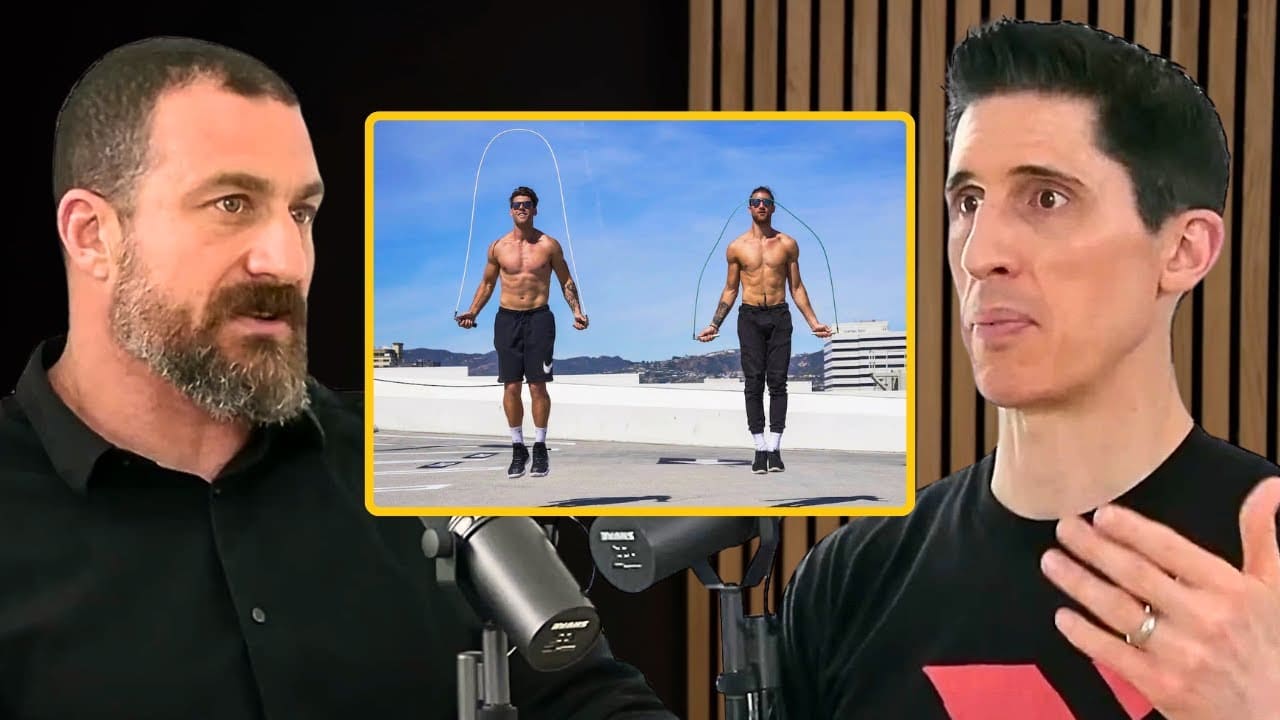
Whether you’re a beginner learning how to land properly or a seasoned athlete looking to refine footwork and rhythm, jump rope training delivers a full-body challenge that syncs brain, body, and breath.
And as one expert points out, “The goal is to feel like you’re effortlessly dancing—without a rope.”
From injury prevention to better posture and more efficient running, here’s why adding jump rope to your routine could change the way you move—and perform—forever.
Jump to:
Why Jumping Rope Builds Better Movement Patterns
At the foundation of every athletic movement is the ability to land efficiently and absorb impact. Jumping rope trains just that.
“Learning how to land and experience ground reaction forces the right way is critical to all other function and disability up the kinetic chain,” says a physical therapist, emphasizing the ripple effect of poor landing mechanics.
Unlike high-impact landings on the heel—which can send shock forces reverberating through the jaw—proper technique encourages people to land on the balls of their feet. This allows the foot to function as a spring, dissipating forces naturally and minimizing strain up through the ankles, knees, hips, and spine.
One simple test says it all: try jumping and landing on your heels. You’ll likely feel the jolt instantly. Now compare that to rebounding off the forefoot. Big difference.
Jumping rope reinforces this landing pattern with every cycle, teaching your body not only how to absorb force but also how to create it efficiently.
More Than Just Cardio: Neurological Benefits and Skill Progression
Sure, it gets your heart rate up. But jump rope’s real magic lies in how it trains timing, rhythm, and movement control.
Whether you’re skipping with both feet or performing corkscrew hops, neurological systems are firing, adapting, and coordinating your body in space. That means increased proprioception, balance, and agility—all essential for sports performance and everyday activities.
“I’m a big believer in training in all three planes of motion,” one trainer explained. “Straight up and down is great. But then we layer side-to-side hops, one-leg skips, even small twists. It changes how the body interprets the movement.”
This variety isn’t just fun—it challenges the brain to map and adapt to new patterns, reinforcing athletic development at every level.
Jump Rope for Foot Health and Kinetic Chain Efficiency
The foot is arguably one of the most complex structures in the body, transitioning from a “mobile adapter” to a “rigid lever” as we push off.
In someone with flat feet, this change is compromised. Without a strong push-off phase, stress gets redirected upstream—causing problems in joints that were never designed to absorb that load.
Jumping rope trains the foot’s ability to spring and stabilize. It enhances the midfoot’s capability to lock and lever. And over time, consistent practice can improve the mechanics not just in the feet, but throughout the entire kinetic chain.
This makes jump rope a functional and therapeutic movement—not only fun but corrective for common imbalances caused by modern sedentary lifestyles.
How to Start: Jump Rope Basics for Beginners
You don’t need to master double-unders or flashy crosses to reap the benefits. In fact, starting with an invisible rope can help build coordination without the frustration (or the occasional ear sting).
To begin, keep these basics in mind:
- Jump minimally— think 1–2 inches off the ground. Big jumps waste energy.
- Land on the balls of your feet, letting the foot act like a spring.
- Keep arms close to the body— the rope is rotated from the wrists.
- Breathe rhythmically— sync breath to cadence.
Start with 1-minute rounds and build up to consecutive 3-minute rounds, much like a boxer’s warmup. You can progress by changing foot patterns—two feet together, single-leg hops, alternating steps, high knees, or lateral bounds.
“We get bored quickly,” the expert notes. “That’s when the magic happens—when we begin exploring footwork, rhythm, and direction.”
No Rope? No Problem.
The benefits aren’t limited by equipment.
Even mimicking the motion with small arm circles engages the same lower body patterns for rebounding and stability. It’s a free and accessible way to boost movement quality from the ground up.
“We even instruct people to jump without a rope,” says the coach. “It’s zero cost, no whip risk, and you’re still training the essential skill—bouncing off the balls of your feet.”
Jumpstart Your Morning Routine (Literally)
Want to stack habits like a pro? Try jumping rope first thing in the morning while getting natural sunlight exposure.
It’s a practice promoted by wellness advocates like Tim Ferriss—ideal for energizing the body, syncing circadian rhythms, and shaking off phone-induced fatigue.
Pairing jump rope with sunlight can jumpstart your metabolism, improve mood, and transition smoothly into a productive day.
The Bottom Line
Jumping rope is low-cost, high-reward. It enhances coordination, improves shock absorption, strengthens the feet, and supports total-body athleticism.
With so many variations to play with—and no gym membership required—it’s one of the most underrated tools for developing new movement patterns, building fitness, and becoming more agile and resilient in everyday life.
Whether you’ve got 5 minutes, 15, or 30, grab your rope—or just your body—and get bouncing.










