Rowing machines deliver incredible full-body workouts, but poor technique can quickly derail progress and lead to injury.
Austin from Just Row has coached thousands of individuals on proper rowing form, and he’s identified the most common errors that sabotage results.
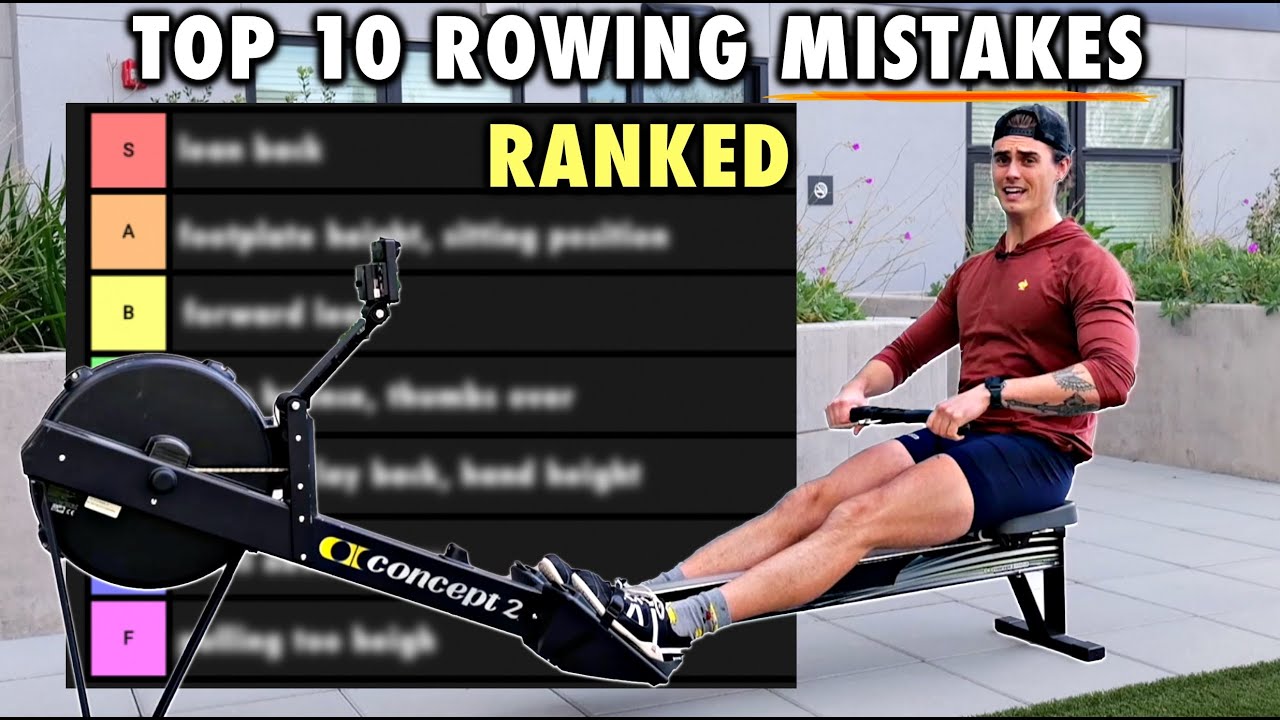
In a recent video, he breaks down the top 10 biggest rowing mistakes that keep people from maximizing their workouts.
Whether you’re new to rowing or a seasoned athlete, avoiding these pitfalls can transform your performance and protect your body from unnecessary strain.
Jump to:
- Handle Height: Finding Your Sweet Spot
- Body Angle Errors That Kill Power
- Grip and Hand Positioning Mistakes
- Leg Compression: Too Much of a Good Thing
- The Knee Bounce Problem
- Forward Lean: The Missing Element
- Equipment Setup Matters More Than You Think
- Sitting Position: A Game-Changer
- The Number One Rowing Mistake
- Putting It All Together
Handle Height: Finding Your Sweet Spot
Pulling the handle too high or too low ranks as mistake number 10, but it’s surprisingly common.
Austin explains that the handle should be pulled to just below the chest—or for those wearing one, right below the sports bra strap.
If we pull any higher than this sure you might be able to get a little bit more extra length but you’re going to overuse your shoulders your traps and your neck which frankly aren’t efficient rowing muscles.
These smaller muscle groups fatigue much faster than legs, cutting workouts short unnecessarily. Pulling too low to the stomach creates another problem—it sacrifices precious inches of stroke length.
Rowing is the third tallest sport in the world, Austin notes, meaning maximizing your height and reach makes a massive difference in performance.
Body Angle Errors That Kill Power
Mistake number nine involves body positioning at the finish of each stroke.
Staying too vertical robs you of power from hip drive, while leaning back excessively strains the lower back and becomes unsustainable at higher stroke rates.
The solution? Think of a 1 o’clock body angle—shoulders just slightly behind hips with engaged abs and an upright chest. This position optimizes power transfer while protecting your spine.
Grip and Hand Positioning Mistakes
Coming in at number eight is gripping with thumbs on top of the handle.
While not catastrophic, this grip activates arms and forearms prematurely, causing them to fatigue before legs tire—the opposite of what should happen during proper rowing.
The simple fix is to remember to keep your thumbs underneath the handle you want to think about holding the handle with a hook grip with the handle resting at the base of your fingers while keeping your fingertips and the overall grip light.
This hook grip allows you to hang from the handle with straight arms, maximizing leg drive efficiency.
Mistake number seven addresses hand height during the stroke. Most rowers don’t lift their hands high enough, which affects chain tension and power transfer. Watch for the chain snapping at a diagonal angle—this signals your hands need to rise slightly higher throughout the stroke.
Leg Compression: Too Much of a Good Thing
Bending legs excessively—mistake number six—seems counterintuitive since leg drive provides rowing power.
However, compressing legs too much rounds the lower back and overstretches quads, eliminating explosive drive capability.
Maximum leg compression should bring knees over ankles or shins to vertical. Professional rowers allow heels to lift naturally because power comes from pushing through the middle of the foot, not the heels.
The Knee Bounce Problem
Mistake number five is “knee bounce”—failing to hold legs down at the finish position.
This inefficiency shortens strokes and wastes energy. Austin recommends thinking “quads flexed” at every finish, actively pushing knees down to keep legs flat.
Adding a deliberate pause at the finish position can retrain this habit, treating each stroke like a weight training rep rather than continuous motion.
Forward Lean: The Missing Element
Mistake number four involves insufficient forward lean at the catch position.
Most rowers barely tilt forward from vertical, missing substantial stroke length and power. The body should move from 1 o’clock to 11 o’clock—shoulders positioned in front of hips at the front of each stroke.
A drill to really help emphasize this is to add in some pausing at the arms and torso position and then bending your legs so you establish the arms torso pause then bend the legs.
This deliberate separation reinforces proper body sequencing.
Equipment Setup Matters More Than You Think
Mistake number three highlights improper foot plate adjustment.
Setting feet as low as comfortably possible on the footplates lowers knee height, making forward lean more comfortable and safer. Higher foot positioning forces knees up, restricting forward movement and creating awkward body mechanics.
Sitting Position: A Game-Changer
The number two mistake is sitting incorrectly on the seat.
Most people naturally sit on the middle of their glutes, but this rounds the lower back during forward lean. Austin uses colorful language to make the point memorable—sit more forward on your pelvis, tilting hips forward to untuck the lower back.
This adjustment transforms the catch position from strained to stable while maintaining proper layback at the finish.
The Number One Rowing Mistake
Leaning back early during leg drive takes the top spot as the most common and detrimental rowing error.
Even experienced rowers fall into this trap, blending the swing with the push instead of separating them properly.
When we row and row properly our torso forward position should stay forward as the legs push and only after the legs should we lean back and pull.
The correct sequence is legs, then swing and pull—never simultaneously.
Austin recommends the legs-only drill: position yourself at the catch, then drive legs while keeping shoulders and torso forward. The handle should move exactly as much as the seat moves, with zero body swing.
He warns that hundreds of people still lean back early even while attempting this drill, which demonstrates how ingrained the mistake becomes.
Putting It All Together
Mastering rowing technique requires attention to multiple details working in harmony:
- Handle height: Pull to just below the chest
- Body angle: Move from 1 o’clock to 11 o’clock
- Grip: Hook grip with thumbs underneath
- Hand position: Slightly elevated throughout the stroke
- Leg compression: Knees over ankles, not beyond
- Knee control: Flexed quads at the finish
- Forward lean: Shoulders in front of hips at the catch
- Foot placement: As low as comfortable on footplates
- Seated position: Forward on pelvis with untucked lower back
- Stroke sequence: Legs first, then swing and pull
Filming yourself during drills provides invaluable feedback that reveals mistakes you can’t feel in the moment. What seems like proper form often looks completely different on video.
Correcting these common errors transforms rowing from a frustrating cardio session into an efficient, powerful full-body workout that delivers results without injury risk. Even small adjustments in technique create dramatic improvements in performance and comfort.