Starting small might be the most underrated fitness strategy out there.
While most people obsess over finding the “perfect” workout program with magical sets and reps, they’re missing a fundamental truth that could transform their approach to exercise entirely.
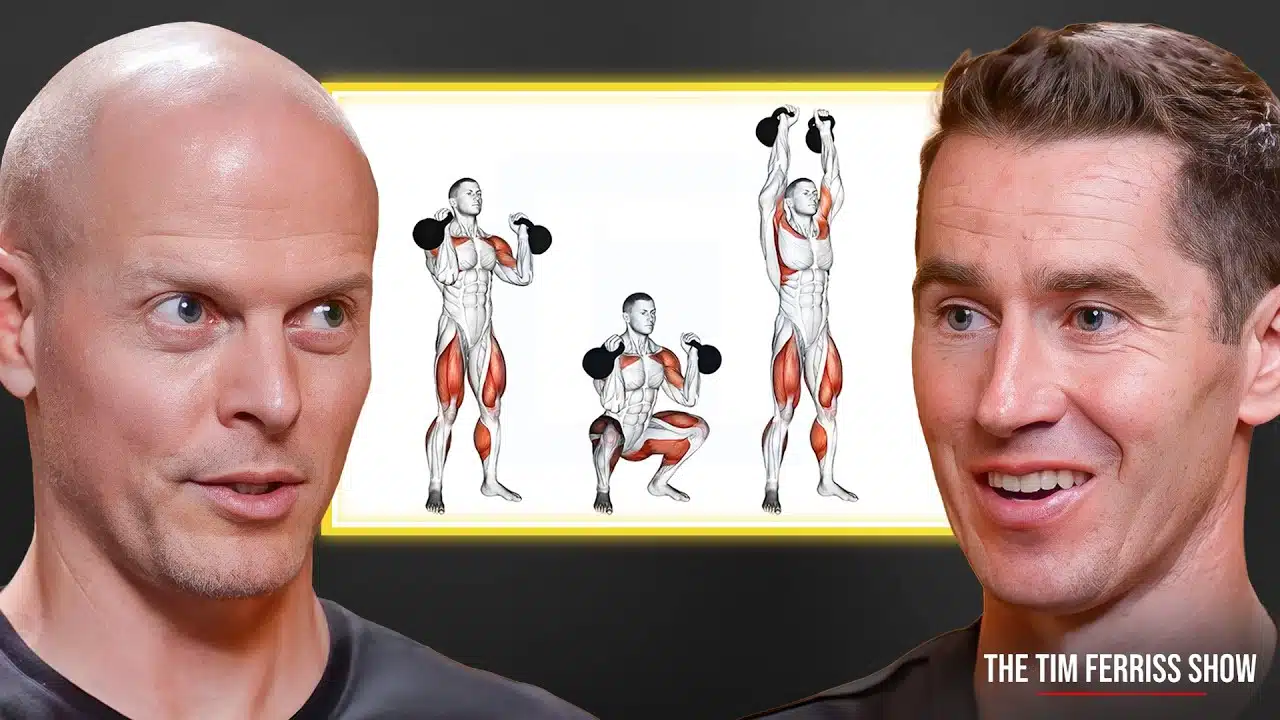
In a recent conversation, entrepreneur and author Tim Ferriss discussed training philosophy with movement specialist Dr. Ryan DeBell, revealing how minimal effort can produce maximum results—if you’re willing to let go of traditional fitness dogma.
What they shared challenges everything mainstream fitness has taught us about volume, frequency, and what it actually takes to get stronger.
Jump to:
The Power of Scaling Down
DeBell emphasized that just like you can reduce range of motion in an exercise, you can drastically reduce volume too. His philosophy? In pain-free range of motion, a little goes a long way.
If you look at something and you’re like, ‘Ah, I don’t have time for three sets of this or five sets of that or whatever it might be.’ Okay, fine. Maybe you start with one set.
Ferriss backed this up with a compelling example. He knows someone who transformed their physique starting from absolute zero athleticism with nothing more than a single push-up before bed.
That one push-up became two. Then more. Within months, this person was doing 50 push-ups nightly and seeing real physical changes. That consistency unlocked everything else.
The One-to-Two Set System
DeBell’s personal approach is refreshingly minimal: one to two sets per exercise. That’s his maintenance baseline.
I found for myself one to two sets I can maintain. Only on exercises that I’m planning to put more weights on, I’ll go a couple more sets just to actually—you’re probably still only talking one or two sets really exerting, like work sets.
He now does just two 45-minute workouts weekly and can still dunk a basketball. Fifteen years ago, he wouldn’t have believed such minimal training could produce these results.
But here’s the critical nuance: This doesn’t mean high-volume programs don’t work. DeBell sees all approaches as valid, refusing to tear down other methodologies.
The program you stick with that works for you and your goals is awesome. The program you stick with is the best program.
The Minimum Effective Dose Principle
Ferriss wrote “The 4-Hour Body” around this exact concept—finding the minimum effective dose for any adaptation you’re seeking.
Water boils at a specific temperature. You don’t need to make it 30 degrees hotter. Your skin adapts to sun exposure at a certain threshold. You don’t need another hour of burning.
This principle applies everywhere:
- Language learning: Focus on highest-frequency words first
- Strength training: Minimal volume with maximal intensity
- Injury prevention: Strategic prehab protocols instead of endless therapy
One NFL player who was benched returned to professional play using a 20-minute twice-weekly resistance protocol from Ferriss’s book. Another reader hit a 475-pound deadlift using the Barry Ross protocol—arguably one of the most minimal strength programs imaginable.
The Barry Ross Protocol
Ross coached Olympic sprinter Allyson Felix and other elite athletes. His deadlift protocol is almost comically simple: two to three sets of two to three reps, pulling only to the knee before dropping the bar.
You take full powerlifter-style rest periods between sets. That’s it.
The amount of strength that you can build doing that is head spinning.
This approach eliminates eccentric hamstring strain risk while building tremendous pulling strength. It flies in the face of conventional high-volume bodybuilding wisdom, yet delivers results that speak for themselves.
Efficiency Over Everything
DeBell’s current training revolves around maximally efficient movements. Sled work or resisted treadmill walking—forward and backward—delivers cardiovascular conditioning, leg strength, and metabolic benefits in mere minutes.
Three, four minutes have gone by that I’ve done three sets forward and backward catching my breath between each set. I’m pumped. My lungs have had a great workout. My legs are like warmed up, springy, fast, all this stuff.
He calls this his two-hour body approach—addressing strength, flexibility, circulation, and cardio in one integrated system. No supplements. No additional therapies. No recurring injuries.
For DeBell, this efficiency enables him to focus energy on what matters most: being present as a father and running his business with integrity.
The “I Don’t Have Time” Myth
Ferriss dismantles the time excuse entirely. If you’re willing to scale down intelligently, time constraints become irrelevant.
I just want to emphasize that ‘I don’t have enough time’ doesn’t really hold up to scrutiny if you’re willing to scale back. And in fact, you can do a lot more with very little than you might suspect.
Yes, high-volume approaches work. Legendary coach Charles Poliquin used them successfully with elite athletes. But not everyone tolerates high volume well, nor does it fit every lifestyle.
The best program is the one you’ll actually do consistently.
DeBell’s Biggest Mistake
After resolving his knee and back issues 15 years ago through intelligent movement practices, DeBell made a critical error: treating it as short-term rehab.
He tried returning to his old training methods. Predictably, problems returned.
Now, twelve years injury-free, he understands these aren’t warm-ups before the “real work.” These movements ARE the work. Everything else is supplementary.
What Ferriss Would Add to The 4-Hour Body Today
Looking back at his 2010 book, Ferriss noted most content has become more defensible over time as research catches up. But he’d make a few additions:
- Sled work or resisted treadmill training: For time-efficient conditioning
- Intermittent fasting: Now widely validated for metabolic health
- Hip stability exercises: Glute medius work and similar movements
- Zone 2 cardio: Despite calling it “the most boring thing in the world”
He’d also remove certain chapters to further simplify the approach, staying true to the minimum effective dose philosophy.
The Real Message
Stop fixating on limitations. Stop searching for the perfect protocol. Start where you are with what you can do.
One push-up. One set. Five minutes on a sled. Whatever removes the barrier between you and consistent action.
DeBell’s passion centers on helping people reduce physical stress so they can focus on what truly matters—family, work, contribution. That requires sustainability, not heroic suffering.
As both experts emphasize, you don’t need more time. You need better strategy. Scale down intelligently, stay consistent, and let compounding work its magic.
The program you stick with is the best program. Even if it starts with just one push-up.