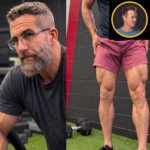
In a recent podcast interview, exercise scientist Dr. Antonella Schwarz, a retired bodybuilder, previewed a massive unpublished paper tackling 17 common myths about female training and nutrition.
Do women need their own workout plans?
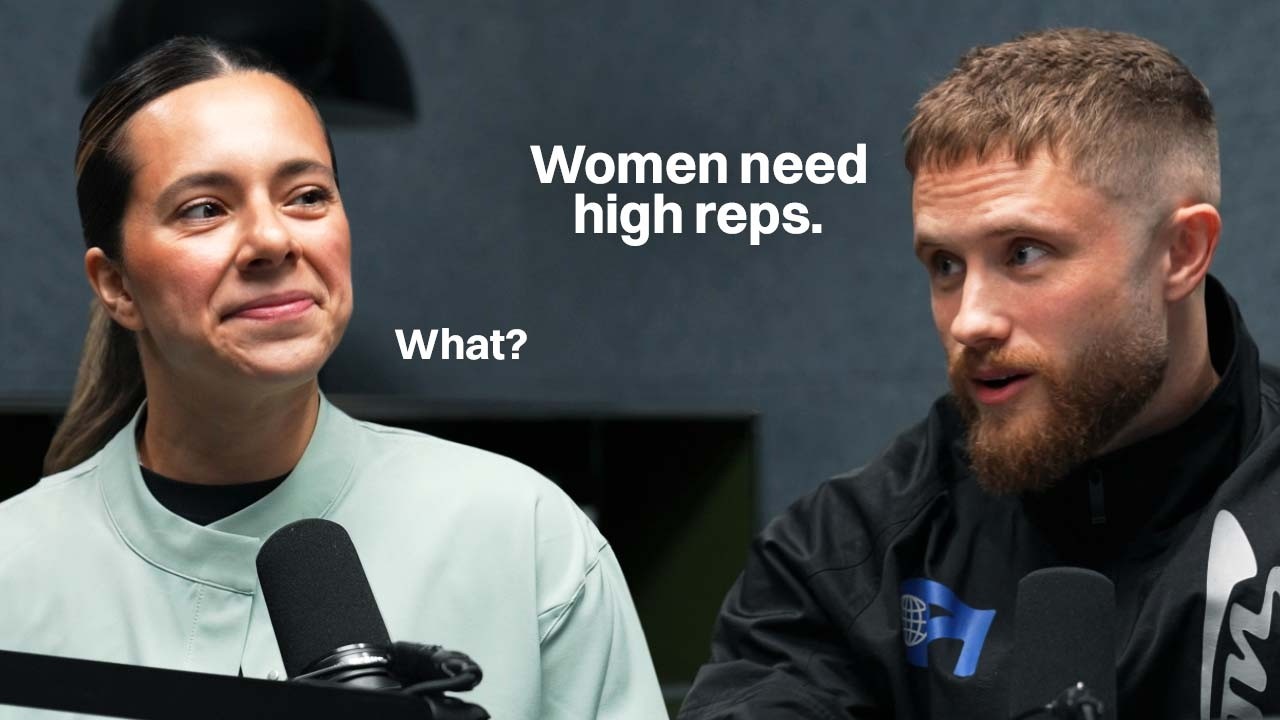
Should training bend around the menstrual cycle?
Her answers surprised even the host, and some come with a twist worth knowing.
Keep reading to see which “women’s rules” hold up and which fall apart.
Jump to:
- Women Don’t Need Different Training Principles
- Why Cycle Syncing Gets a Thumbs-Down
- Midlife Is the Moment to Build a “Tissue Bank”
- Lifting While Pregnant: Safe, With Smart Tweaks
- Sex Differences That Are Genuinely Real
- Nutrition: Do Women Need to Eat Less?
- Supplements: Creatine, Iron and Contraceptives
- Is Aging Wrecking Your Metabolism?
Women Don’t Need Different Training Principles
The short answer: no. Sex differences are real, yet Schwarz stressed that fundamentals stay identical.
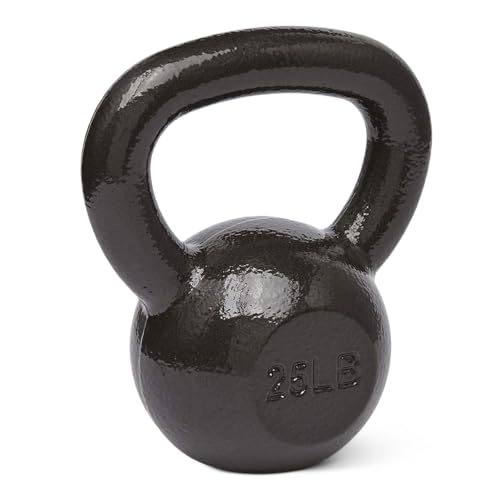
If you want something simple that actually works, this is one of the most effective tools I’ve used to build strength, conditioning, and endurance without needing a full gym setup.
- Full-body training with one weight using swings, squats, and presses
- Solid cast iron build that feels stable and lasts for years
- Comfortable grip that makes high-rep workouts easier to handle
Men and women are different, but they don’t need different training principles.
Fear of bulk? Barbells aren’t the culprit.
Women can also train heavy and not become bulky and has way more to do with body composition than the actual training itself.
Life stages still matter. Auto-regulation is the truly female-specific piece, covering menstrual cycles, perimenopause, menopause and childbearing years.
Why Cycle Syncing Gets a Thumbs-Down
Her verdict on rebuilding programs around hormonal phases? “Not necessary.”
Consistency drives adaptation, and symptoms swing widely between women and across months. Rigid phase-based rules can also stack new hurdles onto a gym culture that already feels uneven.
I think it’s doing an injustice to prescribe heavier or lighter during this phase cuz what if you wake up and you feel great or what if you wake up and you don’t feel great?
Symptoms are real, though. Schwarz never waved them away, and noted that mood and perceived strength can shift.
Her point: effects are too inconsistent for blanket prescriptions like “lift heavy in week one, light in week three.”
If you want something simple that actually works, this is one of the most effective tools I’ve used to build strength, conditioning, and endurance without needing a full gym setup.
- Full-body training with one weight using swings, squats, and presses
- Solid cast iron build that feels stable and lasts for years
- Comfortable grip that makes high-rep workouts easier to handle
Her Data-Driven Alternative
- Journal sleep, mood and recovery
- Log training output alongside those notes
- Spot patterns repeating month after month
- Adjust only when your own trend is consistent
I think journaling, logging, and making your own personal informed decision is where the money’s at.
Midlife Is the Moment to Build a “Tissue Bank”
Perimenopause lines up with the 40s and 50s, when bone density and muscle mass begin sliding. Schwarz sees a golden window.
This is the perfect time to try and reserve and create that like tissue bank.
- 150 minutes weekly of steady or moderate cardio
- Resistance training roughly three days weekly
Strength work may also ease some menopausal symptoms, she said, pointing to a commentary she co-wrote on overlaps with hormone therapy.
Lifting While Pregnant: Safe, With Smart Tweaks
Strangers and relatives kept questioning her gym sessions. Schwarz cited research from Dr. Christina Prevett supporting good maternal and fetal outcomes, with no red flags tied to elevated heart rate.
Clinician input still matters, since symptoms differ.
So overall, yes, very safe.
Her own adjustments tell the story:
- Running stopped around month four due to round ligament pain; spinning replaced it
- Back squats dropped from 205 pounds to roughly 135 by months seven and eight
- Single-leg work like lunges, split squats and step-ups felt far better
Biggest payoff came afterward. Her maintained muscle gave smoother recovery following an emergency surgical delivery.
If you want something simple that actually works, this is one of the most effective tools I’ve used to build strength, conditioning, and endurance without needing a full gym setup.
- Full-body training with one weight using swings, squats, and presses
- Solid cast iron build that feels stable and lasts for years
- Comfortable grip that makes high-rep workouts easier to handle
Sex Differences That Are Genuinely Real
- Muscle fibers: Women carry a higher proportion of type one fibers, which Schwarz called “definitely a real difference” visible in biopsies.
- Rep grinding: The host observed women pushing out extra hard reps; Schwarz agreed, though she wants more standardized research.
- Leg focus: Preference for lower-body training likely reflects culture more than biology, in her view.
Nutrition: Do Women Need to Eat Less?
In absolute terms, yes. Smaller bodies and less lean mass mean fewer calories.
Scaled for size, gaps shrink, and recent studies show similar relative muscle gains between sexes. Her real beef is fatalism.
I think there’s a lot more in our control as women than we tend to think.
Protein Targets
Women and men share identical needs, 1.2 to 1.6 grams per kilogram daily, per Schwarz.
The RDA is 0.8 g per kilo but I always say that’s just enough to survive. But we don’t want to survive, we want to thrive.
The host felt that range sounded low for a 130-pound woman, around 72 to 96 grams. Schwarz admitted similar instincts, personally favoring somewhat more for fullness.
Research suggests 1.8 to 2.0 grams per kilo carries no harm, though it brings no extra muscle gain.
Carbs Aren’t Villains
The carbs are not the bad guys. They’re just potentially the vessel for the consequences that you may not want if that’s not your goal.
Overeating, especially carb-and-fat combos, drives weight gain. Energy balance wins.
If you want something simple that actually works, this is one of the most effective tools I’ve used to build strength, conditioning, and endurance without needing a full gym setup.
- Full-body training with one weight using swings, squats, and presses
- Solid cast iron build that feels stable and lasts for years
- Comfortable grip that makes high-rep workouts easier to handle
Supplements: Creatine, Iron and Contraceptives
Creatine won’t make anyone manly. Any “bloat” is water stored inside muscle cells.
No, women will not become bulky or manly or bloated from taking creatine.
- Dose: start at 3 grams, with 5 grams the best-studied sweet spot
- Loading: unnecessary, and the host linked 20-gram loading to stomach upset
- Timeline: roughly a month to saturate muscles, plus a possible pound or two of water weight
- Responders: some people simply notice little
Schwarz described promising work in older women, where creatine plus resistance training favored bone density over training alone. Brain-related benefits remain, in her words, “very much in its infancy.”
Women-specific marketing drew her sharpest critique.
Where my beef with this question lies is like the pinkified movement, right? Like let’s pinkify this creatine.
Real needs exist, such as folic acid and choline in pregnancy or iron with heavy bleeding. Her rule: food first, test before supplementing. Men can run low on iron too.
Birth Control and Performance
Evidence points to possibly tiny, highly variable effects, and Schwarz called it “too soon to say” that any specific contraceptive hurts performance. Athletes on hormonal contraceptives still break world records.
Whatever is best for you works for your life.
Is Aging Wrecking Your Metabolism?
Not much, according to Schwarz. Declining activity does most damage through the 30s, 40s and 50s.
If you want something simple that actually works, this is one of the most effective tools I’ve used to build strength, conditioning, and endurance without needing a full gym setup.
- Full-body training with one weight using swings, squats, and presses
- Solid cast iron build that feels stable and lasts for years
- Comfortable grip that makes high-rep workouts easier to handle
After roughly age 60, metabolic dips appear, probably tied to lost muscle and bone. Her classroom example: ex-student-athletes move far less once desk jobs begin.
There’s really no one bad guy to blame.
Her advice for frustrated people: target what you can control. Sit less, cook more at home, keep lifting.