At 52, one woman discovered that building physical strength would transform far more than her body—it would reshape her entire relationship with aging, self-worth, and purpose.
Her journey began with a simple commitment: set up a barbell rack in the garage and train alongside her parents in their 80s.
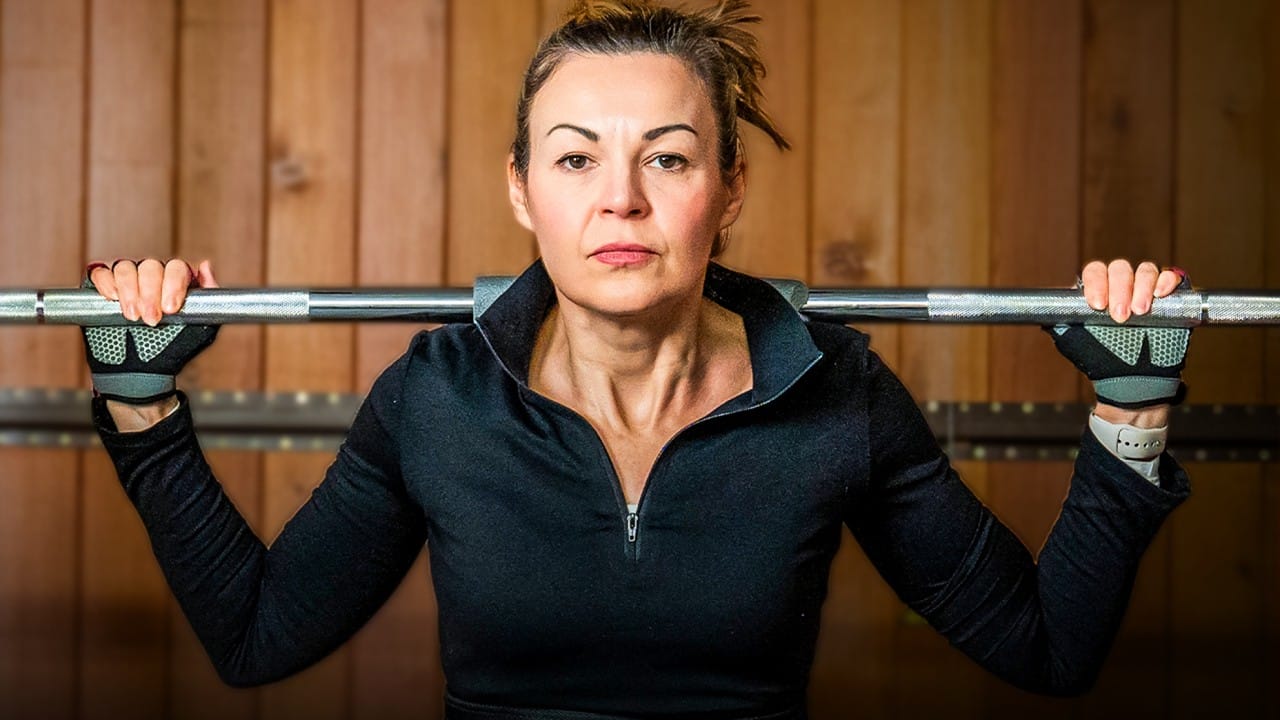
What followed was a year of remarkable physical transformation, emotional resilience, and a viral movement that inspired millions worldwide.
This is the story of how strength training became the antidote to fear, weakness, and the cultural myths about aging.
Jump to:
- The Wake-Up Call: Weakness Disguised as Activity
- Muscle: The Organ of Longevity
- Starting from Zero: Learning the Four Foundational Lifts
- One Year Later: The Numbers Tell the Story
- Beyond Physical: The Psychological Transformation
- The Viral Movement: Rebuilding Mom and Dad
- The Lows: Criticism and Emotional Challenges
- The Well: A Daily Practice of Hope
- Four Lessons That Changed Everything
The Wake-Up Call: Weakness Disguised as Activity
For years, she thought daily dog walks meant she was active. The reality was different.
Her lower back felt chronically stiff and weak, occasionally seizing up completely for days. After emergency surgery following her second child’s birth, she was diagnosed with stage 2 rectocele—pelvic floor weakness that became a constant background concern.
Her knees were so sore and stiff she could barely kneel. The trajectory was clear: she was heading down the same path as her mother.
I thought I was active because I walked the dog briskly every day. But in fact, I was weak.
Her mother had developed sarcopenia with significant muscle loss in her back, was diagnosed with osteoporosis in her 60s, and had severely compromised mobility. Without intervention, this was her future.
Muscle: The Organ of Longevity
Diving into the science revealed something profound: muscle isn’t just about strength—it’s about survival.
Building muscle protects mobility and reduces catastrophic fracture risk from falls. But the benefits extend far beyond the obvious.
- Metabolic health: Improves insulin sensitivity
- Inflammation: Significantly reduces chronic inflammation
- Brain health: Dramatically lowers dementia risk
- Quality of life: Enhances posture, circulation, and even skin quality
Understanding this science changed everything. She wasn’t just trying to look better—she was investing in decades of quality life.
Starting from Zero: Learning the Four Foundational Lifts
In January, she and her parents began working with strength coach Chris Ree, learning four key movements: the squat, deadlift, bench press, and overhead press.
Progress started cautiously. Her first deadlift? Around 40 kilograms (88 pounds).
With pelvic floor issues, she had to build extremely slowly, learning specialized breathing techniques to manage internal pressure during lifts. There were genuine moments of fear—what if lifting was making things worse?
The Summer Breakthrough
Around summertime, something remarkable happened. By strengthening the area of weakness, her symptoms began reducing dramatically.
Today, I’m barely aware I even have a rectocele. I do need to manage my breathing when I lift and keep up that pelvic floor work. But because I’ve been building all the major muscle groups, it feels like the combined strength has helped restore function in my pelvic floor.
The chronic tension in her neck and shoulders? Gone. Her knees and lower back, which used to ache constantly, now only felt slightly stiff after prolonged sitting.
One Year Later: The Numbers Tell the Story
Nearly a year into training, the transformation was measurable. She learned from watching her parents’ coaching sessions and followed a similar program, adding weight slowly and cautiously.
Her current lifts after one year:
- Deadlift: 61 kg (134 lbs)
- Bench press: 36 kg (79 lbs)
- Overhead press: 33 kg (73 lbs)
- Squat: 46 kg (101 lbs)
These numbers represent more than progressive overload. They represent functional strength that translates to real life.
When she picked up an 8-foot Christmas tree, she threw it over her shoulder and carried it to the car herself—something impossible just months earlier.
Beyond Physical: The Psychological Transformation
The physical changes were obvious: visible muscle definition, full knee mobility, ability to kneel and stand without using hands.
But the mental shift was even more profound.
I literally feel like I hold more weight in this world. And I see now that some of my greatest concerns around how I looked as I age and the changes in my skin came from that sense of lost control.
Strength training gave her control back. She became more relaxed about aging, about moving through different life stages, about how she looks.
Growing up, she felt completely unathletic—a weakling who didn’t know physical strength was possible for her. School reinforced this belief.
But the truth? The vast majority of us can be strong. When we challenge our muscles and bones, they respond.
The Viral Movement: Rebuilding Mom and Dad
The biggest high of the year came from sharing her parents’ journey publicly through “Rebuilding Mom and Dad.”
Millions watched their progress. The response was overwhelming:
- Parents in their 70s joined gyms after watching
- Someone’s father in his 90s was inspired to start building strength
- Countless others began weight training after seeing the clear benefits
Over time, I’ve come to believe that sharing that message is why I’m here. In fact, I think the three of us were somehow meant to show that it’s never too late to build strength and change how we age.
The kindness and encouragement from strangers worldwide became a moving, powerful force.
The Lows: Criticism and Emotional Challenges
Visibility brought criticism. Some questioned whether older adults should lift heavy, claiming she was putting her parents at risk.
Others criticized their form—the inevitable result of documenting progress publicly rather than only showing highlight reels.
But she remains confident: if Chris Ree says their form is good enough, she trusts that. Some days they wobble. It’s not always perfect or pretty, but it’s good enough.
Importantly, none of them suffered strains or injuries from lifting this year.
The year also demanded emotional strength. Supporting loved ones through mental health struggles while navigating menopause herself.
Symptoms varied wildly: some days she felt great, others brought headaches, gut issues, low mood, anxiety, and extremely dry eyes—sometimes all simultaneously.
HRT helped some symptoms but worsened others, requiring careful micro-dosing adjustments.
The Well: A Daily Practice of Hope
On a particularly low day, she heard Lewis Howes on his School of Greatness podcast suggest visualizing your future self—the version with wisdom you don’t yet possess.
She tried it. A message emerged: we need to draw from a well of inspiration daily, or it dries up.
She visualized a round stone well on a windswept coastal hill surrounded by tall trees. By visiting it mentally each day, she could stay present rather than letting her busy mind wander through endless checklists.
After each visualization, she wrote down what she’d drawn from it. Within weeks: 7,000 words.
Then something extraordinary happened. Walking through castle grounds near her home, taking a new route, she turned a corner and found a round stone well—exactly like the one she’d imagined.
She sat on it for a photo. Later, they noticed a rainbow over her shoulder in that picture. That’s when she decided to publish “The Well” on her website.
Four Lessons That Changed Everything
First: We must purposely build physical and emotional strength. It’s not something you stumble upon—it requires intention.
Second: We can’t control what others think or say about us, but we can control what we think of ourselves and what we say to ourselves.
Third: Building strength removes fear of aging. When you’re physically capable, growing older becomes less threatening.
Fourth: Every one of us has vast untapped potential. We may not feel it right now, but it’s there. When you keep pushing with something you believe in, what you build can become bigger than you ever imagined.
And know it’s not too late.
Her story proves that 52 isn’t too late, 80 isn’t too late, and neither is wherever you’re starting from. The body responds when challenged. The mind follows when the body leads.
Strength training isn’t just about lifting weights—it’s about lifting yourself into a version of life where aging means gaining power, not losing it.