

Your body whispers before it screams.
Those weird white spots on your nails? That annoying eye twitch that won’t quit?
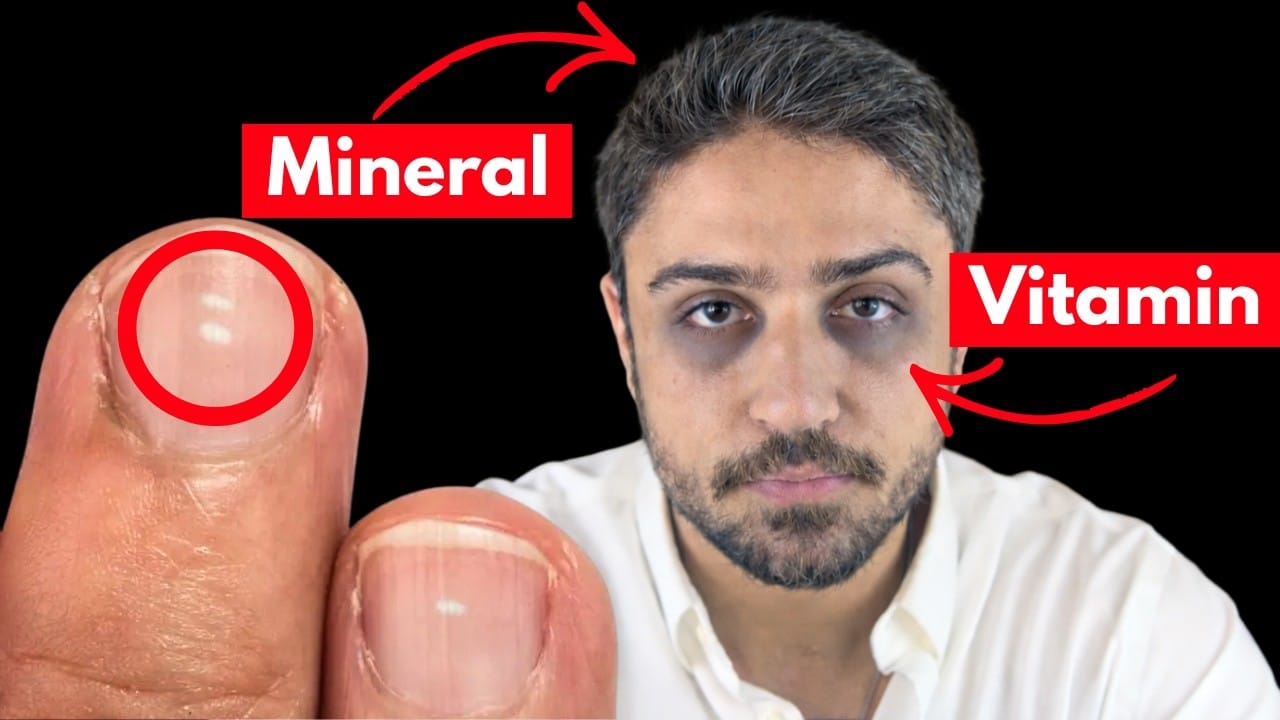
They’re not random quirks—they’re nutritional SOS signals your body has been sending for weeks, maybe months.
Most people brush these symptoms off as cosmetic annoyances, but emerging research suggests they reveal critical nutrient deficiencies that could be affecting your health in ways you haven’t even considered yet.
Jump to:
White Spots and Ridges on Nails: Your Zinc Warning System
Nails are constructed from keratin, a structural protein manufactured by specialized cells called keratinocytes. These cellular factories require abundant zinc to function properly.
Without adequate zinc, keratinocytes struggle to produce quality keratin, resulting in visible nail abnormalities. The biological mechanism is fascinating: zinc enables enzymes to properly latch onto DNA and read genetic blueprints.
This process, called differentiation, allows cells to specialize for specific functions. When zinc is scarce, cells cannot express correct genes or differentiate appropriately—and your nails show the evidence.
Best Zinc Sources
Target at least 10 milligrams daily through food or supplements.
- Oysters: Ridiculously high zinc content that blows every other food out of the water
- Beef and dairy: Excellent alternative sources with good bioavailability
- Supplement forms: Zinc acetate, zinc gluconate, and zinc sulfate are well-absorbed options
Premature Gray Hair: When Melanin Production Falters
Gray hair happens to everyone eventually. Premature graying, however, signals something deeper.
Hair loses color when melanin production declines. Manufacturing melanin requires tyrosine as a starting material, plus several critical nutrients: copper, zinc, iron, vitamin C, and vitamin B9 (folate).
Copper plays an especially notable role, though beef liver contains such concentrated amounts that overconsumption becomes a legitimate concern. Limiting liver intake to 4-8 ounces weekly provides benefits without copper overload.
Oxidative Stress: The Primary Culprit
Beyond direct melanin synthesis, oxidative stress likely drives premature graying by destroying melanocytes—the cells producing pigment in skin and hair.
Research reveals people with gray hair exhibit higher oxidative stress biomarkers and lower copper levels. Multiple animal studies demonstrate antioxidants can actually restore hair color.
Protective nutrients include vitamin E, glycine, cysteine (which form glutathione), selenium, riboflavin (B2), and thiamine (B1).
Nutritional Targets for Hair Pigmentation
- Copper: 1 milligram daily (chocolate, potatoes, beef liver)
- Iron: 18 milligrams for women, 8 for men (red meat preferred over supplements)
- Vitamin C: Minimum 100 milligrams (citrus fruits, berries)
- Folate (B9): 400 micrograms daily (citrus, leafy greens, or methylfolate supplements)
Easy Bruising: When Blood Vessels Become Fragile
Bruises form when capillaries—tiny blood vessels—rupture and leak blood into surrounding tissues.
Two nutrients directly prevent this: vitamin K2 and vitamin C.
Vitamin K2 enables proper blood clotting, preventing excessive bleeding when vessels break. Without adequate K2, coagulation processes fail.
Vitamin C supports collagen synthesis—the structural protein giving blood vessels strength and resilience. Deficient collagen makes vessels fragile and prone to rupture.
Top vitamin K2 sources include beef liver, certain cheeses like Munster and Gouda, plus egg yolks.
Dark Under-Eye Circles: More Than Just Fatigue
Skin beneath eyelids is exceptionally thin compared to other body areas, making it highly susceptible when collagen levels drop.
Similar to bruising mechanisms, capillaries can leak blood into surrounding tissue. When hemoglobin oxidizes, it transforms into darker pigments visible through thin skin.
Two separate processes drive this phenomenon: inadequate collagen synthesis and oxidative stress (or potentially iron excess).
Clinical Evidence
Research demonstrates vitamin C can reduce under-eye darkness. Another recent study showed combining vitamin C with glutathione, hyaluronic acid, and tranexamic acid partially reverses dark circles.
These interventions work by supporting antioxidant systems and skin tissue structure.
The Iron Paradox
Here’s a complication: high iron can actually cause this problem, yet vitamin C promotes iron absorption.
If increasing vitamin C intake, take it away from iron-rich meals. Complete iron panels—including CBC, ferritin, serum iron, transferrin, and transferrin saturation—help determine whether iron levels are high or low.
Both iron and copper require careful balance: essential for antioxidant function in proper amounts, but contributors to oxidative damage in excess.
Eye Twitches: Magnesium Deficiency in Action
Involuntary muscle twitches anywhere on your body signal nerves firing inappropriately—becoming excited without reason.
Cellular excitation is governed by mineral flow. Calcium and sodium flowing into cells creates excitatory signals, while potassium and magnesium produce inhibitory ones.
Magnesium deficiency allows excessive excitatory signaling. Magnesium also modulates GABA receptors—the primary inhibitory neurotransmitter system.
Why Almost Everyone Needs Magnesium
Getting adequate magnesium through diet alone is remarkably difficult, making supplementation advisable for most people.
Well-absorbed forms include:
- Magnesium glycinate
- Magnesium taurate
- Magnesium citrate (caution: potent laxative effect)
- Magnesium sulfate
Your Body’s Language Decoded
These five signs—nail abnormalities, premature graying, easy bruising, dark circles, and eye twitches—represent your body’s early warning system.
Each symptom connects to specific nutrient deficiencies that likely affect health beyond visible manifestations. Research backs these connections, offering a reliable assessment method without expensive laboratory testing.
Addressing these deficiencies through targeted nutrition or supplementation can resolve symptoms while supporting overall wellness. Your body has been speaking—now you understand its language.










