Burning fat remains one of fitness culture’s most debated topics, with endless arguments about optimal workouts, diets, and training zones.
But according to anatomy and physiology experts, there’s actually only one metabolic pathway capable of burning fat for energy.
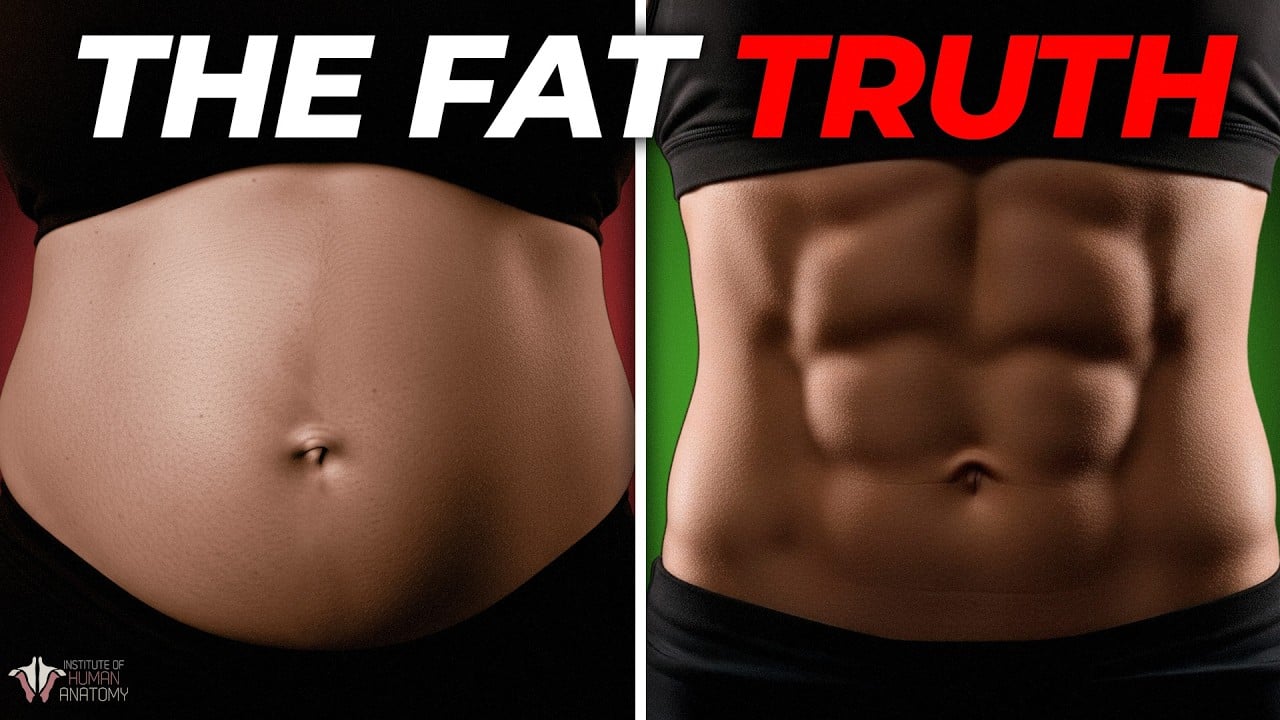
Understanding this singular pathway—and how your body’s three energy systems work—can completely transform how you approach fat loss.
And it might just explain why that “fat-burning zone” everyone talks about isn’t the complete picture you’ve been led to believe.
Jump to:
- Not All Fat Is Created Equal
- What Happens When Fat Cells Shrink
- Your Body’s Three Energy Systems
- Why Fat Requires Oxygen to Burn
- Fitness Level Shifts the Crossover Point
- Debunking the “Fat-Burning Zone” Myth
- The 24-Hour Fat Loss Perspective
- High-Intensity Intervals and Fat Burning
- The Better Question About Fat Loss
- Sample Weekly Training Split
- The Takeaway
Not All Fat Is Created Equal
Before diving into metabolism, it’s critical to understand what fat actually is and where it lives in your body.
Most adults carry white adipose tissue—the kind that stores energy, provides insulation, and cushions organs. This tissue appears white to light yellow and can vary dramatically in thickness from millimeters to several inches.
Subcutaneous fat sits just beneath skin but above muscle tissue. It’s what hides abdominal definition and can range from paper-thin to several centimeters thick depending on the individual.
Visceral fat wraps around internal organs like the heart, liver, and intestines. This deeper fat poses significantly greater health risks.
Excess visceral fat links strongly to type 2 diabetes, cardiovascular disease, hypertension, increased inflammation, and impaired insulin sensitivity. It’s often called “the dangerous fat” for good reason.
There’s also brown adipose tissue, which is packed with specialized mitochondria and blood vessels. Unlike white fat, brown fat actually burns calories to generate body heat. Adults maintain small deposits primarily around the neck and upper back, and cold exposure may activate it.
What Happens When Fat Cells Shrink
Adipose tissue qualifies as connective tissue composed of fat cells (adipocytes) suspended in a loose network of collagen fibers.
These adipocytes function as storage units packed with triglycerides—molecules consisting of glycerol bonded to three fatty acids.
Weight gain occurs when these cells fill with additional triglycerides, causing individual cells to expand and overall tissue to thicken. Weight loss reverses this process through lipolysis—the breakdown of stored triglycerides.
During lipolysis, signals trigger fat cells to release fatty acids into surrounding capillaries. Blood then transports these fatty acids throughout the body to cells requiring energy—like repeatedly contracting quadriceps during exercise.
When fat cells release more fatty acids than they store, they shrink. Continued shrinkage thins adipose tissue and reveals underlying muscle definition.
Your Body’s Three Energy Systems
Here’s where physiology gets fascinating: your body operates three distinct energy systems to produce ATP (adenosine triphosphate), the cellular energy currency.
Only one can metabolize fat.
The Creatine Phosphate System
This system powers super-short, explosive efforts lasting roughly 5-10 seconds—think maximum-effort sprints or heavy, low-rep squats.
Stored creatine phosphate in muscles rapidly regenerates ATP without requiring oxygen. The enzyme creatine kinase facilitates this lightning-fast process.
Benefits: Incredibly fast, no oxygen needed. Drawbacks: Depletes within seconds. Creatine supplementation can extend this window slightly, explaining its performance benefits.
Fat burned: Zero.
Anaerobic Glycolysis
This system handles medium-duration, high-intensity activities lasting approximately 10-120 seconds—like all-out intervals or intense circuit training.
“Anaerobic” means without oxygen; “glycolysis” refers to glucose breakdown. This pathway generates ATP relatively quickly but produces only two ATP molecules per glucose molecule without oxygen present.
After 90-120 seconds of maximum effort, this limited ATP production becomes insufficient. Lactic acid byproducts quickly dissociate into lactate and hydrogen ions, temporarily increasing muscle acidity and contributing to fatigue.
Fat burned: Zero.
The Aerobic Energy System
Also called oxidative phosphorylation, this is the only metabolic pathway capable of burning fat.
Operating within cellular mitochondria, this system utilizes oxygen to metabolize carbohydrates, proteins, and fats into massive quantities of ATP. It’s essentially why humans breathe—consuming oxygen and producing carbon dioxide as waste.
Fat breakdown releases fatty acids into blood. These fatty acids enter cells containing mitochondria, get shuttled inside, and undergo beta-oxidation—literally being oxidized (burned with oxygen).
Products from beta-oxidation feed into the Krebs cycle, generating enormous ATP yields. One 16-carbon fatty acid like palmitate produces approximately 113 ATP molecules—compared to just 30-32 from one glucose molecule.
Why Fat Requires Oxygen to Burn
Without oxygen and this aerobic pathway, fatty acids cannot be metabolized for energy. Period.
Carbohydrates show more versatility—they fuel anaerobic glycolysis and, when oxygen is available, can enter mitochondria for complete oxidation.
So why doesn’t the body always prefer fat, given its superior ATP yield?
Speed. Fat oxidation requires significantly more biochemical steps, enzymes, and time compared to rapid-fire energy systems. Mobilizing fat from adipose tissue, transporting it through bloodstream, and shuttling it into working muscle fibers takes even longer.
Plus, this system demands substantial oxygen. At rest, meeting oxygen requirements poses no challenge—metabolic demand remains low, and cardiovascular and respiratory systems easily supply necessary oxygen.
Light activity like walking or gentle jogging? Still manageable.
But as exercise intensity climbs, oxygen demand skyrockets. Lungs can only exchange so much oxygen and carbon dioxide. Hearts can only pump so much blood. Blood carries finite oxygen capacity.
At higher intensities, the body literally cannot deliver oxygen to working muscles fast enough to rely solely on fat oxidation. It must recruit carbohydrates and anaerobic energy systems.
Fitness Level Shifts the Crossover Point
Here’s something remarkable: the intensity at which you must “cross over” and depend on carbohydrates depends entirely on cardiovascular fitness.
Aerobic training strengthens the heart, increasing stroke volume. It boosts red blood cell count, expands capillary networks to skeletal muscles, and increases total blood volume.
Result? More oxygen delivered to exercising muscles.
When less fit, you might stay in the aerobic zone at 5 mph on a treadmill. After consistent training, you could maintain that same aerobic zone at 6 mph—burning more total calories and fat because your cardiovascular system improved oxygen delivery.
Debunking the “Fat-Burning Zone” Myth
You burn the highest percentage of fat at rest. But percentage doesn’t equal total fat burned.
Consider data from a male recreational athlete in his 40s training for a marathon. As heart rate (proxy for intensity) increased, the percentage of energy from fat decreased while carbohydrate percentage increased.
This aligns with physiology: carbohydrates provide faster fuel, so higher intensities demand greater carbohydrate reliance.
But here’s the crucial insight: even though fat percentage drops, total calories burned per minute climbs.
Fat calories burned per minute actually increases as intensity rises—up to a point. For this individual, fat oxidation peaked around 130 beats per minute. This is the legitimate “fat-burning zone” or Zone 2, typically 60-70% of maximum heart rate.
Your personal fat-burning zone varies based on age, fitness level, resting and max heart rates. The pattern remains consistent; only the specific heart rate changes.
The 24-Hour Fat Loss Perspective
The “fat-burning zone” only reveals where fat oxidation peaks during exercise—not where fat loss maximizes over time.
Compare a 45-minute steady-state Zone 2 session against a 45-minute Zone 3 or 4 session. Higher intensity burns less fat per minute during exercise but torches significantly more total calories, creating a larger energy deficit.
Higher intensity also places greater recovery demands on the body. During recovery, you’re restoring ATP, resynthesizing phosphocreatine, reestablishing ion gradients, and replenishing glycogen.
This energy debt gets repaid partially through carbohydrates—but a huge portion comes from fat. In many cases, this results in greater total fat oxidation over 24 hours compared to lower-intensity exercise alone.
High-Intensity Intervals and Fat Burning
During brutal intervals lasting 30-90 seconds, fat oxidation approaches near-zero. Energy comes almost exclusively from anaerobic glycolysis and phosphocreatine.
Seems inefficient for fat loss, right?
Wrong. Between intervals—during walking or Zone 2 jogging recovery—you’re gasping for oxygen and heavily utilizing the aerobic energy system. Fat becomes crucial fuel for regenerating ATP, resynthesizing phosphocreatine, and restoring homeostasis.
This fat oxidation continues long after the workout ends.
The Better Question About Fat Loss
Stop asking: “Am I burning fat right this second during this exact exercise?”
Start asking: “Am I creating conditions that allow my body to burn fat overall?”
The answer involves burning meaningful total energy through varied training intensities throughout the week.
Maximum intensity every session leads to burnout and overtraining. You cannot sustain extremely high-level intensity session after session.
Zone 2 training offers legitimate benefits beyond fat burning:
- Stimulates mitochondrial biogenesis (bigger, more numerous mitochondria)
- Reduces type 2 diabetes risk
- Increases fat-burning capacity at that intensity and beyond
- Builds aerobic base that supports higher-intensity work
Sample Weekly Training Split
A balanced approach might include:
- Resistance training: Tuesday, Thursday, Saturday (alternating upper/lower body)
- Cardiovascular training: Monday, Wednesday, Friday
Cardio variations could include:
- Alternating Zone 2 and high-intensity days (two Zone 2 sessions one week, one the next)
- Zone 2 on Monday and Wednesday, high-intensity Friday
- Customized based on individual goals and recovery capacity
Resistance training burns calories, preserves muscle mass, increases strength, improves bone density, and maintains higher baseline metabolic rate.
The Takeaway
Fat can only be metabolized through the aerobic energy system—the single pathway requiring oxygen.
While Zone 2 training maximizes fat oxidation per minute during exercise, higher-intensity work often produces greater 24-hour fat loss through increased total calorie burn and post-exercise fat oxidation during recovery.
The most effective approach combines varied intensities: Zone 2 sessions build mitochondrial capacity and fat-burning infrastructure, while higher-intensity work and resistance training create larger energy deficits and preserve metabolically active muscle tissue.
Fat loss happens over hours, days, and weeks—not minute by minute during individual workouts. Focus on creating sustainable conditions for overall fat oxidation rather than chasing the “perfect” fat-burning zone during every training session.