Muscle growth doesn’t happen in the gym.
That part might sting a little, especially if you’ve been chasing soreness like it’s a trophy. But here’s what actually builds size: recovery.
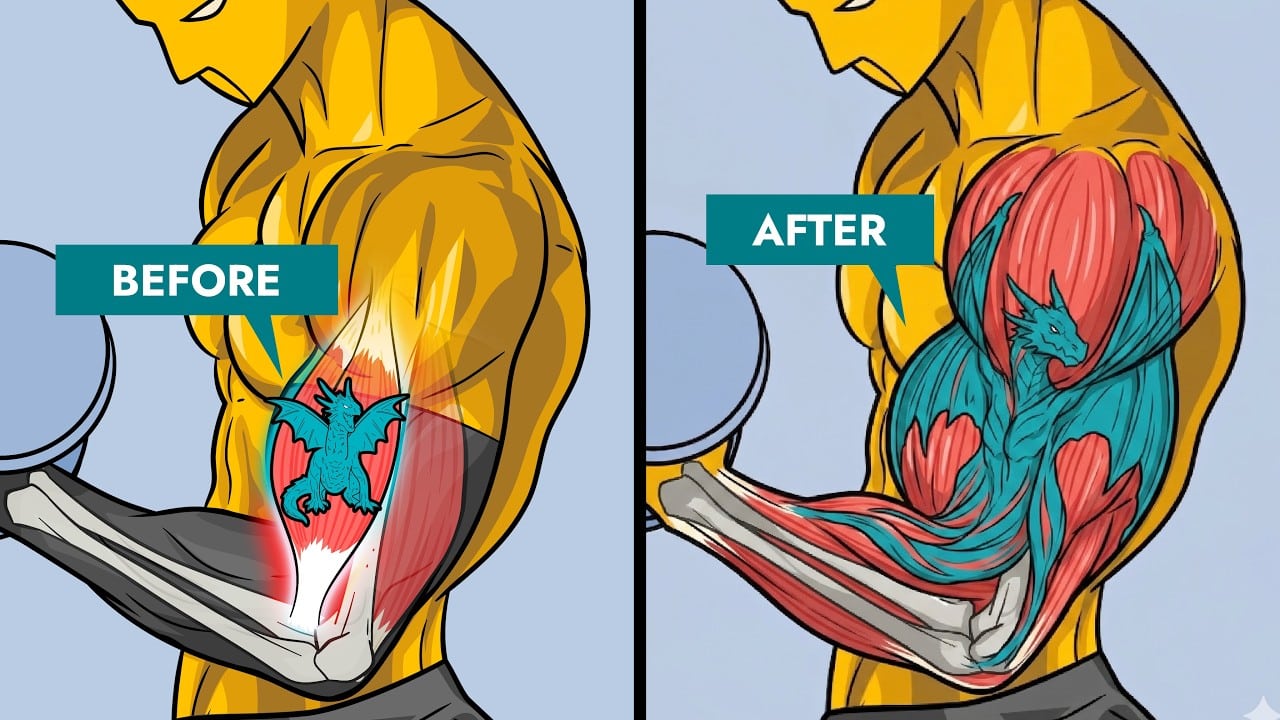
In a recent breakdown, fitness content creator and calisthenics expert highlighted a critical misunderstanding most people have about hypertrophy. Training tears things down, but growth happens when you’re sleeping, sitting at your desk, or doing absolutely nothing.
And if you’re getting that part wrong, you’re leaving serious gains on the table.
Jump to:
What Actually Happens During Training
When you train, your brain sends signals to motor neurons, which fire and cause muscle fibers to contract. Under heavy load, your body recruits larger, more powerful fibers—the ones with real growth potential.
But here’s where it gets interesting. As muscle fibers contract and lengthen under tension, they physically deform. That deformation triggers a molecular signal called MTC1, which tells your body to start building new protein.

If you want something simple that actually works, this is one of the most effective tools I’ve used to build strength, conditioning, and endurance without needing a full gym setup.
- Full-body training with one weight using swings, squats, and presses
- Solid cast iron build that feels stable and lasts for years
- Comfortable grip that makes high-rep workouts easier to handle
More protein equals bigger fibers. That’s hypertrophy.
A 2025 review from McMaster University, one of the world’s leading sports science programs, confirmed something crucial: muscle doesn’t need to be torn to grow. It just needs to be loaded.
Soreness Is Not a Growth Signal
That burning soreness you’ve been chasing? It’s inflammation.
Your body is cleaning up damage, not signaling growth. Marathon runners are completely destroyed for a week after a race, yet they don’t come back with bigger legs.
That soreness you still feel on Thursday, that’s just your body still doing cleanup while the construction crew already went home.
Muscle protein synthesis—the actual building process—peaks around 24 hours after training. By 48 hours, it’s basically back to baseline.
Window closed.
If you want something simple that actually works, this is one of the most effective tools I’ve used to build strength, conditioning, and endurance without needing a full gym setup.
- Full-body training with one weight using swings, squats, and presses
- Solid cast iron build that feels stable and lasts for years
- Comfortable grip that makes high-rep workouts easier to handle
If you’re hitting pull-ups on Monday and not touching your back again until next Monday, your muscles spent two days growing and five days sitting idle. Training each muscle group twice per week isn’t just better—it doubles your growth window from two days to four.
The Lowering Phase Is Where You’re Leaving Gains
Your muscles can handle roughly 40% more force during the lowering (eccentric) phase than during the lifting phase. That descent on a pull-up or dip? That’s where tension is highest, and where MTC1 gets triggered hardest.
Most people treat lowering like a commute between reps. Drop fast, pull up again, count it.
But the rep you counted? Your muscles cared most about the part you rushed.
Slow the lowering down. 3 seconds minimum. Your gains are going banana just from that one change.
Sleep Is Half the Recovery Equation
One bad night of sleep reduces muscle protein synthesis by 18%. Not a week—one night.
One week of sleeping just five hours per night drops testosterone by 10 to 15%. That’s the same hormonal decline you’d expect from aging a full decade.
If you want something simple that actually works, this is one of the most effective tools I’ve used to build strength, conditioning, and endurance without needing a full gym setup.
- Full-body training with one weight using swings, squats, and presses
- Solid cast iron build that feels stable and lasts for years
- Comfortable grip that makes high-rep workouts easier to handle
In one study, two groups followed identical diets with the same calorie deficit. The only difference? Sleep duration. The group sleeping less lost 60% more muscle and 55% less fat.
Same food. Different results.
You can track protein to perfection, but if you’re scrolling until 1:00 a.m. and sleeping six hours, that’s your bottleneck.
Protein: The Other Half
MTC1 tells your body to build muscle. But it needs raw materials to do it.
If protein intake is off, that signal fires—and nothing gets built. You’ve essentially hired a construction crew and forgot to order materials.
Most people have no idea how much they’re actually eating. Studies show individuals underestimate food intake by up to 50%. You think you’re eating 2,000 calories; you’re eating 3,000. Or the reverse—you think you’re getting enough protein, but you’re not even close.
If you want something simple that actually works, this is one of the most effective tools I’ve used to build strength, conditioning, and endurance without needing a full gym setup.
- Full-body training with one weight using swings, squats, and presses
- Solid cast iron build that feels stable and lasts for years
- Comfortable grip that makes high-rep workouts easier to handle
MacroFactor fixes this. It’s a nutrition app that tracks food intake, learns your metabolism, and adjusts targets weekly based on how your body actually responds. Not stuck on numbers entered on day one—it adapts around you.
Photo logging makes it simple. Snap your plate, and it calculates macros. Use code yellowdude for a free 14-day trial.
Progressive Overload Applies to Bodyweight Training Too
Load muscles progressively harder over time. Not just more reps of the same movement.
Bodyweight training doesn’t exempt you from progressive overload. Harder variations, slower eccentrics, weighted vests—muscles need increasing tension.
Doing the same pull-ups forever isn’t progressive overload. That’s maintenance.
The Practical Takeaways
- Slow down eccentrics: Aim for 3 seconds on every lowering phase
- Sleep minimum 7 hours: This isn’t lifestyle advice—it’s where growth literally happens
- Train each muscle twice per week: Maximize your protein synthesis windows
- Track nutrition accurately: Use tools like MacroFactor to know what you’re actually eating
- Progressive overload matters: Increase difficulty over time, even with bodyweight movements
Soreness Peaks After Growth Ends
Soreness will peak around day two and linger until day three or four. But your muscles finished building around hour 48.
If you want something simple that actually works, this is one of the most effective tools I’ve used to build strength, conditioning, and endurance without needing a full gym setup.
- Full-body training with one weight using swings, squats, and presses
- Solid cast iron build that feels stable and lasts for years
- Comfortable grip that makes high-rep workouts easier to handle
They were done before your soreness even peaked.
Your muscles don’t grow because they hurt. They grow because you loaded them, fed them, and got out of the way.
Next time you limp out of a session thinking you crushed it, you probably did. But the crushing part is over.
What happens in those next 48 hours determines everything. Most people spend that window sleeping poorly, skipping protein, and waiting to feel less sore before training again.
Stop chasing soreness. Start chasing recovery.