Running with extra body weight presents unique challenges, but it’s far from impossible.
In a recent YouTube video tackling Edinburgh’s famous Seven Hills route, endurance athlete and content creator teamed up with Johnny Davis—fresh off running 572 kilometers covering the entire London Underground over 11 days—to share practical strategies for heavier runners looking to improve.
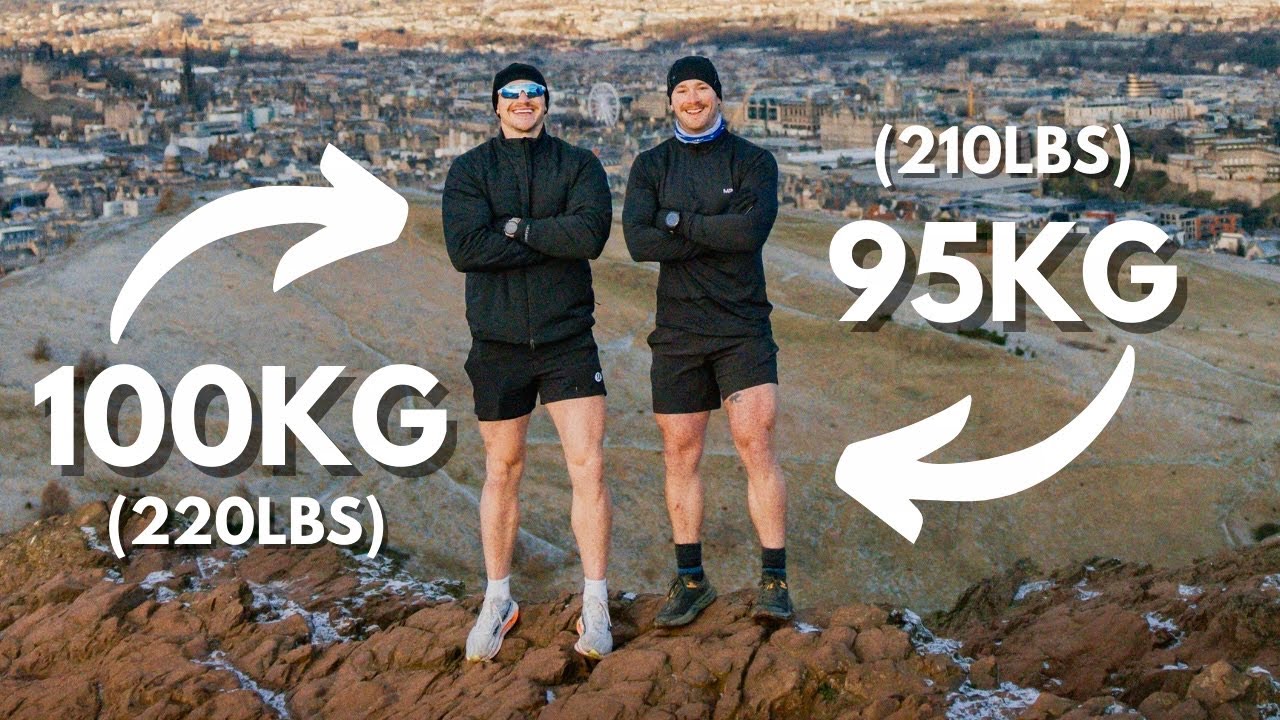
The 30-kilometer loop with nearly 1,000 meters of elevation gain provided the perfect backdrop for discussing what actually works when you’re carrying more mass.
And the advice might surprise you—it’s less about pushing harder and more about training smarter.
Jump to:
Start Steady: Building Your Aerobic Foundation
The biggest mistake heavier runners make? Going too hard, too soon.
Instead of lacing up and pushing maximum effort every single day, the focus should be on cautiously building volume within specific heart rate parameters. This means prioritizing Zone 2 aerobic work—that comfortable pace where you can still hold a conversation.
Don’t think I’m going to lace up my shoes get out the door and burst myself all day every day 5 km every day using sweat as a currency hard work as a currency you should in fact be doing the opposite.
The reasoning is simple but crucial: carrying extra weight means higher impact forces through your lower limbs. Rush the process, and you’re exposing yourself to injury risk that could derail progress entirely.
Establishing clear heart rate training zones allows runners to build aerobic base systematically before adding intervals, threshold work, or other high-intensity sessions. Think foundation first, speed later.
Master Your Cadence: The Technique Game-Changer
Cadence—steps per minute—represents one of the most impactful adjustments heavier runners can make.
Johnny Davis explained his personal transformation around this metric.
When I first started running I was running about 150 steps per minute which most people know isn’t very good means that I was stepping out in front of myself Landing in front of myself and a lot of force is going through each step which led to shin splints ankle problems.
By increasing his cadence to 170-175 steps per minute, Davis achieved something remarkable: his feet began landing beneath him rather than out in front, dramatically reducing impact forces per step.
The formula is straightforward:
- Faster feet = shorter steps
- Shorter steps = less overstriding
- Less overstriding = reduced impact forces
- Reduced impact = fewer injuries
This single adjustment helped eliminate shin splints and ankle problems that had plagued his earlier running attempts. For runners carrying additional weight, distributing impact across more frequent, lighter steps makes enormous practical sense.
Kit Considerations That Actually Matter
Equipment choices become significantly more important when running with extra body mass.
Clothing: Preventing the Chafe
Two-in-one shorts with built-in liners topped the list of essential gear. They prevent chafing in delicate areas that can transform an enjoyable run into misery.
Beyond shorts, chamois cream—traditionally used in cycling—offers superior anti-chafing protection compared to petroleum-based products. It’s also kinder to technical fabrics.
Higher body mass increases friction risk anywhere clothing contacts skin: under arms, chest (yes, bleeding nipples are real), anywhere a pack or vest sits. Preventive lubrication in these areas isn’t vanity—it’s practical injury prevention.
Footwear: Size Matters More Than You Think
Davis shared an often-overlooked footwear strategy that’s particularly relevant for heavier runners.
I’m a size 12/13 most shoes I’ve run are 14, 14 and a half simply because your feet expand when you run has a bigger bloke you going have wider feet as it is to make sure there’s enough room in there so your toes can spread and expand as you run.
Feet naturally swell during running. Combined with higher impact forces from additional body weight, cramped footwear becomes a recipe for black toenails, blisters, and worse.
Going up one to one-and-a-half sizes provides toe box space for natural foot expansion and spreading. Since foot problems inevitably cascade into issues elsewhere in the kinetic chain, this preventive measure pays enormous dividends.
Work With Your Body, Not Against It
Perhaps the most important mindset shift involves abandoning unhelpful comparisons.
Comparing performance to friends, family, or social media runners built completely differently creates frustration rather than progress. Body mass and leverage aren’t obstacles to ignore—they’re factors to account for and work with strategically.
It’s all a case of working within the leverages and body mass consideration that you as an individual have it’s not something to ignore it’s something to take into account and actually use as a springboard to build from working with what you’ve got rather than working against it.
This approach represents the opposite of the mistake many heavier runners make when starting: fighting their bodies instead of learning to move efficiently within their current physical reality.
Set Incremental, Specific Goals
Social media showcases ultra-distance achievements and extreme challenges constantly. While inspiring, these shouldn’t dictate personal goal-setting.
Progress happens incrementally. A 5K goal is just as valid as a 100K goal—arguably more so if it represents genuine challenge based on current fitness.
Your goal could be to run a 5k then to a 10K then to a half marathon then to Marathon I was very fortunate when I started running it was during Covid there was no events on so for me it was just case of getting better incrementally little by little week by week month by month.
Davis highlighted the value of progressive goal-setting without external event pressure. Consistent small improvements compound into remarkable transformations over time.
British YouTuber Mark Lewis exemplifies this perfectly—starting from nearly 400 pounds, his initial goal was simply running to the lamppost at his street’s end and walking back. From that humble beginning, he’s now completed 100+ kilometer challenges.
The Edinburgh Reality Check
Completing Edinburgh’s Seven Hills route—just over 25 kilometers with nearly 1,000 meters of climbing—demonstrated these principles in action.
The route wasn’t aggressive mountain terrain but rather urban and suburban hills perfectly suited to building capability without excessive risk. This choice itself reflects smart training: challenging enough to stimulate adaptation, manageable enough to complete safely.
Davis noted the contrast between this elevation profile and his flat London Underground route.
102 kilos going uphill takes a lot of energy it’s not often that I’m with somebody that’s heavier than me when we’re running a long distance.
That honest acknowledgment captures the physical reality heavier runners face on climbs. Physics doesn’t care about effort—moving more mass vertically requires more energy, period.
But that doesn’t make the goal impossible. It makes appropriate pacing, adequate recovery, and patient progression more important.
The Bottom Line for Heavier Runners
Improving running performance with extra body weight isn’t about suffering more or pushing harder than lighter runners.
Success comes from technical adjustments, strategic training progression, and equipment choices that account for biomechanical realities. Higher cadence reduces per-step impact. Zone 2 aerobic building prevents overtraining injuries. Proper footwear sizing prevents cascading foot problems.
Most importantly, the mental framework matters. Working with your current body rather than against it transforms running from punishment into sustainable practice. Incremental goals based on individual capability rather than comparison with differently-built athletes create actual progress.
Running as a heavier athlete presents distinct challenges. But those challenges have practical solutions grounded in biomechanics, training science, and equipment optimization—not motivational platitudes about working harder.
Start where you are. Build systematically. Move efficiently. Progress happens.