Squats have dominated leg training for decades, but they may be missing the mark for men over 50.
While countless guys grind through squat sessions week after week, their hamstrings remain underdeveloped, glutes barely activate, and deep stabilizing muscles stay dormant.
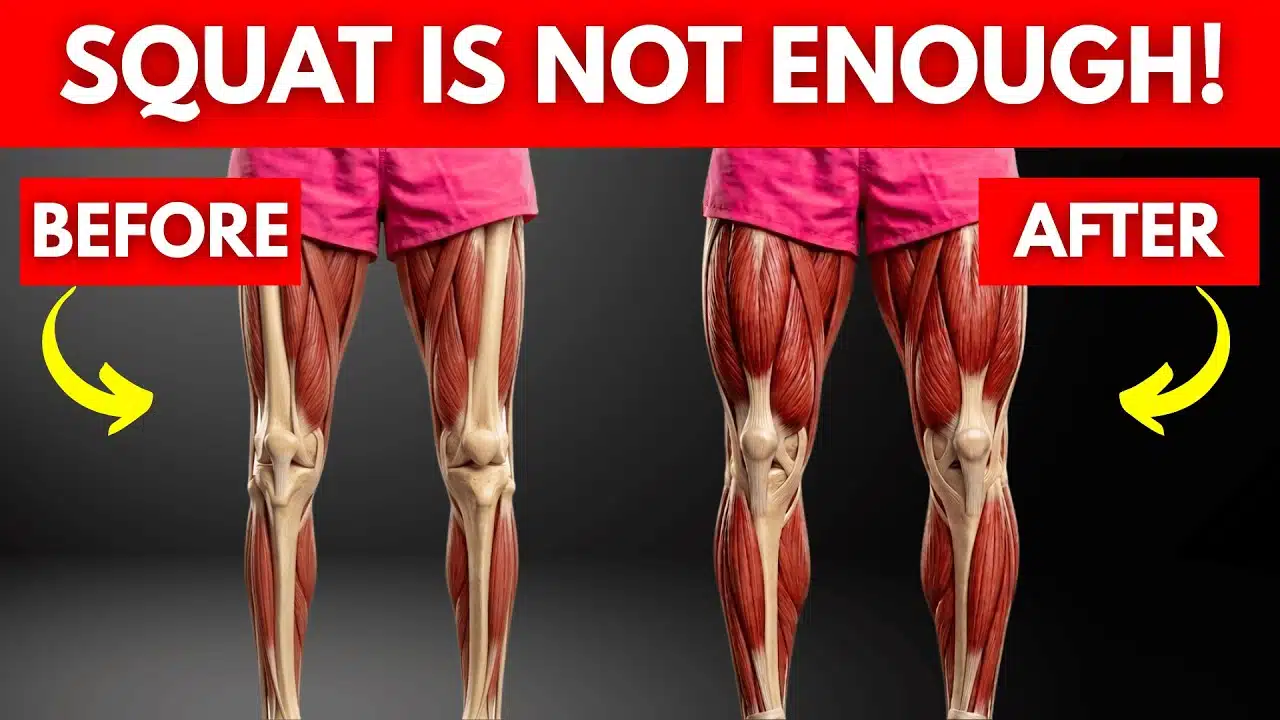
This isn’t about effort or age—it’s about muscle imbalances that quietly rob strength, balance, and power after 50.
Five targeted movements can address what squats ignore, potentially restoring significant leg strength in just three weeks without wrecking knees or requiring gym machines.
Jump to:
- The Lateral Step-Up: Training Movement Patterns That Matter
- Bulgarian Split Squat: Exposing Strength Imbalances
- Feet-Elevated Glute Bridge: Waking Dormant Powerhouses
- Deficit Calf Raise: Building Balance From Ground Up
- Farmer’s Carry: Total Body Integration
- Bonus Move: Tibialis Raise for Fall Prevention
- Implementation Matters More Than Information
The Lateral Step-Up: Training Movement Patterns That Matter
Most leg exercises move in a single plane—forward and backward. Real life doesn’t work that way.
Stepping out of cars, catching balance during stumbles, shifting weight to prevent falls—these all require lateral strength that traditional training neglects.
Lateral step-ups target gluteus medius, the muscle responsible for hip stability and proper knee tracking. They also hammer gluteus maximus, building both function and shape simultaneously.
The Eccentric Phase Changes Everything
The controlled lowering phase—not the stepping up—delivers 70% of this exercise’s benefit. Rushing through it wastes the movement’s potential.
Execution:
- Stand beside a sturdy box at knee height or lower
- Plant inside foot flat on surface
- Drive through heel to stand tall
- Either tap trailing foot on step or suspend it for 1-2 seconds
- Lower slowly over 3 full seconds until trailing foot kisses ground
- Maintain chest-up position with knee tracking over middle toes
Three-Week Progression:
- Week 1: Low step, 8 reps per leg, focus on 3-second descent
- Week 2: Raise step height, 10 reps per leg
- Week 3: Add goblet-hold dumbbell, use dumbbells in each hand, or extend descent to 4 seconds for 12 reps per leg
Balance challenges? Rest a fingertip—not entire hand—on a wall. Progressive independence is the goal.
Bulgarian Split Squat: Exposing Strength Imbalances
This single-leg loaded movement reveals exactly how much weaker one leg is compared to the other. That imbalance quietly becomes limps, falls, or knee injuries down the road.
With back foot elevated, nearly all body weight loads onto the front leg with minimal opportunity to compensate. Quads, glutes, and hamstrings work simultaneously while stabilizers engage automatically.
Foot Positioning: The Game-Changing Setup Trick
Most people guess foot placement. Too close drives knees past toes dangerously. Too far eliminates glute and hamstring engagement.
The solution? Sit on the bench, extend front leg straight, and mark where the heel lands. That’s the perfect position every time.
Proper Form:
- Back foot elevated with laces down on bench
- Chest tall, eyes forward
- Drop hips straight down—not forward—until back knee nearly touches ground
- Front knee stays stacked over toes throughout movement
- Drive up through entire front foot, especially heel
- Keep tension live; don’t lock out at top
Progression Protocol:
- Week 1: Bodyweight only, 6-8 reps per leg
- Week 2: 10 reps per leg with 3-second lowering phase
- Week 3: Add dumbbells, goblet hold, or loaded backpack for 8-10 challenging reps per leg
Feet-Elevated Glute Bridge: Waking Dormant Powerhouses
Hours of daily sitting—driving, desk work, meals, television—essentially puts glutes into hibernation. Lower back and hamstrings then compensate, creating chronic aches.
Elevating feet extends range of motion and shifts load directly onto glutes and hamstrings. No equipment needed, zero spine strain involved.
The Critical Squeeze That Most People Skip
Without deliberately squeezing glutes at the top—imagine cracking a walnut—this becomes either a hamstring cramp generator or backache creator rather than effective glute training.
Step-by-Step Execution:
- Lie flat with both feet on low bench, step, or couch edge
- Knees bent approximately 90 degrees
- Arms flat at sides for stability
- Drive through heels to lift hips until body forms straight line from knees to shoulders
- Squeeze glutes hard and hold 2 full seconds at top
- Lower slowly over 3 seconds until hips hover above floor
- No resting between reps
Weekly Advancement:
- Week 1: Bodyweight, 12-15 reps with 2-second squeeze
- Week 2: 4-second lowering for 15 reps, or attempt single-leg variation
- Week 3: Add weight across hips for 12 controlled reps, or complete single-leg version for 8-10 per side
Hamstring cramping? Bring feet slightly closer and intensify glute focus.
Deficit Calf Raise: Building Balance From Ground Up
Calves serve as the body’s first defense against falls—springs absorbing every step and generating upward force when balance falters.
Weak, stiff calves don’t just slow movement. They eliminate balance and remove spring from every stride.
Training through full range—letting heels drop below toes for deep stretch—builds strength and resilience that flat-floor training never reaches.
Why Bouncing Wastes Your Time
Using momentum to bounce up and down while skipping the bottom stretch eliminates the most valuable portion of this movement. Slow stretching at bottom plus hard contraction at top creates actual adaptation.
Correct Technique:
- Stand with balls of feet on step edge or sturdy book
- Heels suspended in air
- Hold wall or rail for balance
- Sink heels down slowly over 3 seconds until deep calf stretch occurs
- Pause 1 second at bottom
- Press up through balls of feet as high as possible
- Squeeze hard at top for 1 second
- Maintain straight but not locked knees throughout
Progressive Overload:
- Week 1: Both legs, 12-15 reps, emphasizing slow stretch and full rise
- Week 2: 4-second descent for 15-20 reps
- Week 3: Single leg for 10-12 reps per side, or add dumbbell/loaded backpack
Farmer’s Carry: Total Body Integration
This deceptively simple exercise ties everything together while building grip strength—one of the strongest predictors of longevity and independence.
Weak grip, weak life.
Carrying heavy loads trains grip, core, traps, forearms, and legs simultaneously while teaching full-body stability under load. Direct carryover to groceries, luggage, and real-world demands makes this irreplaceable.
Posture IS the Exercise
Letting shoulders round forward and posture collapse transforms a powerhouse movement into back strain. Standing tall and braced while carrying like a soldier—not sagging like a pack mule—creates the adaptation.
Implementation:
- Grab heavy weight in each hand (dumbbells, kettlebells, loaded bags, water jugs)
- Stand tall with shoulders back and down
- Brace core firmly
- Walk with slow, controlled steps
- Eyes forward, chest proud throughout
- Set weights down with control when grip approaches failure
Building Duration:
- Week 1: 20-30 seconds with moderate weight, 3-4 rounds
- Week 2: Increase weight or extend to 40 seconds per round
- Week 3: Heavier load for 45-60 seconds, or single-arm carry to intensify core demand
Bonus Move: Tibialis Raise for Fall Prevention
The tibialis anterior runs down shin fronts and lifts toes during walking. When weak, feet drag with every step—creating toe catches on curbs, stairs, and rugs that cause falls.
Strengthening this overlooked muscle bulletproofs against the most common fall cause while balancing strong calves and easing chronic knee and shin pain.
How to Execute:
- Stand with back against wall, heels about 12 inches out
- Legs straight, leaning lightly into wall
- Lift toes toward shins as high as possible
- Squeeze hard at top for 1 second
- Lower slowly over 3 seconds until toes nearly touch floor
- No bouncing—keep all work in shin fronts
Gradual Progression:
- Week 1: 15-20 slow reps to learn muscle activation
- Week 2: 25 reps or 4-second lowering phase
- Week 3: Step heels further from wall or hold light weight across toes for 15-20 reps
Implementation Matters More Than Information
Knowledge without action changes nothing. These six movements—lateral step-ups, Bulgarian split squats, feet-elevated glute bridges, deficit calf raises, farmer’s carries, and tibialis raises—address specific weaknesses that accumulate after 50.
Three weeks of consistent execution can demonstrate measurable improvements in strength, balance, and functional capacity. But only for those who actually start.
The blueprint exists. The progressive structure is clear. Execution separates results from regrets.