Recent research reveals that physical fitness and strength don’t decline gradually throughout life—they drop off sharply around age 35, even among people who stay active.
A remarkable 47-year study tracked participants across nearly five decades to pinpoint exactly when the body’s physical capabilities begin their downward trajectory.
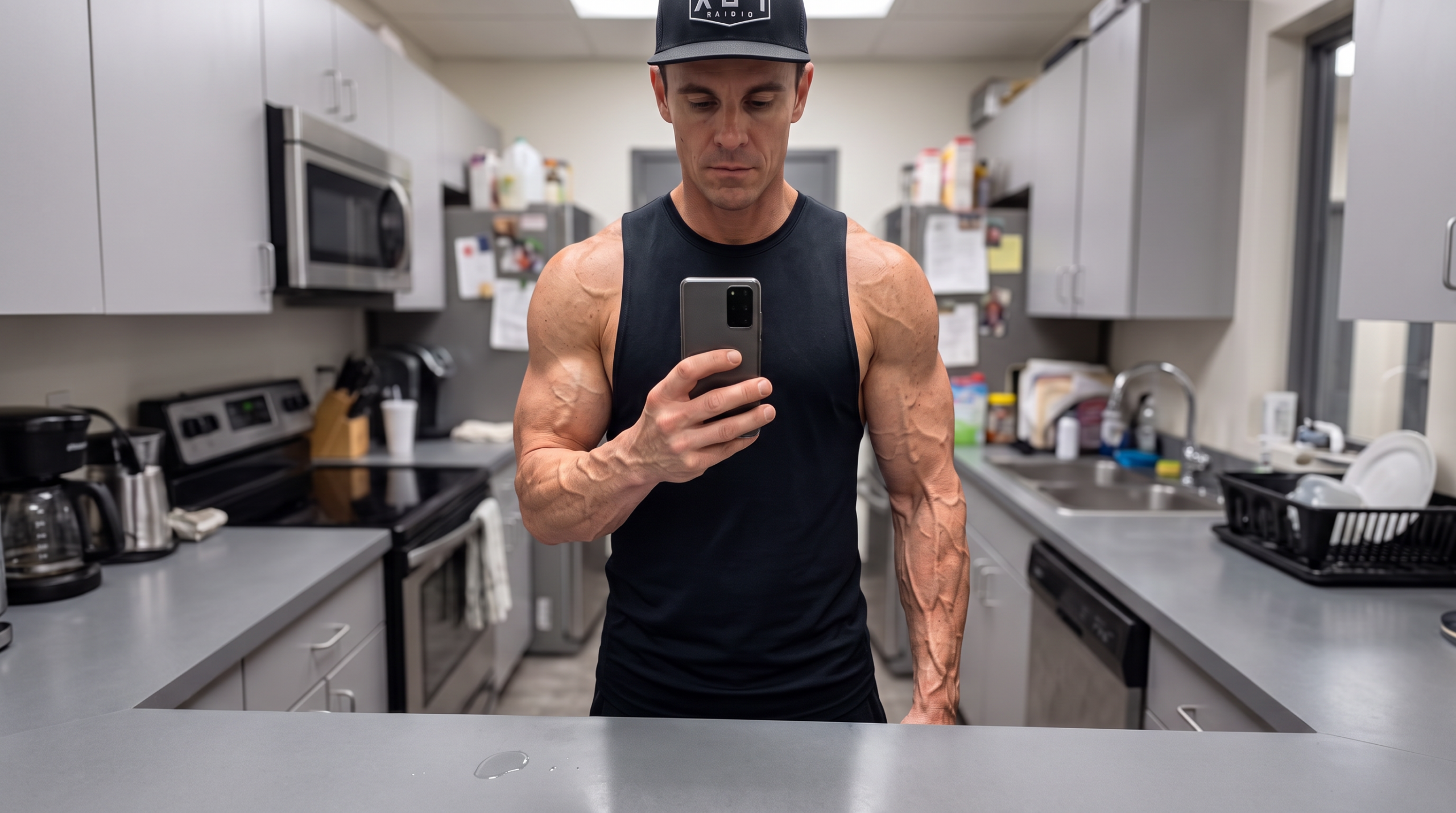
The findings challenge assumptions about aging and exercise, showing that regular workouts can’t completely stop the clock.
But they also reveal powerful strategies that may help slow the inevitable decline.
Jump to:
- The Surprising Turning Point
- Why Age 35 Matters
- High-Intensity Training Shows Unique Benefits
- Strength Training’s Critical Role
- The Acceleration Problem
- What Regular Exercisers Still Face
- Practical Implications
- Beyond Cardiovascular Exercise
- The Minimum Effective Dose
- What Happens When Decline Accelerates
- The Reality of Biological Aging
- Moving Forward
The Surprising Turning Point
Researchers discovered that fitness levels and strength begin declining around age 35, marking a critical inflection point in physical aging. This deterioration accelerates as people grow older, creating an increasingly steep curve of physical decline.
What makes this finding particularly striking is that it applies even to individuals who maintain consistent exercise routines. The body’s physiological systems appear to shift fundamentally during the mid-thirties, regardless of activity levels.
The study’s unprecedented duration—tracking participants for 47 years—provided researchers with a rare window into how human physical capacity changes across the entire adult lifespan.
Why Age 35 Matters
The mid-thirties represent a physiological watershed moment. Multiple biological systems that support physical performance begin coordinated decline during this period.
Muscle mass starts decreasing at a measurable rate. Cardiovascular efficiency begins its gradual reduction. Recovery from physical exertion takes noticeably longer.
These changes don’t happen overnight, but the study identified age 35 as the approximate point where decline becomes statistically detectable and consistent across large populations.
High-Intensity Training Shows Unique Benefits
While no exercise program can completely halt age-related decline, research suggests that high-intensity interval training (HIIT) may offer older adults a distinct advantage over other workout approaches.
A separate six-month study examined different exercise modalities in older adults, comparing their effects on body composition. The results revealed something unexpected about how different workouts affect aging bodies.
Participants who engaged in HIIT workouts managed to lose body fat while preserving their muscle mass. In contrast, those performing moderate-intensity exercise experienced a small but measurable loss of lean muscle tissue alongside fat reduction.
This distinction becomes increasingly important with age, as maintaining muscle mass directly influences metabolic health, physical independence, and quality of life.
Strength Training’s Critical Role
Beyond cardiovascular fitness, resistance training emerges as particularly crucial for combating age-related decline. Strength training may be one of the most powerful tools for staying independent as you age, according to recent findings.
Age-related muscle loss, technically called sarcopenia, makes everyday tasks progressively harder while simultaneously increasing injury risk. This creates a dangerous cycle where reduced activity leads to further muscle loss.
The encouraging news? Even minimal strength training appears beneficial. Research suggests that even one strength training session per week could make a meaningful difference in maintaining muscle mass and functional capacity as people age.
The Acceleration Problem
Physical decline doesn’t proceed at a steady pace. The 47-year study revealed that deterioration speeds up as individuals move through their forties, fifties, and beyond.
This acceleration means that the gap between a sedentary 40-year-old and an active 40-year-old may be relatively modest. But that gap widens dramatically by age 60 or 70.
- Early intervention matters: Starting or maintaining exercise habits in the thirties and forties provides compounding benefits
- Consistency trumps intensity: Regular moderate activity throughout life appears more protective than sporadic intense efforts
- Multiple systems decline together: Cardiovascular fitness, muscle strength, flexibility, and balance all deteriorate in concert
What Regular Exercisers Still Face
Perhaps the study’s most sobering finding concerns individuals who maintain consistent exercise routines throughout adulthood. Even these dedicated fitness enthusiasts cannot completely escape the age 35 turning point.
Regular physical activity appears to slow the rate of decline rather than prevent it entirely. Active individuals maintain higher absolute fitness levels than sedentary peers, but still experience measurable decreases in capacity.
This reality underscores the biological inevitability of aging while simultaneously highlighting exercise’s protective effects. The physically active 60-year-old may possess the fitness of an inactive 45-year-old—a substantial practical advantage.
Practical Implications
These findings carry important messages for people in their thirties and beyond. Understanding that significant decline begins around 35 creates an opportunity for proactive intervention.
Starting exercise programs earlier rather than later allows individuals to enter their decline phase from a higher baseline. A person who begins training at 32 will likely possess greater fitness at 55 than someone who starts at 45, even with identical training programs.
The research also validates feelings many people report in their mid-thirties—that workouts require more effort, recovery takes longer, and maintaining fitness demands greater attention than it once did.
Beyond Cardiovascular Exercise
While much discussion around fitness and aging focuses on cardiovascular health, the importance of maintaining muscle mass deserves equal emphasis.
Muscle tissue serves multiple critical functions beyond strength. It acts as metabolic tissue that helps regulate blood sugar, supports bone density, generates heat, and enables the physical independence that defines quality of life in later decades.
The distinction between HIIT and moderate-intensity exercise in preserving muscle while losing fat suggests that exercise intensity matters for maintaining favorable body composition during aging.
The Minimum Effective Dose
For individuals intimidated by demanding exercise regimens, research on minimal strength training offers hope. The finding that just one weekly resistance training session may provide measurable benefits removes the “all or nothing” barrier many people face.
This doesn’t suggest that one session weekly is optimal—more frequent training likely produces superior results. But it establishes a practical minimum that busy adults might realistically sustain.
Consistency over years and decades matters more than perfect adherence to ideal training volumes. A modest program maintained for 30 years outperforms an ambitious program abandoned after three months.
What Happens When Decline Accelerates
The study’s documentation of accelerating decline explains why physical differences become increasingly apparent in older age groups. Two 70-year-olds may exhibit vastly different functional capacities based on their exercise histories.
This acceleration also means that starting exercise at any age provides benefits, though earlier intervention produces more dramatic effects. The 65-year-old who begins strength training won’t achieve the same outcomes as someone who started at 35, but will likely surpass sedentary peers.
The Reality of Biological Aging
These findings reinforce an important but sometimes uncomfortable truth: aging involves real, measurable biological decline that cannot be completely prevented through lifestyle interventions alone.
However, they simultaneously demonstrate that the rate and severity of that decline remain substantially under individual control. The difference between an active and sedentary aging trajectory can mean years or decades of maintained independence and quality of life.
Exercise doesn’t stop aging. But it may represent the closest thing to a time machine currently available—not traveling backward, but significantly slowing the forward journey.
Moving Forward
The 47-year study provides a roadmap for understanding physical aging while highlighting interventions that may help navigate it successfully. Age 35 emerges not as a cliff but as a signpost—an indication that the body’s relationship with fitness has fundamentally shifted.
Armed with this knowledge, individuals can make informed decisions about exercise priorities, realistic expectations, and long-term planning. The goal shifts from preventing aging to aging as well as possible—maintaining function, independence, and vitality for as long as biology allows.
Perhaps most importantly, the research confirms that it’s never too late to start. While earlier is better, the benefits of exercise persist regardless of when someone begins. The best time to start was 20 years ago. The second best time is today.