Social media is flooded with sports performance products promising instant results—from brain helmets to cooling devices to mouthguards that supposedly boost your vertical jump. But do any of these gadgets actually work, or are they just expensive placebos?
A group of fitness enthusiasts recently put several viral performance products to the test, documenting their results in a series of controlled experiments.
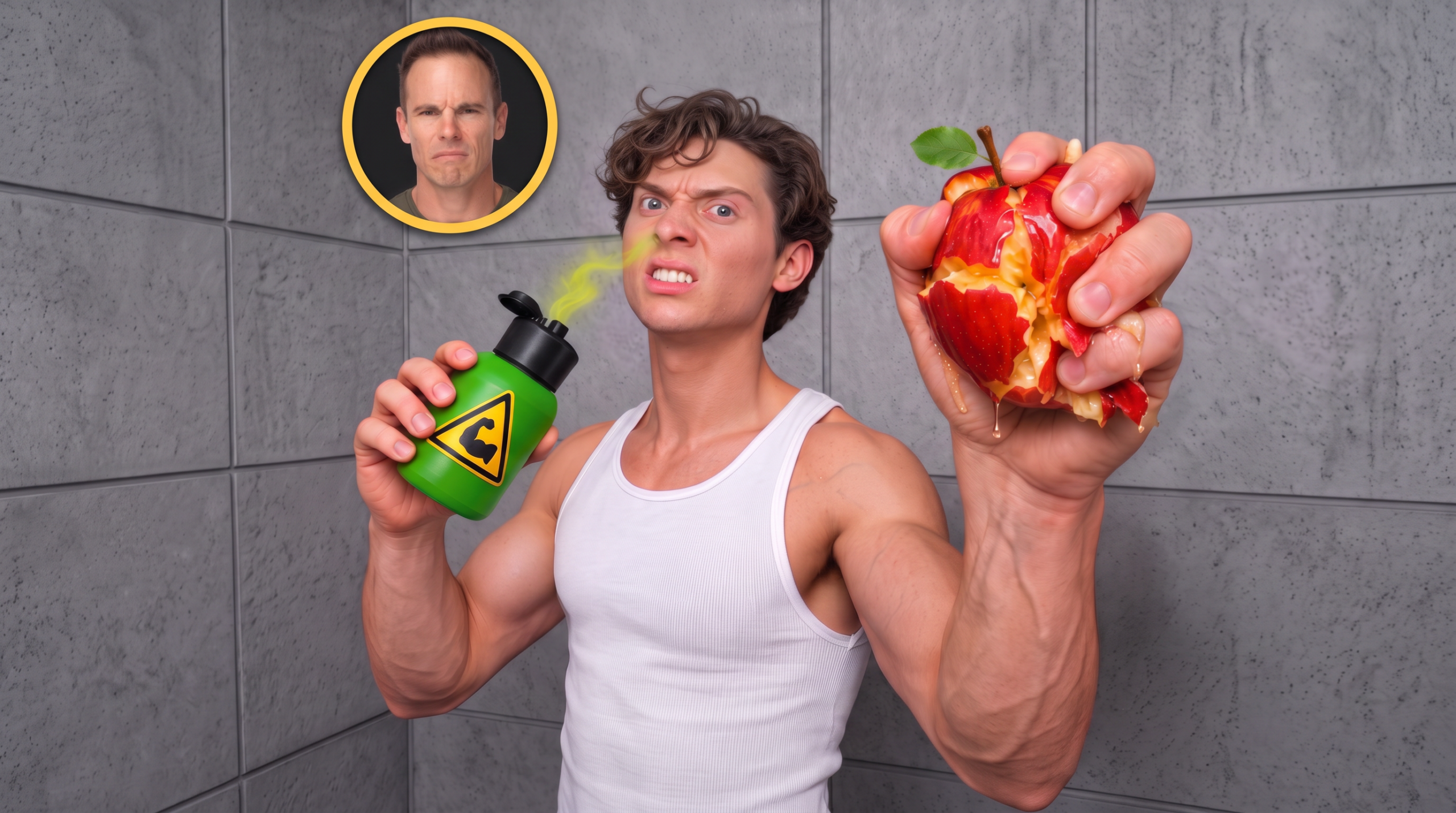
What they discovered might surprise you—some products delivered measurable improvements, while others left them questioning the science behind the claims.
Here’s what happened when they tested cooling mitts, performance mouthguards, brain-stimulating helmets, and more to see which products are worth your money.
Jump to:
- The Cool Mitt: Rapid Body Cooling for More Reps
- Performance Mouthguards: Jaw Alignment and Athletic Power
- Smelling Salts: An Adrenaline Rush Before Heavy Lifts
- Dog Paw Medicine: Enhanced Grip Through Chemistry
- Infrared Brain Helmet: Light Therapy for Cognitive Performance
- Strobe Goggles: Training Visual Processing Speed
- Which Products Actually Deliver?
- The Bottom Line on Performance Enhancement Products
The Cool Mitt: Rapid Body Cooling for More Reps
The first product tested was the Cool Mitt, a device filled with ice and water designed to rapidly cool the body between workout sets. The concept is simple: after reaching muscle failure, you place your hands on the device, which supposedly pulls heat from your body through small blood vessels in your palms, allowing you to perform more reps in subsequent sets.
The testers conducted a rigorous five-set protocol. They performed pull-ups and bench press to failure with three-minute rest periods, using the Cool Mitt only before the fifth set when their bodies were most fatigued and overheated.
The results were dramatic. On pull-ups, the tester went from 10 reps on his fourth set to an impressive 16 reps on his fifth set after using the Cool Mitt—a 60% increase in performance. His training partner experienced similar results on bench press, jumping from 16 reps to 18 reps.
I just did 16. You almost doubled your last set.
The science behind palm cooling is actually well-established. Research has shown that cooling specific parts of the body—particularly areas with arteriovenous anastomoses like the palms—can lower core body temperature and improve athletic performance. Stanford University researchers have published multiple studies demonstrating that targeted palm cooling can enhance exercise capacity and reduce fatigue.
One tester initially expressed skepticism but became a believer after experiencing the effects firsthand.
I hate to admit it, but the first 10 reps felt way easier.
Performance Mouthguards: Jaw Alignment and Athletic Power
Next up was a specialized mouthguard claiming to increase vertical jump height instantly. The theory is that biting down on the mouthguard activates more brain activity, allowing greater muscle fiber recruitment during explosive movements.
The baseline vertical jump measured 28.8 inches—right at the lower end of NBA averages. After inserting the mouthguard, the tester jumped again.
The device produced a measurable improvement, with the vertical jump increasing to 30 inches—a gain of 1.2 inches or roughly 4%.
Numbers don’t lie. That’s a big difference.
However, the research on performance mouthguards is more mixed than these results suggest. While some studies have found modest improvements in strength and power output, a 2016 systematic review published in the British Journal of Sports Medicine concluded that evidence for performance-enhancing effects of mouthguards remains inconsistent and limited. The improvements may be due to reduced jaw clenching or a placebo effect rather than enhanced neural activation.
Smelling Salts: An Adrenaline Rush Before Heavy Lifts
Smelling salts have been used by athletes for decades, but the testers tried what they described as “the world’s strongest” variety. These powerful salts contain ammonia compounds designed to trigger an involuntary inhalation reflex and boost adrenaline levels.
The reaction was immediate and intense. One tester experienced effects from several feet away, feeling the fumes hit his eyes and nose before even opening the container.
I actually felt it hit my eyes and my nose.
Grip strength testing showed a modest improvement from 171 to 173 after using the salts. While this represents only a small gain, the user reported feeling more alert and focused.
I feel more locked in and about to cry like a baby. So it’s like somewhere in between.
Smelling salts work by irritating nasal membranes, triggering a sharp inhalation that increases oxygen intake and heart rate. While widely used in sports, medical experts caution that repeated use may cause nasal irritation or respiratory issues. The performance benefits are typically short-lived and primarily psychological.
Dog Paw Medicine: Enhanced Grip Through Chemistry
Perhaps the most unusual product tested was “dog paw medicine”—a topical substance containing an ingredient listed as “dragon’s blood” that supposedly makes hands grippy like rubber.
After application, the product created an audible squeaking sound when rubbed together, similar to wearing rubber gloves. The grip enhancement was immediately apparent during testing on a smooth metal pole.
I can hang here forever, bro. We might be able to beat a Guinness World Record with this.
The tester demonstrated remarkable ease hanging from a slippery pole that would normally be difficult to grip. Dragon’s blood is actually a real botanical substance—a red resin from certain palm trees—known for forming a tacky coating when dried. Similar formulations are used by rock climbers and gymnasts to improve grip, though effectiveness varies by product.
Infrared Brain Helmet: Light Therapy for Cognitive Performance
One of the most futuristic devices tested was a helmet that delivers infrared light through the nose directly to the brain. The manufacturers claim this photobiomodulation can improve hand-eye coordination, reaction time, and focus in just 20 minutes.
To measure effectiveness, testers performed a reaction speed challenge involving hitting numbered buttons in sequence as quickly as possible. Baseline times were established before the 20-minute helmet session.
Results showed notable improvement. One tester’s average time dropped from 4.56 seconds to 3.79 seconds—a 17% improvement. The second tester improved from 5.15 seconds to 4.17 seconds, representing a 19% gain.
Saw his brain spinning, but he locked in the last two runs.
Photobiomodulation—also called low-level light therapy—has been studied for various applications. Research suggests that certain wavelengths of light may improve cellular energy production in brain tissue. A 2019 study involving football players found improvements in cognitive function and reaction time after transcranial photobiomodulation sessions. However, research quality varies, and the field remains somewhat controversial in sports science circles.
Strobe Goggles: Training Visual Processing Speed
Strobe glasses intermittently block vision, creating a flickering effect that forces the brain to process visual information more efficiently. The claim is that after removing the glasses, objects appear to move in slow motion due to enhanced visual processing.
The test involved catching a lit handle on a moving stick. Without the goggles, the tester successfully caught 5 out of 10 attempts. After training with the strobe glasses, performance improved dramatically to 9 out of 10 catches—an 80% success rate compared to 50% initially.
I felt everything was moving a lot slower. I’m skeptical about a lot of the products as a training method. I think it’s very cool. I would not sleep on it.
Stroboscopic training has been researched in athletic contexts, with studies showing improvements in anticipation timing and visual-motor performance. A 2017 study in Research Quarterly for Exercise and Sport found that stroboscopic training improved hitting performance in baseball players. The theory is that limiting visual information forces athletes to make better use of available cues.
Which Products Actually Deliver?
Based on the testing results, not all performance products are created equal. Some demonstrated clear, measurable benefits while others showed minimal effects.
Strong performers included:
- Cool Mitt: Produced dramatic improvements in workout capacity with well-supported science
- Strobe Goggles: Showed significant enhancement in reaction time and visual tracking
- Dog Paw Medicine: Delivered obvious grip improvement for specific applications
Moderate performers included:
- Brain Helmet: Showed measurable cognitive improvements but requires more testing to confirm consistency
- Performance Mouthguard: Produced modest vertical jump gains, though research support is mixed
Minimal impact:
- Smelling Salts: Only slight grip strength increase, primarily psychological benefits
The Bottom Line on Performance Enhancement Products
While many sports performance products make bold claims, this testing revealed that some actually deliver measurable results. The key is understanding which products have solid scientific backing versus those relying primarily on marketing hype.
Palm cooling technology stands out as having both strong real-world results and robust research support. Training devices like strobe goggles show promise for specific skill development, particularly for athletes in reaction-based sports.
However, it’s important to remember that no product replaces consistent training, proper nutrition, and adequate recovery. These devices may provide marginal gains or training advantages, but they work best when integrated into a comprehensive athletic development program.
For athletes considering these products, start with those showing the strongest evidence and most dramatic results in testing. The Cool Mitt’s ability to extend workout capacity and the strobe goggles’ impact on visual processing both demonstrated clear, measurable benefits worth investigating further.
As one tester noted after experiencing multiple products, maintaining a healthy skepticism while remaining open to data-driven results is the best approach.
I can’t say that it works 100%. We need further testing.
That balanced perspective—demanding evidence while acknowledging when products deliver—is exactly the mindset athletes should bring when evaluating performance enhancement claims.