Pelvic floor health rarely gets discussed at the gym or doctor’s office, yet it impacts everything from athletic performance to sexual function.
Back pain, erectile dysfunction, and bladder control issues can all stem from weakness in this often-overlooked muscle group.
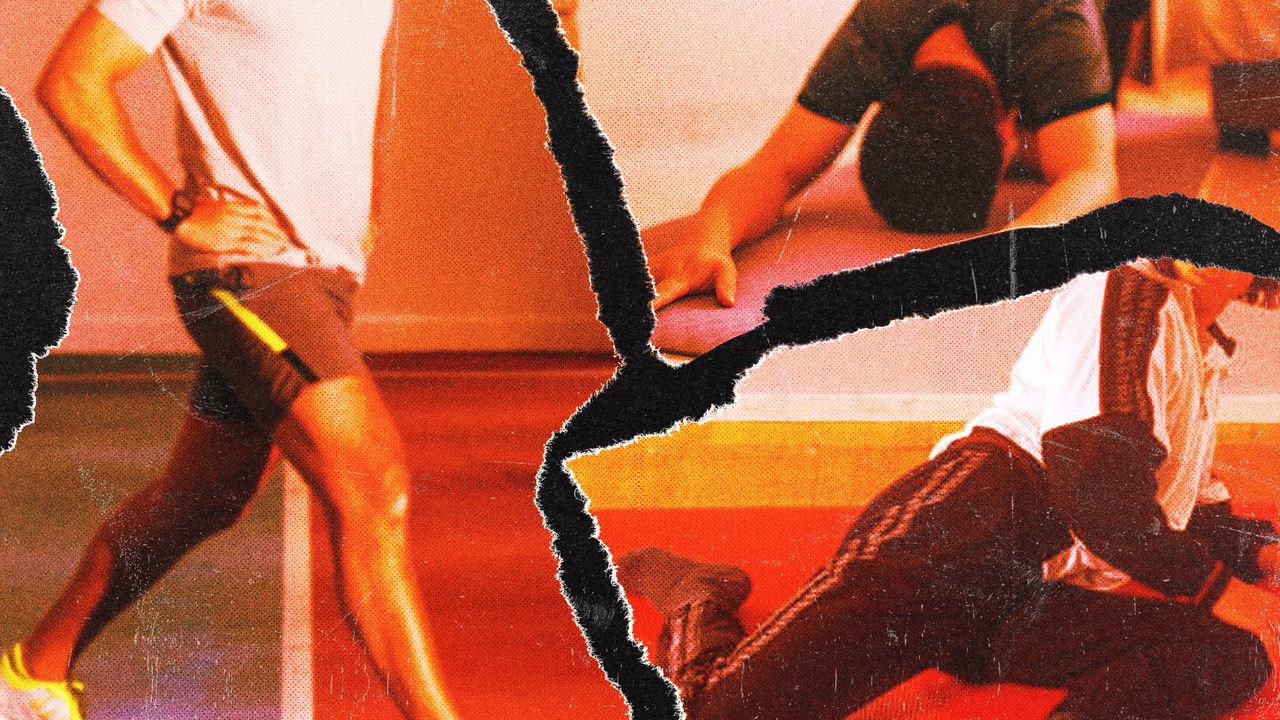
In a recent GQ article, physical therapist Dr. Kristy Clements and sports medicine physician Dr. Irvin Sulapas shared three powerful exercises designed to strengthen and relax the pelvic floor.
These simple movements require no equipment and can transform both gym results and bedroom performance.
Jump to:
Understanding Your Pelvic Floor: More Than Just Kegels
Most men go through life completely unaware of their pelvic floor’s existence.
I think a lot of people go their whole life without ever knowing what their pelvic floor is.
Often compared to a sling, bowl, or trampoline, the pelvic floor forms the foundation of your abdominal cavity. It cradles critical organs including the bladder, bowel, and prostate while actively participating in sexual function, bladder control, and force transfer during workouts.
Despite the name “floor,” these muscles should be dynamic and responsive, not passive. When functioning properly, they coordinate seamlessly with breathing, core engagement, and hip movement to support overall body mechanics.
The Hidden Consequences of Pelvic Floor Dysfunction
Dr. Sulapas points to an extensive range of conditions potentially improved through targeted pelvic floor work. Constipation, chronic back pain, erectile dysfunction, and premature ejaculation all connect to this muscle group’s health.
The relationship between pelvic floor strength and sexual function runs so deep that medication alone may not solve certain problems.
The little blue pill may not work if you have a weak pelvic floor to begin with.
Dr. Clements notes that sexual dysfunction typically becomes the catalyst driving men to seek treatment. However, addressing pelvic floor health proactively—before symptoms emerge—offers far greater benefits.
Why Kegels Aren’t Always the Answer
Conventional wisdom suggests kegels as the go-to pelvic floor exercise. Reality proves more complex.
Most people will say, ‘Oh, I should just be doing kegels.’ Or, ‘I was talking to AI and it said to try kegels.’ But nine times out of 10, people already have too much tension in their pelvic floor and it’s working overtime.
Dr. Clements explains that excessive tension, not weakness, plagues most pelvic floors. Rather than contracting already-tight muscles further, these individuals need exercises focused on lengthening and relaxing chronically clenched tissues.
The three exercises below specifically target this common pattern of overactivity.
Exercise 1: Child’s Pose Back Breathing
If Dr. Clements could teach everyone just one exercise, it would be proper breathing technique. This modified child’s pose variation creates ideal conditions for restoring natural breathing patterns and pelvic floor coordination.
If I could teach everyone one exercise, it would be learning how to breathe well.
The Breathing-Pelvic Floor Connection
During inhalation, the diaphragm descends while the pelvic floor naturally lengthens. Upon exhalation, the pelvic floor recoils and lifts. This rhythmic coordination forms the foundation of pelvic floor health.
Child’s pose back breathing encourages expansion through the back and sides of the rib cage, facilitating this natural pattern.
How to Perform It
- Begin kneeling with knees and feet together, tops of feet flat on the floor
- Sit back onto heels and fold torso forward over knees
- Extend arms straight forward with palms resting flat
- Take slow, deep breaths directing air into lower ribs
- Hold for 1-2 minutes
I love this exercise, because you really can’t mess it up. Just let the setup do the work for you.
Exercise 2: 90-90 Hip Stretch
Hip mobility directly influences pelvic floor function. The hip joint sits immediately adjacent to the pelvic floor, creating an unavoidable anatomical relationship.
Hip mobility plays a major role in pelvic floor health. If we’re looking at the pelvic floor, the hip joint is right there. They’re literally connected. So if we don’t talk about hip mobility, then we’re missing a big piece.
The 90-90 position improves both internal and external hip rotation, changing how the pelvis moves and how surrounding muscles function.
Setup and Execution
- Sit on the floor with legs spread wide
- Bend both knees to 90 degrees
- Lower legs to the left side until both knees rest on the ground
- Pull right leg back until thighs form a 90-degree angle
- Maintain upright posture and gently lean forward over front leg
- Hold for one minute, then switch sides
Dr. Clements recommends integrating this stretch into daily routines rather than treating it as a separate workout.
Sometimes I’ll have people grab their laptop and sit like this on the floor. It can be a very easy and passive way to release tension.
Exercise 3: Split-Stance Hip Hinge
Unlike the previous stretches, the split-stance hip hinge functions as active strengthening work. It requires coordinating the core, glutes, and pelvic floor simultaneously—what Dr. Clements calls bringing “the whole system” together.
This last one is a little bit different—it’s more of a functional strengthening exercise.
Why Hip Hinges Matter
Prolonged sitting keeps everything in a shortened position. Hip hinging lengthens the glutes, hamstrings, and pelvic floor while integrating breath, glute activation, and core stability.
If you’re sitting all day, everything’s in this shortened position. As we hinge at the hip, we’re lengthening the glutes, hamstrings, and the pelvic floor. It brings the breath, glutes, and core together, and helps to open up space in the pelvic floor.
Proper Form
- Stand with staggered stance, feet hip-width apart
- Keep ribs stacked over pelvis with slight bend in front knee
- Place most weight on front leg (back leg provides balance only)
- Hinge at hip to lower torso toward floor
- Pause when feeling hamstring stretch
- Engage glutes to reverse movement back to start
- Perform continuous reps for one minute per side
Making Pelvic Floor Work Part of Daily Life
The beauty of these exercises lies in their versatility. Each movement translates directly into everyday activities, making them easy to practice without dedicated workout time.
The 90-90 stretch works perfectly while working at a laptop. The split-stance hip hinge mirrors common movements like loading the dishwasher or brushing teeth.
It’s a practical movement pattern that carries over into everyday activities, like brushing your teeth or loading the dishwasher. Any time you bend, you can use a split-stance hip hinge.
Consistency matters more than duration. Even brief daily practice produces noticeable improvements in pelvic floor function, often within weeks. These changes cascade into better lifting mechanics, improved sexual function, and reduced pain during everyday activities.
Rather than waiting for dysfunction to develop, incorporating these movements proactively establishes a foundation for long-term pelvic health and overall performance.