An Australian endurance athlete just pushed the human body to a place most people wouldn’t dare to dream about.
For nearly seven full days, Phil Gore ran 6.71 kilometers every single hour — sleeping in 15-minute bursts, eating McDonald’s cheeseburgers and Coco Pops between laps, and doing it all while the rest of the world carried on with normal life.
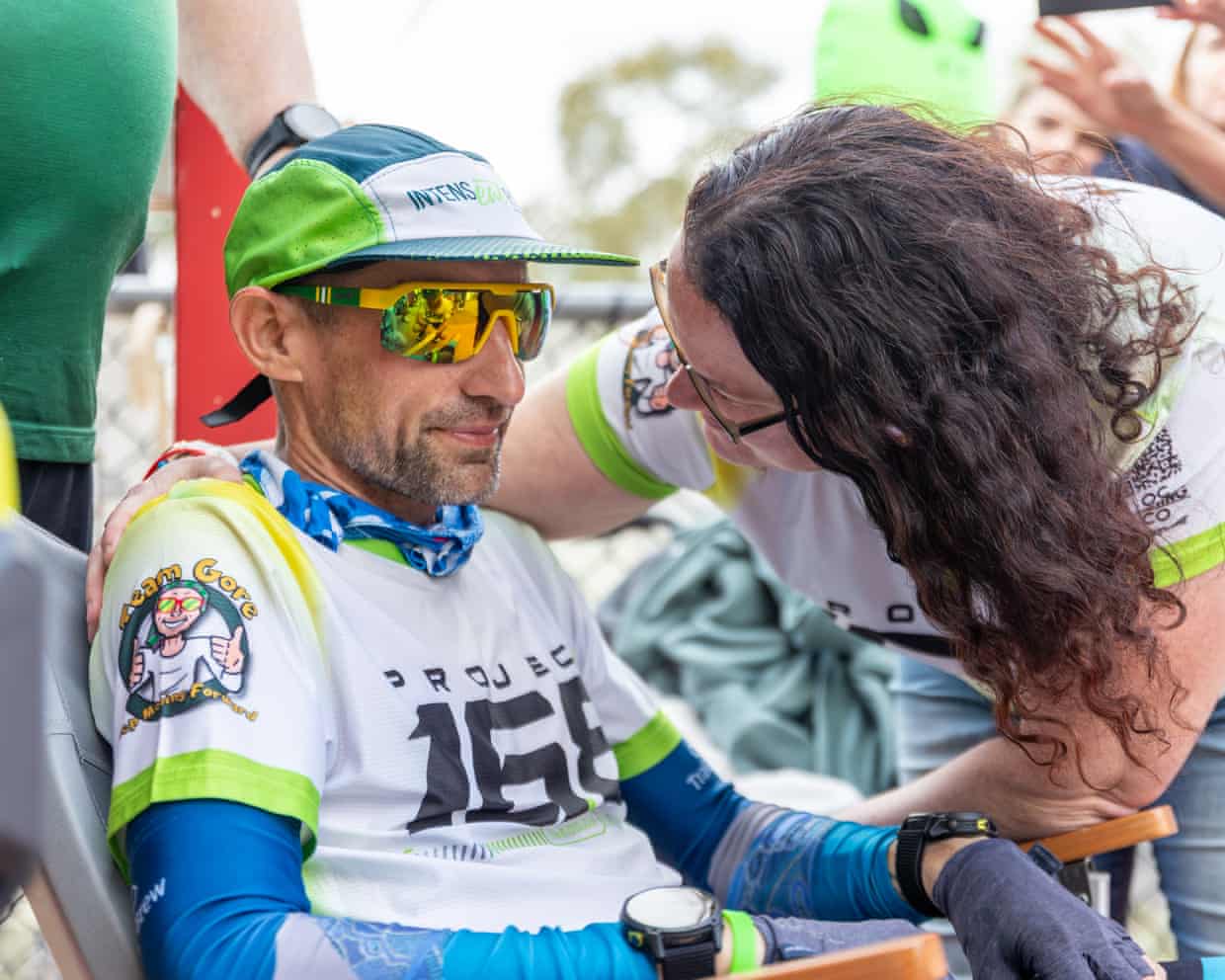
The feat doesn’t officially count as a world record, and the reason why says everything about the sport Gore has already mastered.
Here’s the full story of Project 168 — and why this “failed” attempt might be one of the most extraordinary athletic achievements you’ll ever read about.
Jump to:
- What Is Backyard Ultra — and Why Is Gore Already a Legend?
- The Problem With Winning — And Why He Had to Go Further
- Sleeping in 15-Minute Bursts — And Loving It
- The Diet That Kept Him Going: Nerds, Meat Pies, and a Surprise Cheeseburger
- Day Seven: The Moment He Found His Limit
- $285,000 Raised — And a Recovery That Tells Its Own Story
What Is Backyard Ultra — and Why Is Gore Already a Legend?
Backyard Ultra is one of endurance sport’s most brutally simple formats.
Competitors run a 6.71km loop every hour, on the hour. Finish with time to spare and you get to rest until the next hour begins. Fail to complete the lap in time and you’re out — no exceptions, no second chances.
There’s no finish line. The race ends only when one person is left standing.
Gore, 40, has competed in 16 of these events and won 14 of them. In early 2025, he set a world record at Dead Cow Gully — running for 119 consecutive hours. That’s nearly five full days without stopping.
And yet, he walked away feeling like he had more to give.
The Problem With Winning — And Why He Had to Go Further
Here’s the cruel irony baked into the Backyard Ultra format: winners never truly find their limit.
Traditional rules require the last runner standing to complete just one additional lap after the second-place athlete drops out — meaning the race ends long before the winner necessarily would.
Because I’ve done a lot of these now — I’ve done 16 and I’ve won 14 of them — whenever you win, you don’t get to push yourself to the limit.
That frustration sparked an idea. Project 168 was born — a self-imposed solo challenge to run 6.71km every hour for an entire week, 168 hours straight. Two full days beyond his existing world record.
No competitors. No race officials. Just Gore, a small crew of family and friends, and a bed set up at the Armadale Soccer Club in Perth’s Forrestdale suburb.
It was a personal challenge for myself to see how far I can go, but also to help set a benchmark that other up-and-coming Backyard athletes can strive to reach.
Sleeping in 15-Minute Bursts — And Loving It
The sleep strategy alone is enough to make most people wince.
After each roughly 40-minute lap, Gore had around 15 minutes remaining before the next hour began. That window covered everything — sleep, food, toilet, massage, and gear changes. All of it.
Remarkably, those micro-sleeps were genuinely restorative for him.
The deeper I get into the event, I am getting into those deep sleep stages, and I can lie down for 15 minutes, and it might feel like I’ve been down for two or three hours. My crew will have to wake me up because I would just be passed out.
The hardest moment? Not the running. Not the sleep deprivation.
That time from getting up out of bed to getting to the start line, that’s the hardest time of the whole event, because all you want to do is just go back to sleep.
The Diet That Kept Him Going: Nerds, Meat Pies, and a Surprise Cheeseburger
Fueling an attempt like this requires a very specific kind of eating strategy — and Gore’s approach was as unconventional as the challenge itself.
Simple sugars were the backbone of his nutrition plan. Speckled snakes, Nerd clusters, jelly cups, and custard pouches kept his energy ticking over between laps. More substantial options included Coco Pops with chocolate milk, meat pies, and microwave chicken curry with rice.
Then came the unexpected highlight.
I don’t normally eat McDonald’s cheeseburgers, but someone brought them down, and I was just like, ‘Oh, that looks amazing.’ And so I had this cheeseburger and it just worked really well.
Sometimes the body knows exactly what it needs.
Day Seven: The Moment He Found His Limit
Gore made it through 152 laps. His slowest — lap 152 — came in at 58 minutes, just two minutes inside the cutoff.
At 4pm on day seven, he set out for lap 153. It would be his last.
I got about 25 minutes into the lap and I wasn’t even at 1,800 metres yet. That was when I gave up and realised there’s not a way that I can move at a pace to finish this lap in time. I just stopped and collapsed on the ground and got my crew to scoop me up and put me in the car.
152 hours. 1,020 kilometers. An unofficial world record that the sport’s format can’t formally recognize — because Project 168 was a solo challenge, not a sanctioned race.
He was candid about the emotions that followed.
I wanted it to be a challenge where I could find my limit, that’s what I’ve done. Maybe there is a little bit of disappointment that I wanted my limit to be a bit further away.
$285,000 Raised — And a Recovery That Tells Its Own Story
Throughout the week, a live-stream broadcast every lap to a rapidly growing audience. The attention helped Project 168 raise an extraordinary $285,000 for Telethon, funding medical research and health services for children in Western Australia — smashing the original fundraising target.
The physical toll, though, was real.
This one has definitely taken a lot more out of me than previous events. I’ve been bobbling around on crutches for the last two days.
Even so, Gore isn’t treating this as a defeat. He’s already working with his doctor and physio to understand what went wrong and to prevent it from happening again in a future race.
Yes, that was the limit on the day, but I know what went wrong. We have a plan to stop this from happening again in another race.
For a man who spent six and a half days surviving on 15-minute naps and microwave curry, that sounds about right.