One of the toughest races on the planet just witnessed something nobody has seen in its entire history.
In a single overnight stretch across scorching Death Valley, two first-time competitors didn’t just win the 2025 Badwater 135 — they obliterated records that have stood for years, doing it within minutes of each other.
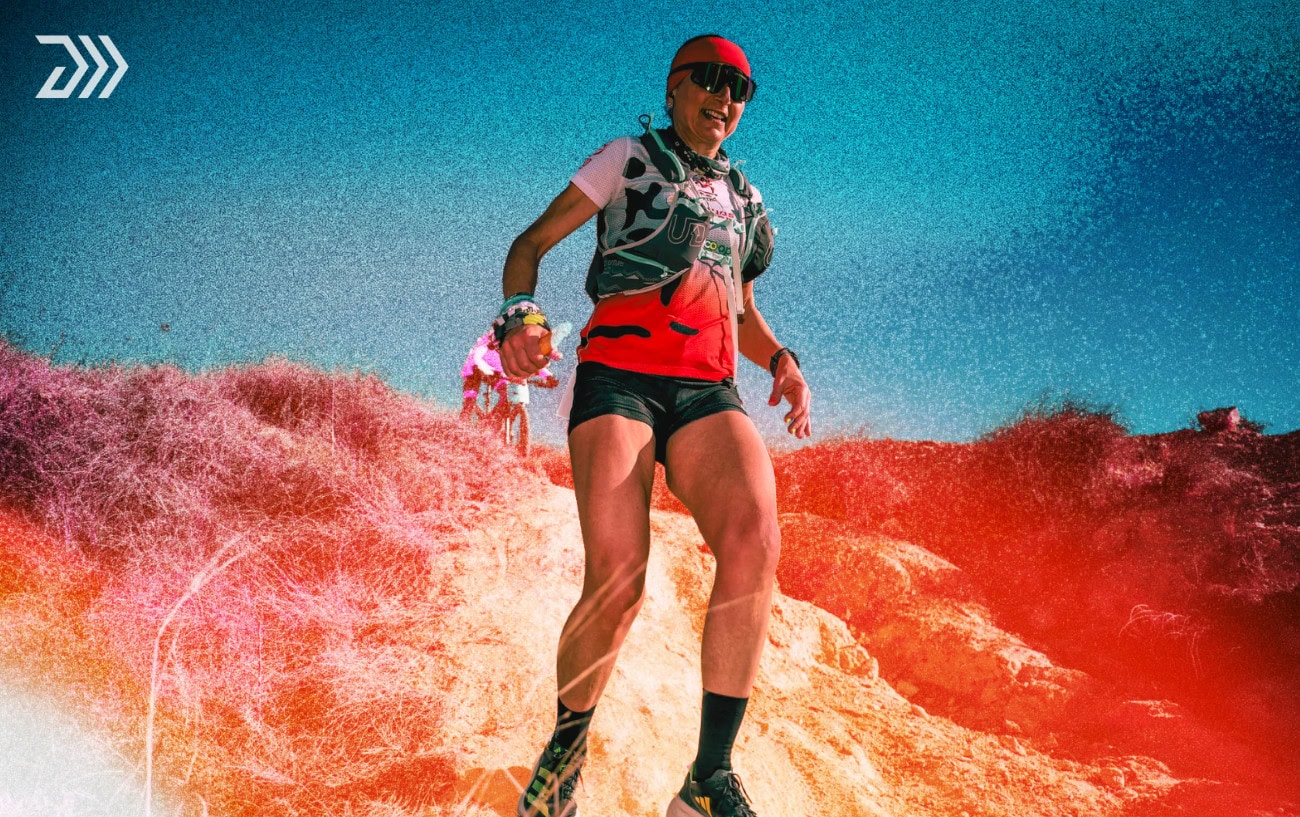
Max Jolliffe and Carmen Maria Perez, both Badwater rookies, turned their debut into one of the most remarkable nights in ultramarathon history.
Here’s how it all unfolded — and why the running world is absolutely buzzing right now.
Jump to:
Breaking 21 Hours for the First Time Ever
Since the Badwater 135 began, no one had ever completed the course in under 21 hours. Max Jolliffe just made that barrier disappear.
The 34-year-old from Costa Mesa, California crossed the finish line at Whitney Portal in an extraordinary 20 hours, 53 minutes, and 41 seconds — slicing nearly 40 minutes off the previous men’s course record of 21:33:01, set by Yoshihiko Ishikawa back in 2019.
That’s not just a record. That’s a landmark moment for the sport.
Then, just 11 minutes and 51 seconds later, something equally staggering happened.
The Woman Who Finished Second Overall — and Rewrote History
Carmen Maria Perez, a 44-year-old from San Juan de Requena, Spain, crossed the finish line in 21:05:32 — good enough for second place overall and a new women’s course record that demolished Ashley Paulson’s 2023 mark of 21:44:35 by more than 39 minutes.
Her time is the second-fastest in Badwater history, regardless of gender. Let that sink in.
Perez finished more than 27 minutes ahead of where the men’s course record stood just hours earlier — a stat that underscores just how extraordinary her performance truly was.
Both records fell within the same evening, by margins just 17 seconds apart. Race organizer AdventureCORPS confirmed the results, and the ultrarunning world hasn’t stopped talking since.
What Makes Badwater 135 So Brutally Different
To understand why these performances are so jaw-dropping, you need to understand the race itself.
Badwater 135 covers 135 miles from Badwater Basin — the lowest point in North America at 280 feet below sea level — to the Whitney Portal trailhead at 8,360 feet above sea level. Along the way, runners climb 14,600 feet across three separate mountain ranges, all while battling the extreme heat of California’s Death Valley in the peak of summer.
It is regularly ranked among the hardest ultramarathons on Earth.
This year’s field included 98 athletes from 21 nations, with an average age of 46. Sixty-five of those runners — including both record-breakers — were Badwater first-timers. AdventureCORPS also tightened the course’s overall time limit this year, cutting it from 48 hours down to 45.
A Race Within the Race: Perez Led for Almost the Entire Night
For the majority of the course, it was Perez who set the pace.
She checked in ahead of Jolliffe at nearly every major milestone — Furnace Creek at mile 17.7, Stovepipe Wells at mile 42.2, Panamint Springs at mile 72.8, and Keeler at mile 108.4. Heading into Lone Pine at mile 122.8, the race was genuinely anyone’s to win, with three runners separated by less than seven minutes.
Hungary’s Tamás Bódis led through Lone Pine in 18:07, with Jolliffe at 18:13 and Perez at 18:14. Barely a heartbeat between them.
What remained was the brutal Whitney Portal climb — 4,750 feet of elevation gain packed into just 12.2 miles, with the steepest section saved for the very last mile.
The Climb That Changed Everything
Jolliffe attacked the final climb in 2 hours and 40 minutes. Perez took 2:51:32, and Bódis — who had been leading as recently as Lone Pine — needed 3:27:47 to summit.
That mountain was where the race was decided. Jolliffe had held a one-minute edge over Perez entering Lone Pine and stretched it to nearly 12 minutes by the finish line.
Bódis held on for third place in 21:34:47 — a time that, on any other night, would have threatened the men’s course record. Ivan Penalba Lopez of Spain finished fourth in 21:57:44, and Francesco Perini of Italy rounded out the top five in 23:14:47. Four athletes finished under 22 hours — an almost unthinkable result for a race this demanding.
The Woman Whose Record Fell Was Racing Right Behind Them
Perhaps one of the most compelling storylines of the night involved Ashley Paulson — the woman whose women’s record Perez erased.
Paulson was in the field, wearing bib number 1, and she finished seventh overall in 24:59:36 — second among women and nearly four hours behind the new champion. Pete Kostelnick, the 2016 Badwater champion, came in sixth with a time of 23:50:12.
The sport is already looking ahead. AdventureCORPS has confirmed the 2027 race is scheduled for July 19–21, with plans to bring back Eleanor Adams Robinson — the winner of the very first Badwater race in 1987 — to mark 40 years since that milestone moment in Lone Pine.
But right now? The conversation belongs entirely to two rookies who showed up to the most grueling race in the world — and rewrote its record books on the very same night.