Building muscle isn’t just about showing up to the gym and breaking a sweat.
Despite what many believe, getting a good pump or drenching your shirt doesn’t automatically translate to muscle growth.
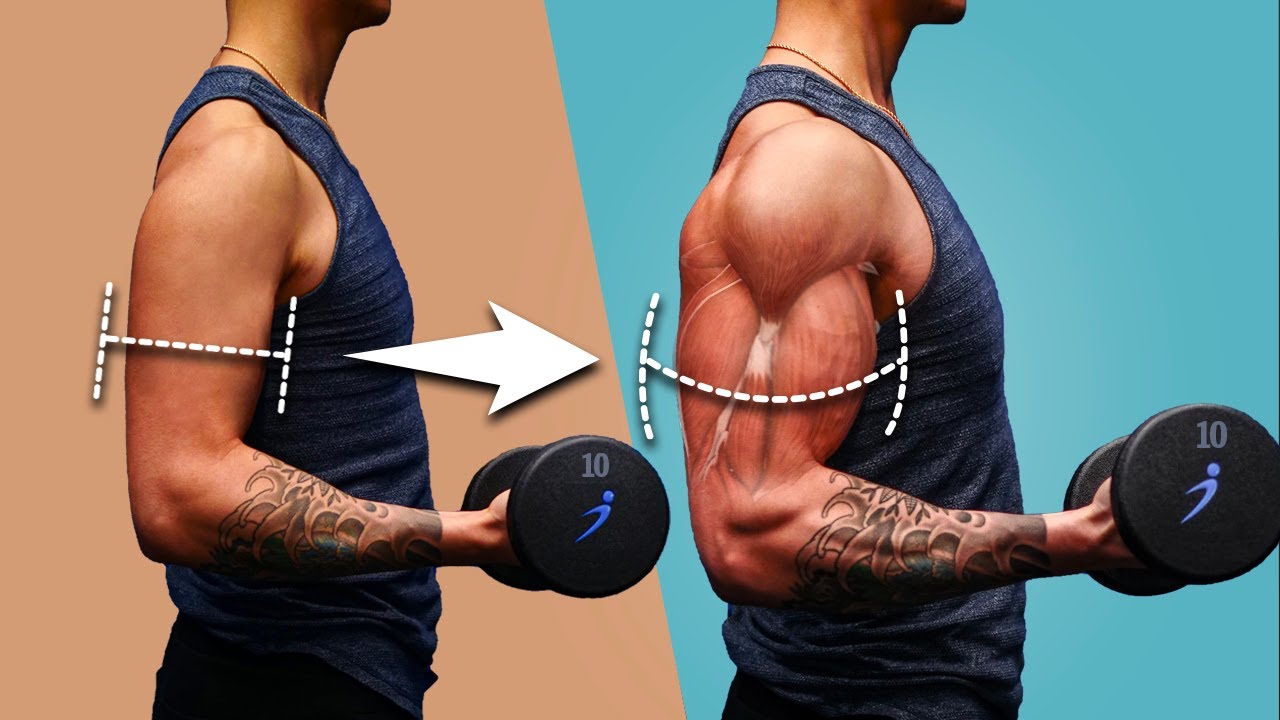
Popular fitness educator Jeremy Ethier recently broke down the science behind progressive overload, revealing five critical methods that force muscles to adapt and grow—and why most people are missing the mark.
Understanding these strategies could be the difference between spinning your wheels and making consistent progress.
Jump to:
Understanding Muscle Growth After Training
The process of muscle growth follows a predictable pattern. Immediately after a workout, muscles don’t actually become stronger—they become temporarily weaker from the damage imposed during training.
Recovery is where magic happens. After a few days of proper rest, muscles adapt to that damage and come back bigger and stronger than before, preparing for the next challenge.
But here’s the catch: if your next session doesn’t provide a greater stimulus than the previous one, muscles have no reason to grow. They’ll simply maintain current size and strength—or worse, shrink and weaken.
Method #1: Add More Weight to the Bar
Increasing load remains the most straightforward approach to progressive overload. Bench pressing 110 pounds for 8 reps after previously lifting 100 pounds for the same reps creates new stimulus demanding adaptation.
Beginners can leverage this method aggressively. Adding 5 to 10 pounds weekly on major lifts like bench press, squat, and deadlift becomes entirely feasible during the novice phase.
However, linear progression has limits. Ethier points out that if someone started benching 100 pounds and added 10 pounds weekly, they’d theoretically bench 620 pounds by year’s end.
As cool as that would be, neither myself nor Alex, one of our record-breaking Built With Science coaches who can bench over twice his body weight, is anywhere close to that.
Eventually, relying solely on adding weight creates plateaus. Breaking through requires more creative approaches.
Method #2: Increase Reps with Same Weight
Adding repetitions offers another powerful progression tool. The math is simple: benching 100 pounds for 10 reps equals 1,000 pounds total volume. Performing 11 reps next week means lifting 1,100 pounds—a 100-pound increase without touching the weight.
Research supports this approach. A 2017 meta-analysis revealed that pushing hard on sets ranging up to 30 reps produces similar growth compared to heavier loads with fewer reps.
This proves especially valuable for those with limited equipment or nagging injuries preventing weight increases.
Double Progression: Combining Weight and Reps
Ethier’s Built With Science programs utilize double progression, merging both weight and rep increases for consistent advancement.
Here’s how it works:
- Start with 3 sets of squats at 100 pounds for 8-12 reps
- Week one: perform 8 reps per set
- Week two: attempt 9 reps per set
- Continue progressing until reaching 12 reps across all sets
- Add 10 pounds and restart at 8 reps
But what happens when you can’t add weight or reps?
Method #3: Increase Training Sets
Volume manipulation provides another progression avenue. Moving from three sets of curls to four sets—while maintaining weight and reps—dramatically increases total workload.
With 40-pound dumbbells, adding one set means each bicep lifts an additional 480 pounds of volume weekly. That’s massive stimulus from a simple change.
Research shows performing at least 10 sets per muscle group weekly nearly doubles gains compared to just 5 sets. However, diminishing returns appear around 20-30 sets.
Key guideline: increase volume no more than 10-20% weekly. If currently performing 10 chest sets weekly and stuck on weight or reps, add one extra set per exercise the following week.
Continue until reaching 20-30 sets or experiencing excessive fatigue, then cycle back down to original programming.
The downside? This method taxes the body significantly and extends workout duration. The next two methods avoid these issues.
Method #4: Manipulate Lifting Tempo
Slowing down repetitions increases time under tension, stimulating additional growth without changing weight, reps, or sets.
This works exceptionally well for smaller muscle groups like lateral raises (where minor weight jumps create disproportionate difficulty) and bodyweight movements like push-ups or pull-ups.
Dr. Brad Schoenfeld’s 2015 meta-analysis on tempo and muscle growth suggests slowing reps up to approximately 6 seconds total—3 seconds lifting, 3 seconds lowering.
Practical application for 20-pound lateral raises:
- Week one: 1 second up, 1 second down
- Week two: 2 seconds up, 1 second down
- Week three: 2 seconds up, 2 seconds down
- Week four: 3 seconds up, 2 seconds down
- Week five: 3 seconds up, 3 seconds down
- Week six: increase to 25 pounds or apply different overload method
Beyond 6 seconds total, reps become too slow and may actually hinder growth rather than enhance it.
Method #5: Perfect Your Form
Perhaps the most overlooked progression method involves technique refinement. Many lifters think they’re progressing by adding weight when they’re actually just compensating with worse form.
Despite using heavier loads, target muscles aren’t working harder—momentum and secondary muscles pick up the slack.
If you do the same work that you did the week before but you perform your exercises with better control, less momentum, and more activation of your target muscles, then that is progression.
Better form means relying more on target muscles, which stimulates growth even when all other variables remain constant.
Even advanced lifters benefit from ongoing form analysis. Ethier notes that he and his team continuously examine and refine technique because they understand other progression methods become meaningless without proper form.
Which Method Works Best?
The optimal approach depends on individual factors: experience level, equipment availability, and specific plateaus encountered.
Beginners should prioritize adding weight to the bar while perfecting form. Intermediate lifters benefit from double progression combining weight and reps. Advanced trainees require rotating through all five methods strategically.
Experimentation reveals what works best for your body. Track progress meticulously, apply one progression method at a time, and assess results over 3-4 weeks before switching approaches.
The fundamental principle remains unchanged: muscles grow when forced to adapt to progressively greater demands. Whether through heavier weights, more reps, additional sets, slower tempo, or improved form, consistency in applying progressive overload separates those who build impressive physiques from those who simply go through the motions.
Stop relying on sweat and pumps as indicators of effective training. Start implementing systematic progression, and muscles will have no choice but to grow.