Tendon injuries are frustratingly stubborn. Whether it’s tennis elbow, a tweaked Achilles, or nagging knee pain, most people are told to rest, ice, and wait. But what if that common advice is actually making things worse?
Dr. Keith Baar, a leading tendon researcher at UC Davis, believes it’s time to ditch outdated treatments and embrace a smarter, science-backed approach to healing connective tissue. As he shared on The Tim Ferriss Show, the key to tendon repair isn’t rest—it’s targeted, low-load isometric training.
This article breaks down everything you need to know to help your tendons heal, get stronger, and stay injury-free.
Jump to:
- The #1 Mistake People Make When Healing Tendons
- Why Isometric Exercises Are the Secret Weapon
- Customize the Protocol Based on Your Injury
- Bonus: Use Nutrition to Supercharge Healing
- Avoiding False Promises: What Doesn’t Help
- Timing Matters: Start Loading Immediately After Injury
- How to Progress Over Time
- What About Ice, Rest, and Anti-inflammatories?
- Final Takeaway: Load It to Heal It
The #1 Mistake People Make When Healing Tendons
“You go to the doctor with a sprained ankle and they put you in a boot,” says Dr. Baar. “That boot is designed to take stress off the tissue. But what’s going to cause that tissue to scar? Taking off the tension.”
In other words, immobilization creates scar tissue, weakens the tendon, and increases re-injury risk.
What tendons actually need is mechanical load—not extreme weight, but gentle, controlled tension that stimulates the tissue to rebuild and realign collagen fibers properly.
Why Isometric Exercises Are the Secret Weapon
Tendons are not like muscles. They don’t respond well to high-rep training or dynamic loading, especially after injury.
Instead, isometrics—where you hold a contraction without movement—give the tendon just enough stimulus without wear and tear. According to Dr. Baar’s lab research, the optimal signal for tendon adaptation peaks within 10 minutes of activity, and more than that becomes just “wear.”
Here’s the ideal isometric protocol:
- Duration: 30 seconds per hold
- Rest: 2 minutes between sets
- Reps: 4 to 5 holds
- Frequency: 1–2 times per day
- Tension level: Low to moderate (no pain, just pressure)
Why this matters: In chronic injuries, tendons develop “strong” regions that shield the damaged areas. Long isometric holds allow those strong parts to fatigue, redistributing load across the weaker, injured tissue and helping it finally rebuild.
Customize the Protocol Based on Your Injury
For different injuries, loading direction and joint angles matter. Here’s how Dr. Baar tailors the protocol:
Tennis Elbow (Lateral Epicondylitis)
- Use a tennis racket or stick to create resistance in a palm-down wrist extension.
- Perform both rotational and extension-based isometrics.
- Work in multiple joint angles: bent elbow, straight arm, and overhead.
Golfer’s Elbow (Medial Epicondylitis)
- Reverse the grip and perform isometrics in wrist flexion.
- Add gentle pronation (palm down) and supination (palm up) holds.
Achilles Tendon
- Do seated calf raise isometrics (knee bent) for the soleus.
- Do straight-leg calf raise isometrics for the gastrocnemius.
- Start in a plantarflexed position (toes pointed) to avoid stressing post-surgical sutures.
Knee Pain or Patellar Tendinopathy
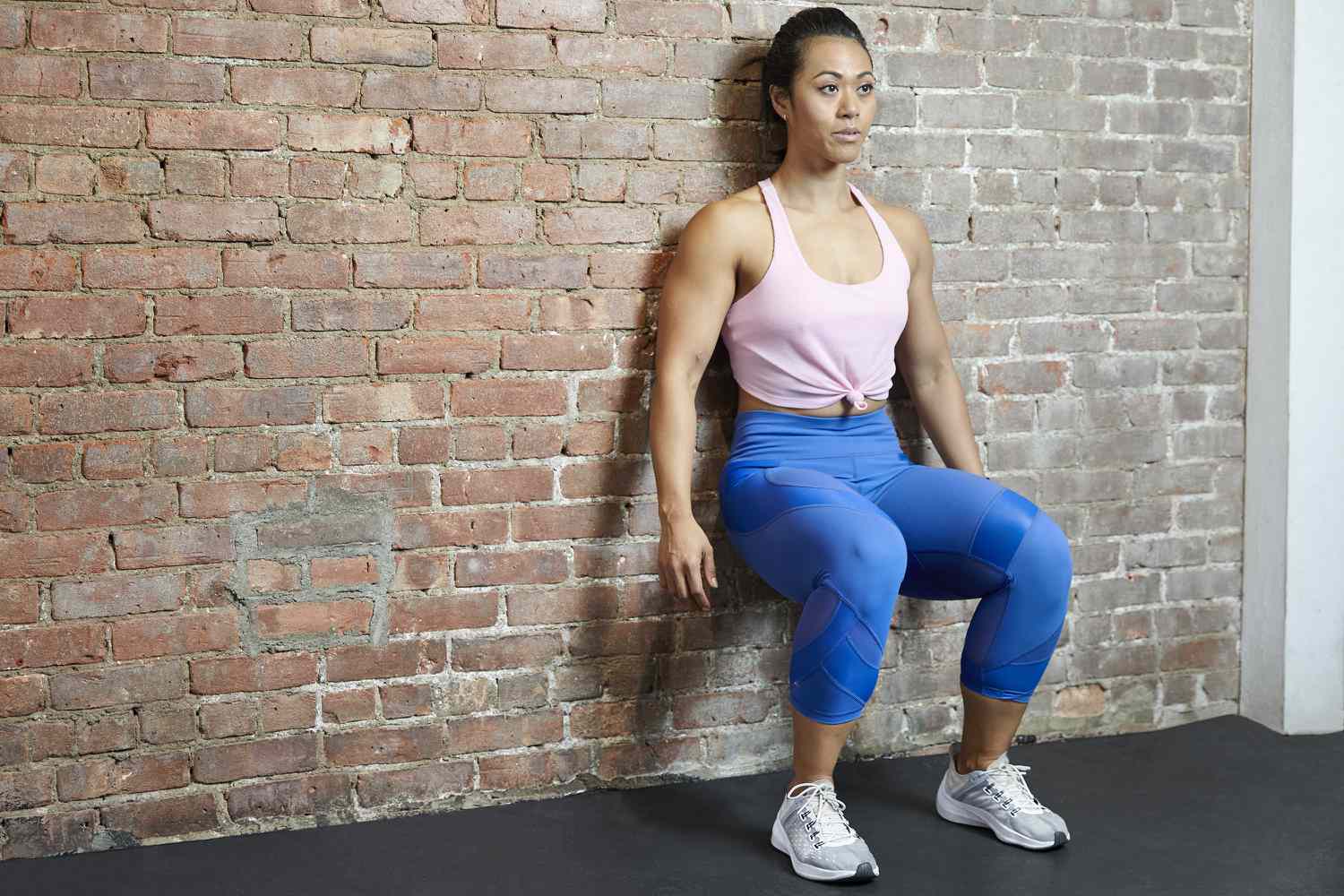
- Use split squats or wall sits with knees at 90°.
- Hold each lunge position for 30 seconds.
- Ensure front knee travels forward over the toes to load the Achilles as well.
Bonus: Use Nutrition to Supercharge Healing
Isometrics provide the stimulus, but your body also needs the raw materials to rebuild tendon tissue.
Dr. Baar’s top recommendation:
- 15 grams of hydrolyzed collagen
- Vitamin C (200–250mg)
- Take it 30–60 minutes before your isometric session
Collagen is rich in glycine and proline—key amino acids in tendon tissue. Vitamin C helps your body use those building blocks to synthesize new collagen.
His lab has shown this pre-training supplement can double collagen synthesis markers in the blood.
✅ Tip: Choose collagen from skin sources (bovine hide or fish skin), not bone broth. Bone can contain heavy metals.
Avoiding False Promises: What Doesn’t Help
Dr. Baar is skeptical of most passive or “biohacked” approaches:
- PRP, stem cells, BPC-157: Often ineffective, especially in the lower body where fluids dissipate quickly.
- Eccentric training: Works because it’s slow—not because it’s eccentric. Isometric is just as effective with less risk.
- Immobilization (boots, braces): Actually increase the chance of scarring and delayed healing.
“If you think of your tendon like a piece of paper,” Dr. Baar explains, “loading dynamically avoids tearing, but with stress shielding, you weaken one spot. Eventually, that spot gives.”
Timing Matters: Start Loading Immediately After Injury
In a study by renowned sports medicine doctor Michael Kjaer, athletes who began light loading 2 days post-injury recovered 25% faster than those who waited 9 days.
Early load is safe—as long as:
- There’s no sharp pain
- Load is applied gently and progressively
- Movements are slow, to avoid “jerk” (rapid acceleration changes)
Dr. Baar’s rule: “If it feels like a burning muscle, that’s okay. If it feels like an ice pick, stop.”
How to Progress Over Time
- Start with low load and longer isometrics for chronic or sensitive injuries.
- As pain decreases, increase load gradually (not speed).
- Transition to dynamic loading or strength training only once isometric holds are painless and strong.
“You’re not trying to crush yourself. The goal is to feel tension, not pain,” Dr. Baar says.
What About Ice, Rest, and Anti-inflammatories?
Dr. Baar recommends skipping the RICE protocol. Ice, rest, and NSAIDs like ibuprofen can actually slow healing by reducing the inflammation your body needs to trigger adaptation.
Instead, he uses short, low-load isometric holds to flush excess fluid, reduce swelling, and keep tissues active—even on Day 1 of an injury.
For post-workout soreness, his go-to isn’t an ice bath. It’s this:
- 5-second isometric holds, alternating sides, to gently pump out inflammation.
Final Takeaway: Load It to Heal It
Tendon pain doesn’t mean “shut it down.” It means “load it right.”
Through isometric training, targeted nutrition, and progressive rehab, Dr. Baar’s research gives injured athletes a new path forward—without relying on painkillers, injections, or outdated protocols.
Start small. Start slow. Stay consistent. Your tendons will thank you.