In a recent candid YouTube video, fitness entrepreneur and influencer shared an unexpected health revelation that transformed his entire approach to training and well-being.
After months of debilitating joint pain, he discovered something shocking: what he thought was normal aging or training-related wear might have been a systemic infection all along.
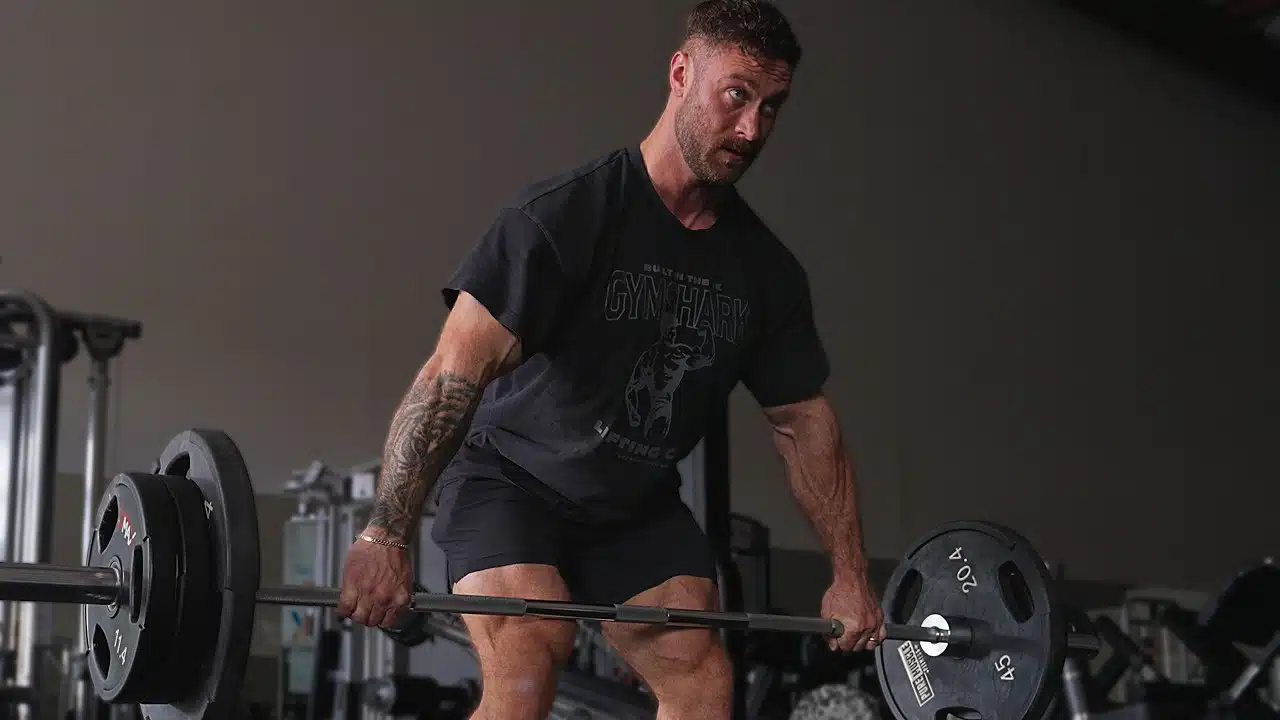
Within 24 hours of starting antibiotics for an unrelated issue, nearly all his joint pain vanished.
But beyond the physical recovery, he uncovered something even more profound about his relationship with fitness and mental health.
Jump to:
The Mental Breaking Point: When Training Becomes Torture
For someone whose identity revolves around fitness, experiencing chronic pain in the gym created an unexpected psychological crisis.
I was leaving more frustrated than when I even got in and I realized like how important the gym is for me to like feel good in the gym to feel good in life essentially. How this is like my foundation of so much of that.
This realization hit differently when he examined his daily routine. Not traveling for bodybuilding competitions, staying home with family all day—while fulfilling—left him without his primary emotional outlet.
The gym had become more than just a place to build muscle. It was his therapy, his meditation, his escape valve for stress and overwhelm.
Two Life-Changing Realizations
The experience forced him to confront uncomfortable truths about physical and mental resilience.
Body Maintenance Isn’t Optional
His first epiphany centered on preventive care. Taking care of his body wasn’t just about performance—it was about preserving access to the activity that anchored his mental health.
I need to take care of my body because I really love the gym and I want to be able to enjoy being in here.
This shift represents a maturation many athletes eventually face: transitioning from purely performance-based training to longevity-focused movement.
Dangerous Dependency on Physical Ability
His second realization cut deeper. Relying entirely on gym training for emotional regulation created vulnerability.
I should probably rely on something a little bit more in my control cuz god forbid something does happen to my body at some point. I don’t want to be too reliant on just having the gym.
This acknowledgment matters tremendously for anyone whose mental health depends heavily on physical activity. Injury, illness, aging—all threaten to remove this coping mechanism without warning.
The Rehabilitation-Focused Leg Workout
His current training reflects this new philosophy entirely. Gone are the ego-driven heavy lifts. Instead, he’s embraced corrective exercises designed to rebuild foundational strength and movement patterns.
Isometric Training for Joint Stability
His workout incorporated 20-second isometric holds in both shortened and lengthened positions—a technique gaining recognition for building resilient connective tissue.
For hip thrusts, he focused on maintaining posterior pelvic tilt with ribs down rather than arching his back. This subtle adjustment activates glutes more effectively while protecting the lower back.
On elevated heel step-ups with minimal weight, he held the bottom position for 20 seconds before performing 12-15 reps. This targets the VMO (vastus medialis oblique)—the teardrop-shaped quad muscle crucial for knee stability.
Humility Meets Functionality
Kind of humbling holding a 15lb dumbbell, but this… It’s different parts of your quads that you’re normally not used to feeling and it’s very like stable like knee health.
His focus on tracking his knee over his second and third toes while maintaining a foot arch addresses one of the most common movement dysfunctions: knee valgus collapse.
This inward knee movement during loading significantly increases ACL injury risk and accelerates joint degeneration.
The Underrated Muscle Group
When asked about underrated accessory muscles, his answer surprised even his training partner: the gracilis, an adductor muscle in the groin.
I feel like it’s very weak in me. And I avoided activating it in any way. And it’s a very important like stabilizer and internal rotator and everything.
This admission highlights how traditional bodybuilding often neglects smaller stabilizing muscles that don’t contribute directly to aesthetic development but prove essential for athletic function and injury prevention.
Advanced Corrective Techniques
Three-Pause Romanian Deadlifts
Using a snatch grip, he performed RDLs with three separate five-second pauses at different depths. This creates time under tension throughout the entire hamstring range of motion while improving positional awareness.
Long Lever Hip Flexor Planks
This exercise targets a common weakness in athletes who sit frequently or focus primarily on posterior chain development.
By elevating one leg straight behind on a box while maintaining a neutral pelvis and ribcage, he creates a challenging hip flexor stretch under load. The goal isn’t just core stability—it’s training the hip flexors in their lengthened position, mimicking running mechanics.
I’m more of a sit all day and squat and bodybuilding. So, my hip flexors and groin stabilizers are pretty weak.
His abs cramping during the exercise revealed just how underdeveloped these patterns had become despite years of training.
Signs of Systemic Change
Throughout the workout, he experienced repeated lightheadedness upon standing—a symptom he attributed humorously to being “so damn healthy now that I’m retired.”
While he joked about low blood pressure from reduced training intensity, postural hypotension can signal various conditions worth monitoring, especially during training transitions.
The Posture-Physique Connection
When discussing underrated muscles from an aesthetic perspective, his answer shifted to rhomboids—the upper back muscles responsible for retracting shoulder blades.
If you have the postural muscles in your rhomboids to hold yourself up straighter… from the back if your back looks huge you look sick like when you’re just walking… but even better back posture lifts your chest up which makes your chest look bigger.
This perspective demonstrates sophisticated understanding: muscle development means nothing if poor posture hides it. Strong rhomboids create the foundation for impressive upper body presentation in daily life, not just during flexing.
Mental Warfare: The Plank Hold Challenge
Plank holds are the worst. Purely just a mental exercise of choosing to stay in there.
This observation captures something essential about rehabilitation work. Without the immediate feedback of progressive overload or muscle pumps, corrective exercises demand different motivation entirely.
The discipline required to consistently perform unglamorous mobility and stability work often exceeds what’s needed for traditional strength training.
Key Takeaways for Sustainable Training
- Listen to persistent pain signals: What seems like normal training soreness might indicate underlying issues requiring medical attention
- Diversify coping mechanisms: Relying solely on physical training for mental health creates vulnerability to injury or illness
- Prioritize movement quality over load: Ego-free training with light weights and perfect form builds resilience
- Address weak links systematically: Small stabilizing muscles deserve dedicated attention despite not contributing to aesthetic goals
- Embrace isometric training: Time under tension in specific positions strengthens connective tissue and improves joint integrity
- Posture amplifies physique: Strong postural muscles showcase muscle development better than additional mass with poor positioning
His journey from mysterious joint pain to systemic infection discovery, followed by a complete training philosophy shift, offers valuable lessons for anyone building sustainable fitness practices.
The most powerful athletes aren’t necessarily the strongest—they’re the ones who maintain enough self-awareness to adapt when circumstances demand evolution rather than forcing outdated approaches.