In January 2024, Rich Froning took on a brutal 24-hour rowing challenge—for the second year in a row. What started as a grueling endurance test in 2023 had somehow become an annual tradition.
“Since we were so successful with that super boring video last year of us rowing for 24 hours, we decided to do it again,” Froning joked before the event began.
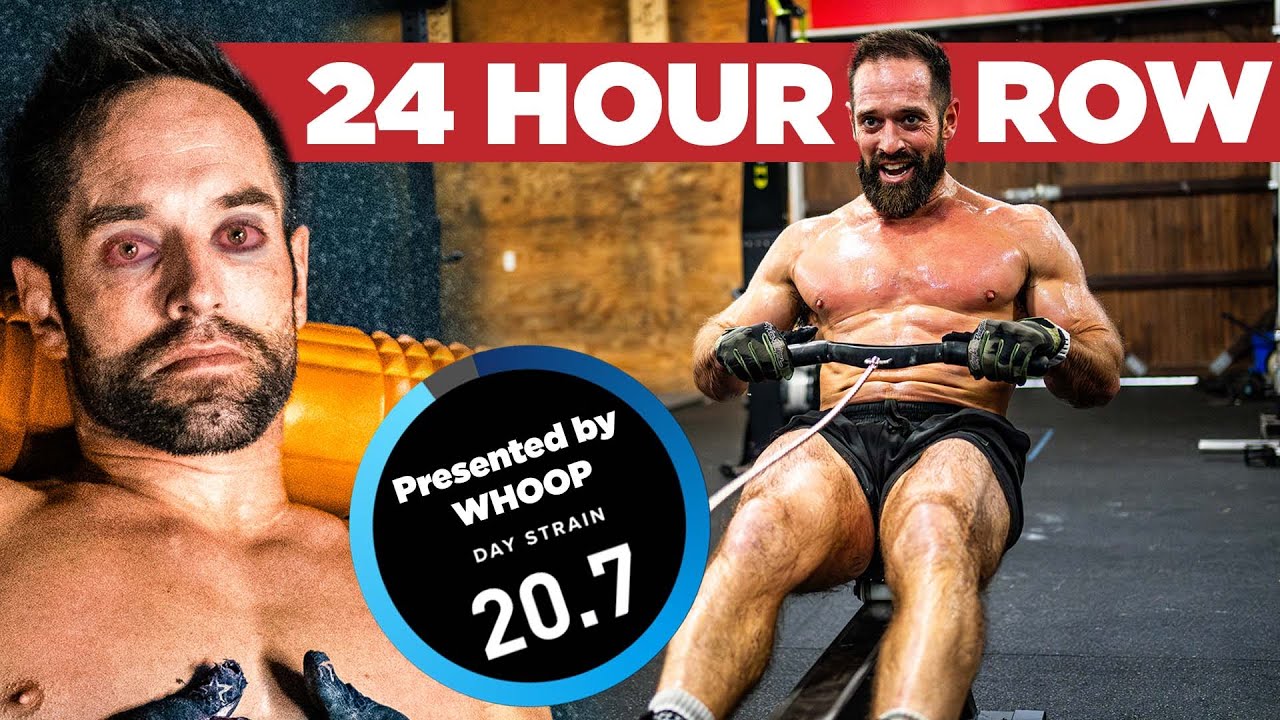
But this wasn’t just about suffering for sport. The challenge was done in partnership with Tasha’s Foundation, an organization Froning has supported through his Mayhem Mountain initiative. The event also helped raise awareness for Big Fish Foundation, which supports veterans transitioning to civilian life.
The goal? Row 375,000 meters as a four-person team while holding a blistering sub-1:55/500m pace—a daunting task even for elite athletes.
Froning, a four-time CrossFit Games champion, is no stranger to pain. But this challenge tested his limits in ways he didn’t expect. With hands shredded, energy depleted, and sleep deprivation kicking in, how did he push through? Here’s how he did it.
Jump to:
Why Froning Took on the Challenge
The challenge was inspired by Brian Shantos, who had completed a cross-Atlantic row in over 30 days as part of a record-setting American team. Froning and his crew, eager to test themselves, took on a version of the challenge created by Rogue Fitness—a 24-hour row for teams of three or four athletes.
The goal? Row 400,000 meters while maintaining a sub-2:00/500m pace.
They had the fitness, they had the experience—but rowing for a full day would demand more than strength. It would require strategic pacing, recovery, and mental toughness.
The Plan: 5,000-Meter Rotations
Froning and his team started with a simple approach: each rower would complete a 5,000-meter effort before rotating out. The pace had to stay under 2:00 per 500 meters, which meant each effort needed to be completed in under 20 minutes.
The first few shifts felt manageable. But as the hours ticked by, Froning and his crew began to realize this strategy wouldn’t last.
“Every 5K started to feel like a marathon.”
The Breaking Point: Adapting to Survive
By the 8-hour mark, reality set in.
- Gloves meant to protect their hands were too tight and restrictive.
- Back pain and muscle stiffness set in.
- Holding a sub-2:00 pace became increasingly difficult.
Froning and his teammates needed to adjust.
“We realized the 5Ks weren’t sustainable,” he admitted. “So we switched to 2,500-meter efforts instead.”
The adjustment allowed for shorter bursts of high effort with more recovery time—a move that kept them in the fight.
The Longest Night: Pain, Donuts, and Marvel Movies
As night fell, the challenge shifted from physical to mental survival.
Froning described 8:00 p.m. feeling like 2:00 a.m., even though they were only one-third of the way through. To stay alert, the team loaded up on caffeine, sugar, and whatever food they could keep down.
“Donuts were the secret weapon,” Froning joked. “At one point, I felt better after eating a few than I had in hours.”
Meanwhile, Marvel movies played in the background, offering some distraction from the endless grind.
But despite the change in pacing and fuel strategy, the pain never stopped.
- Hands locked up. “I literally couldn’t open my fingers.”
- Lower backs seized up. “My biceps and my legs were gone.”
- Fatigue set in. “I wasn’t tired, but my body was wrecked.”
The Final Push: Could They Hit 400,000 Meters?
By hour 16, the team had rowed 244,000 meters—still on pace, but barely.
Every stroke felt heavier. Their bodies were breaking down.
Yet Froning refused to let the pace slip. The team stuck with their adjusted strategy, grinding through the final eight hours with shorter, intense intervals.
As the final minutes ticked down, exhaustion gave way to relief. They had survived.
Final result: 369,990 meters.
They fell just short of their goal, but in a test of pure endurance and mental toughness, it was a victory.
Froning’s Takeaways: Lessons from the Row
After 24 hours on the rower, what did Rich Froning learn?
- Strategy matters. “We should’ve started with 2,500s sooner.”
- Fueling is key. “I don’t know how many calories we ate, but it was a lot.”
- Pain is inevitable—but suffering is optional. “You just have to embrace the suck and keep going.”
Would he do it again?
“Maybe,” Froning admitted with a grin. “But next time, I’m bringing better gloves and fewer donuts.”