Weak, underdeveloped glutes might be sabotaging your fitness progress in ways you never realized.
They’re often behind strength plateaus, poor posture, and that persistent lower back pain that just won’t quit.
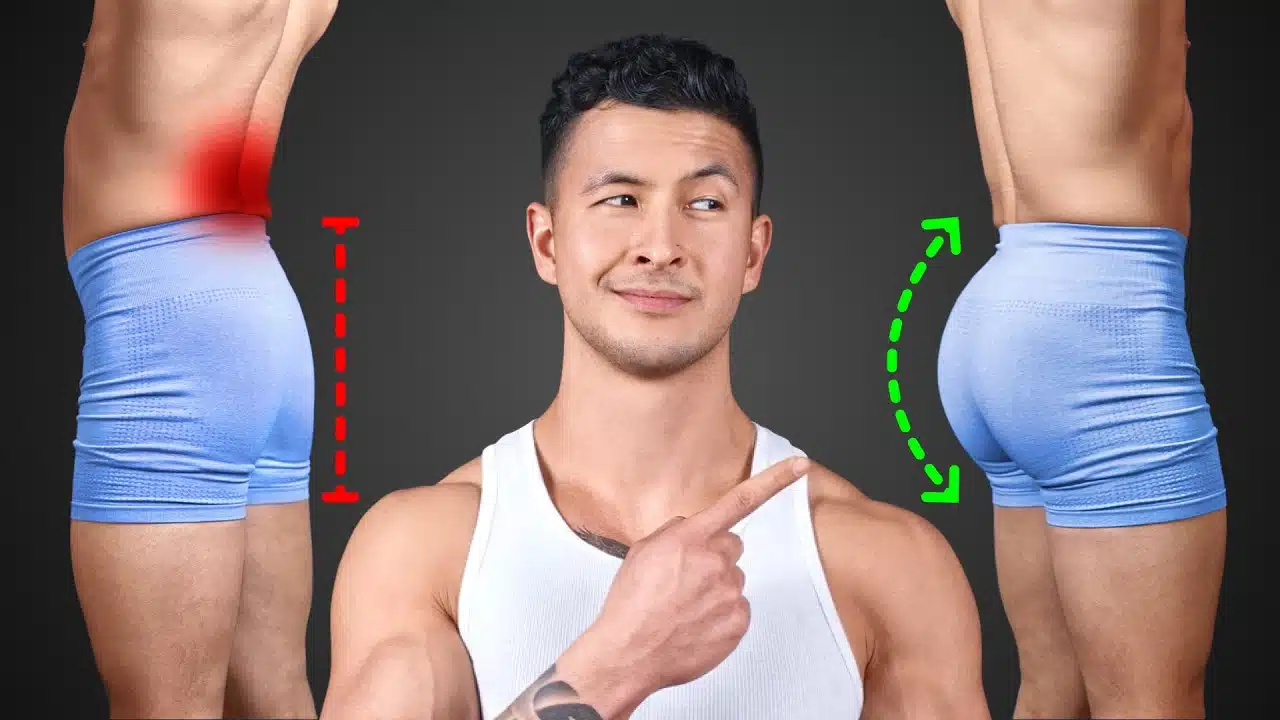
But here’s the good news: according to Brett Contreras—the world’s leading glute expert who literally invented the hip thrust—you only need two exercises to fix this problem.
In a recent collaboration video, fitness expert Jeremy Ethier worked directly with Contreras to uncover the most effective glute-building movements that help you move better, jump higher, and run faster.
Jump to:
Why Your Glutes Matter More Than You Think
The gluteus maximus is by far your largest glute muscle. When you sit all day and fail to train it properly, it becomes weak and underdeveloped.
For many people, this leads to serious issues with posture and chronic back pain. The muscle’s primary function is hip extension—something you perform during deadlifts and squats.
But surprisingly, Contreras didn’t select those popular movements as his top choices for growing this critical muscle.
The Problem With Traditional Glute Exercises
Lunges, squats, and deadlifts can effectively work your glutes, but they come with three significant problems.
First, these taxing compound movements target multiple muscles simultaneously. While this is usually beneficial, if other muscles like your lower back or grip give out first, you could reach failure while your glutes still have plenty left in the tank.
Even worse, if you already have weak or difficult-to-activate glutes, other muscles can literally steal your glute gains. Ethier experienced this problem himself.
After neglecting his glutes temporarily, heavy squats suddenly hit only his inner thighs and quads instead of his glutes. This explains why even if you’ve gotten incredibly strong on squats and deadlifts, your glute development might not reflect that strength.
Finally, there’s the soreness factor. Many glute exercises like Bulgarian split squats create brutal post-workout soreness that makes recovery difficult before your next leg session.
I think the reverse lunge is the best, but it’s too good. It makes you too sore. If I have you do dumbbell walking lunges to failure, say we did it out in the parking lot and I just had you go up and down to absolute failure. Your glutes get too sore. Your glutes, your adductors, everything gets so sore.
Exercise #1: The Glute-Focused Step Down
Contreras proposed an exercise that Ethier had never tried before but found extremely effective at growing glutes without the soreness and limitations of traditional movements.
The step-up does not get you as sore. And therefore, you can perform it more frequently. And we want to train glutes two to three times a week. At least twice a week. If you can handle three times a week, have at it.
How to Perform the Glute-Focused Step Down
This exercise looks similar to a lunge or split squat, but one key difference makes it superior. By keeping one leg elevated and following specific form cues, it forces your glutes to do almost all the work.
Even with just body weight, the effectiveness is remarkable.
Here’s your step-by-step setup:
- Position a bench next to any equipment or rack you can hold for balance
- Stand on the bench with one foot planted firmly
- Slowly push your hips back while folding over at your torso
- Reach your back leg out until it lightly touches the ground
- Drive your hips forward to the top using the glute of your planted leg—without momentum or boosting yourself up
To prevent your quads from taking over, avoid letting your knees bend too far forward over your toes. For maximum glute activation, keep your knee directly over your foot.
Choose a bench height where your front thigh is parallel with the ground at the bottom. If your platform is too high, add a plate for your back foot to shorten the range of motion.
The Secret Weight Placement Technique
Eventually, you’ll want to add weight for progressive overload. But where you hold that weight matters tremendously.
When you have weight in the opposite hand, this glute has to stabilize you. When you’re standing straight up, it’s mostly glute medius. When you go down into the stretch, it’s not glute medius anymore. It’s the gluteus maximus. So that it has to produce a little more activation to counteract the rotational torque imposed on the hip.
By holding the dumbbell in your opposite hand, you work not just the glute max but also the outer upper glute known as the glute medius.
This exercise proved so effective that Ethier made it a permanent staple in his own training routine.
Why You Need Both Stretch and Squeeze Exercises
The step down challenges your glutes most at the bottom when they’re fully stretched. Contreras believes it may build more of your lower glutes.
But if you want that full, round shape—the kind of glutes they write country songs about—you need to pair it with an exercise that challenges your glutes in the squeeze position.
Contreras and Ethier recently ran a study comparing training muscles in the stretch versus squeeze position, specifically testing the glutes. While combining one stretch-focused and one squeeze-focused exercise is likely optimal for growth, there’s another crucial benefit.
I’ve seen big strong dudes that squat 315, 405. They didn’t have end-range hip extension strength. So, they were prone to getting low back pain because they want to anterior tilt and put everything in the flexed position. When you have extended range hip extension strength, you start noticing good things. Your body starts distributing stress better, squats feel better, deadlifts feel better, you start taking longer strides when you walk.
Exercise #2: The Hip Thrust (With a Game-Changing Technique)
To build the type of end-range strength Contreras describes, the hip thrust is essential.
If you’re uncomfortable with the barbell version in a crowded gym, try the single-leg dumbbell hip thrust instead. It’s more subtle, easier to set up, and works just as effectively—even at home.
Three Steps for Perfect Hip Thrust Form
Regardless of which variation you choose, follow these three critical steps:
- Position your upper back high on the bench to maximize stability
- Plant your feet far enough away so that at the top position, your knees are directly over your feet (too close works more quads; too far works more hamstrings)
- Brace your core, squeeze your glutes, and drive your hips up
The “Scoop Method” That Changes Everything
But the final technique Contreras revealed might be the game-changer your glutes have been missing.
It’s called the scoop method, and it instantly lit up Ethier’s glutes in a way he’d never experienced before.
Here’s how it works:
- Tuck your chin and keep your eyes forward
- Let your back arch at the bottom
- Focus on moving from the chest down, tilting your pelvis upward by squeezing your glutes
It feels weird at first. You won’t be able to thrust as much weight or go as high.
But it creates the perfect setup for your glutes to dominate the movement. The key is really keeping that chin tucked into your chest.
This technique is also excellent for people struggling with recurring back pain. Ethier’s wife had previously cut hip thrusts entirely from her routine due to injury, but after Contreras taught her to train with her chin tucked, she worked up to heavy hip thrusts completely pain-free.
Finding What Works for Your Body
Here’s where it gets really interesting: 60% of Contreras’s clients found the scoop method worked their glutes better. But the other 40% prefer the hinge method, where you look forward at the bottom and look up at the top, hinging your body in a straight line.
The key is to experiment with both methods to find what works best with your unique body mechanics.
How to Program These Exercises for Maximum Results
Contreras recommends performing three sets of 8 to 12 reps two to three times per week.
Start with the glute-focused step down as your stretch-focused movement. Then follow with hip thrusts as your squeeze-focused exercise.
For beginners, start with body weight on step downs until you master the form. Then progressively add weight by holding a dumbbell in your opposite hand.
On hip thrusts, experiment with both the scoop and hinge methods for 2-3 weeks each to determine which creates better glute activation for your body.
By combining these two exercises—one that maximizes the stretch position and one that maximizes the squeeze—you’ll build not just bigger glutes, but stronger, more functional glutes that improve your posture, eliminate back pain, and enhance your performance in every athletic movement.
And unlike traditional glute exercises that leave you crippled with soreness for days, these movements allow for the frequent training your glutes need to grow without the brutal recovery times.