Building visible, well-developed abs isn’t just about doing endless crunches and hoping for the best.
In a recent video, fitness expert and physical therapist Jeff Cavaliere put 30 of the most popular ab exercises to the test, using EMG sensors to measure muscle activation and ranking each movement from S-tier (super) down to F-tier (fail).
Alongside beginner Dennis, Cavaliere discovered that many beloved ab exercises are actually terrible for building core strength—while others you’ve probably never heard of blow the competition away.
By the end of their exhaustive testing session, they revealed the two best exercises for beginners and two for advanced lifters that check every box for maximum ab development.
Jump to:
- Why Most Ab Exercises Actually Fail
- Sit-Ups: The Overrated Classic
- Crunches: Better, But Still Limited
- The Lat Pull-Down Surprise
- Upper Abs vs. Lower Abs: Does It Matter?
- Why Leg Raises Disappoint
- The Exercise That Looked Ridiculous But Worked Brilliantly
- Captain’s Chair: The Grip-Saver
- Planks: Beloved But Ineffective For Growth
- Dragon Flags: Bruce Lee’s Brutal Legacy
- The Garhammer Hold: A Hidden Gem
- Garhammer Raises: S-Tier Perfection
- Reverse Crunches: The Beginner-Friendly Alternative
- Ab Roller: Fun But Limited
- Popular Bodyweight Moves That Flopped
- Dead Bugs: Great Warm-Up, Not For Growth
- Cable Crunches: Living Up To The Hype
- Lat Pull-Down Cable Crunches: The Final Evolution
- The Final Verdict: Best Exercises For Your Level
Why Most Ab Exercises Actually Fail
According to Cavaliere, for an ab exercise to truly build muscle, it must satisfy three critical criteria. First, it needs to allow for progressive overload—meaning you can add weight over time.
Your abs are muscles just like your biceps or quads, and they respond to the same training principles. Second, the exercise must create a deep stretch position with tension in that stretched state, which research suggests sends a powerful growth signal to muscle fibers.
No products found.
Third, your hip flexors shouldn’t secretly be doing most of the work. To measure this precisely, Cavaliere and Dennis wore EMG sensors on their upper abs, lower abs, and hip flexors throughout every single movement.
Sit-Ups: The Overrated Classic
Despite being one of the most common ab exercises, traditional sit-ups earned a lowly D-tier ranking. While they do allow you to hold weight for progression, they fail the other two tests miserably.
The floor prevents your abs from achieving a deep stretch—it’s like doing only the top half of a bicep curl. Even worse, the EMG data revealed that while upper abs showed high activation during the first portion of the movement, hip flexors completely took over during the second half to pull the torso upward.
Crunches: Better, But Still Limited
Standard floor crunches performed significantly better by removing the top portion where hip flexors dominate. These focus purely on spinal flexion—bringing your rib cage down toward your pelvis into a C-shape.
The EMG confirmed far less hip flexor involvement and much higher abs activation compared to sit-ups. However, the floor still limits the stretch at the bottom, earning crunches a C-tier placement.
The Simple Upgrade That Changes Everything
Adding a rolled towel or inexpensive ab mat under your lower back instantly transforms the exercise. Now your abs can fully stretch at the bottom while maintaining proper form.
No products found.
Regular sit-ups, they don’t fully stretch your abs. So you don’t go through a full range of motion.
This simple modification created the first exercise to check all three boxes. The main drawbacks? It requires extra equipment, and many people—including Dennis—tend to cheat by swinging their arms or jutting their neck forward.
With these caveats, ab mat crunches earned A-tier status.
The Lat Pull-Down Surprise
Performing crunches on a lat pull-down machine produced remarkable results. The pad locks your knees in place, creating stability that essentially eliminated hip flexor activation—lower than any other exercise tested.
Without the floor limiting movement, lifters can achieve a deep stretch at the bottom. However, they’re brutally difficult—even Cavaliere could only manage eight clean reps before form breakdown.
For Dennis, the unassisted version proved impossible. But there’s a clever workaround: using the cable as assistance, similar to an assisted pull-up machine.
The cable provides an upward pull that helps control the descent and assists the return. Select a heavier weight for more assistance. Dennis went from zero unassisted reps to banging out sets of ten, making the assisted lat pull-down crunch the first S-tier exercise.
No products found.
Upper Abs vs. Lower Abs: Does It Matter?
Throughout testing, the EMG data revealed fascinating patterns. All crunch-type movements activated upper abs significantly more than lower abs.
Technically, your abdominal wall is one continuous muscle—the rectus abdominis—so you can’t truly isolate upper from lower the way you’d isolate different muscle groups. However, certain movements clearly place more demand on either the upper or lower fibers.
While no controlled studies have directly measured whether upper versus lower ab exercises actually grow those respective areas more, Cavaliere suspects they likely do. In the final tier list, exercises are color-coded: purple for upper abs emphasis, green for lower abs, and red for balanced activation.
Why Leg Raises Disappoint
Lying leg raises—a supposed lower ab favorite—actually showed the highest hip flexor activation of any exercise tested. Your abs merely stabilize while hip flexors do the heavy lifting, literally pulling your legs upward.
The floor also prevents a full stretch, though lower abs were more active than during crunches. D-tier. Hanging variations didn’t fare much better.
Bent-knee hanging leg raises suffered from the same hip flexor dominance—great for those muscles, terrible for ab development. Straightening the legs into an L-shape only made things worse by creating a longer lever, which increased hip flexor activation by 40% while barely budging abs involvement.
No products found.
The Form Fix That Actually Works
Performing leg raises with deliberate C-shaped spinal flexion changes the game. Instead of just lifting legs, actively curl your pelvis upward.
Your abs, what they’re trying to do is bring you from this position into this like curled flexed position like this. So what I want you to do now is actually think about curling your pelvis like this. Your legs come along for the ride, but now your abs are actually helping out.
EMG confirmed a slight decrease in hip flexors with increased upper abs activation, likely because they assist with the crunching motion at the top. Unfortunately, stability becomes an issue, and swinging makes proper form difficult to maintain. B-tier.
The Exercise That Looked Ridiculous But Worked Brilliantly
Setting up what appeared to be an overcomplicated contraption in a squat rack, Cavaliere demonstrated an exercise that solved the stability problem plaguing hanging leg raises. Using the barbell as a lower back support completely stabilized the body, allowing total focus on that crucial C-shape contraction.
The extra control boosted lower abs activation, possibly because the bar allows a slightly deeper stretch at the bottom. Progressive overload remains simple: add ankle weights or hold a dumbbell between your feet.
You feel your body is actually completely stable. I can’t move around from both sides. Of course you have a pad, so feel more comfortable. I like this one.
Despite Dennis’s enthusiasm, hip flexor activity remained fairly high, earning A-tier rather than the top spot.
Captain’s Chair: The Grip-Saver
Dennis repeatedly complained about grip fatigue during hanging exercises, a common barrier for beginners. The captain’s chair solves this by supporting forearms on pads while a back pad stabilizes the spine.
No products found.
As long as you allow full stretch at the bottom and curl your pelvis into that C-shape, you’ll get the same benefits as squat rack leg raises without monopolizing equipment. It also landed in A-tier.
Planks: Beloved But Ineffective For Growth
Despite their popularity, traditional planks earned a harsh F-tier ranking. They provide no stretch, no range of motion, and difficult progressive overload unless someone adds weight to your back.
Your abs contract isometrically to prevent lower back sagging—useful for teaching spine stabilization, but terrible for actually building muscle. Shoulders typically fatigue before the core does.
The RKC plank variation—where you position forearms higher, squeeze quads and glutes, and pull elbows downward simultaneously—nearly tripled abs activation. However, it’s tricky to coordinate for beginners and still carries plank’s inherent limitations. C-tier.
Dragon Flags: Bruce Lee’s Brutal Legacy
Made famous by martial arts legend Bruce Lee, dragon flags demand keeping your entire body rigid from shoulders to feet while slowly lowering and raising without hip sag or lower back arch.
The core demand is absolutely insane—this exercise produced the highest upper and lower abs activation of any movement tested to that point. That’s not because it does anything magical, but rather because maintaining body rigidity requires near-maximal abs contraction, essentially creating a one-rep max for your core.
No products found.
As his first attempt, Cavaliere could only complete two to three clean reps before form collapsed. Dennis fared predictably worse. While it completely demolished Cavaliere’s core the next day, abs aren’t placed in deep stretch or taken through full range of motion—they primarily contract isometrically to maintain rigidity.
Excellent for core strengthening, but not optimal specifically for building abs. B-tier. The similar front lever raise received the same ranking.
The Garhammer Hold: A Hidden Gem
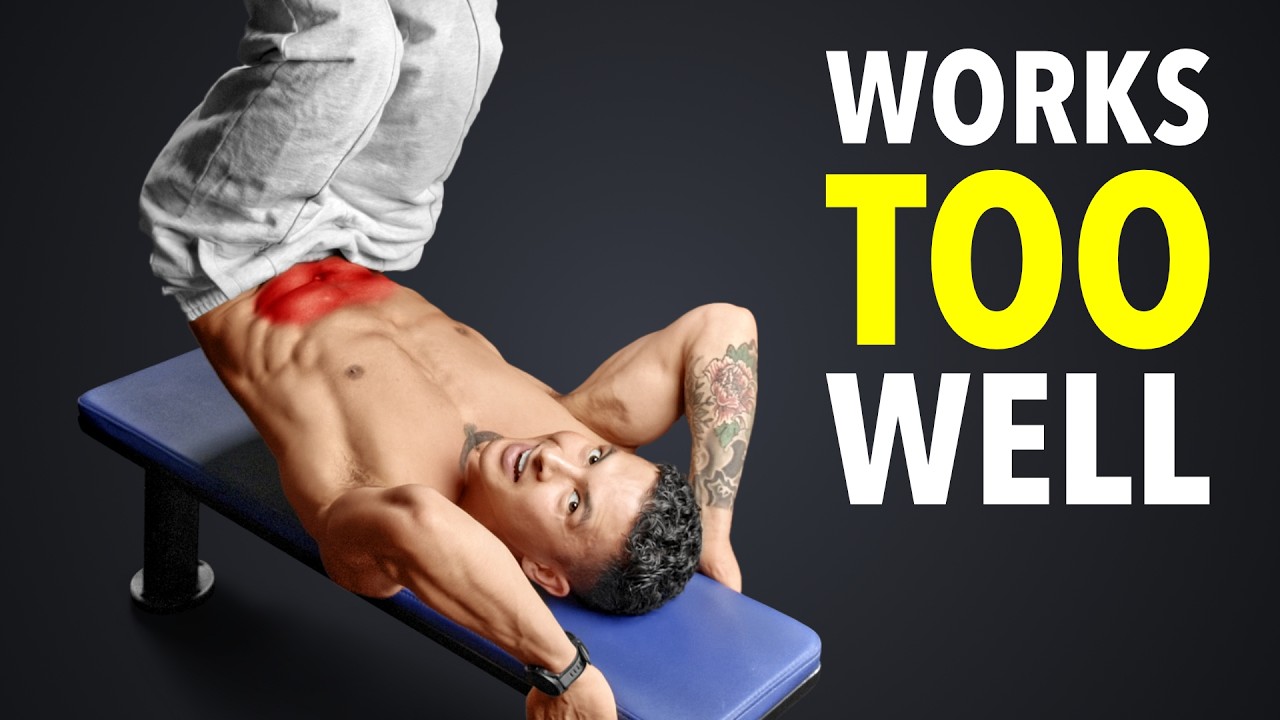
This obscure exercise might be an exception to the “no isometrics” rule. Hang your hips off a bench edge, tuck knees in, lower legs as far as possible without touching the floor, then simply hold that position.
Even without movement, tremendous tension builds in the stretched position—like a weighted stretch for your abs. Emerging research suggests isometric exercises performed in a stretched position might build similar muscle mass compared to full range of motion training.
The EMG data showed abs activation climbing higher and higher as the hold continued, exactly like muscle activation patterns when approaching failure during normal sets. Remarkably, this became the first exercise where lower abs activated more than upper abs.
Cavaliere could only hold 20-30 seconds unweighted, while Dennis managed just five seconds. Tempting for S-tier, but the lack of full range of motion and less straightforward progressive overload tracking held it to A-tier.
No products found.
Garhammer Raises: S-Tier Perfection
Converting the static hold into dynamic raises checked every single box. Deep stretch? Yes. Easy to add weight via extended legs, ankle weights, or dumbbell? Absolutely. Minimal hip flexor involvement when performed correctly? Confirmed.
As long as you avoid swaying legs and focus purely on curling your pelvis upward, hip flexors stay quiet. The lower-to-upper abs activation ratio remained the best yet observed. Well-deserved S-tier placement.
However, they’re extremely challenging. Dennis called them one of the hardest exercises tested.
Reverse Crunches: The Beginner-Friendly Alternative
Luckily, a more accessible movement provides most of the same benefits. In a previous 30-day experiment, Dennis performed reverse crunches every other day, and MRI scans revealed his abs had grown by an impressive 20%.
Keep knees at 90 degrees and focus on pushing your tailbone upward while curling pelvis into a C-shape. When Dennis first started, he could barely lift his pelvis an inch or two. After consistent practice, he progressed to eight to ten full reps. Instantly increase difficulty by extending legs further outward.
The major limitation? The bench prevents deep stretch at the bottom. A-tier initially, but add an ab mat or rolled towel under your lower back, and suddenly your spine has room to fully extend and stretch your abs. With this simple upgrade, reverse crunches jump to S-tier.
No products found.
Ab Roller: Fun But Limited
Similar to planks, abs contract isometrically to prevent hips from sagging. The further you roll outward, the harder it becomes. Dennis performed these competently from past practice, but Cavaliere caught the most common mistake: letting hips move.
I want you to kind of round your back like this. And you extend and pull back up. So you see how my hips aren’t moving like this at all. I’m just locking. And then round the back, extend, pull up.
The biggest downside remains progression—you can only roll so far before running out of distance. Attempting the exercise on feet rather than knees represents a massive difficulty spike that even Cavaliere couldn’t complete for one clean rep. Fun and demanding, but C-tier for muscle building.
Popular Bodyweight Moves That Flopped
Bicycle crunches produced extremely low abs activation for Cavaliere compared to other exercises, while Dennis showed much higher activation—highlighting a critical problem. Once you get stronger, they stop challenging you, with no reliable way to increase difficulty beyond more reps. No deep stretch either. D-tier.
V-ups proved challenging but suffered from excessive hip flexor involvement. D-tier. Butterfly kicks were even worse—almost entirely hip flexors with minimal abs. F-tier. Mountain climbers turned into cardio rather than focused abs work. Also F-tier.
Dead Bugs: Great Warm-Up, Not For Growth
Cavaliere programs dead bugs for many beginners and still performs them personally. Engage your core to flatten your lower back against the floor, then extend opposite arm and leg as far as possible without creating space between lower back and floor.
This ranks among his favorite methods for testing true core strength and teaching proper muscle engagement. For actually building abs? Not the top choice. Excellent as warm-up activation, but only C-tier for hypertrophy.
No products found.
Cable Crunches: Living Up To The Hype
Many consider cable crunches the single best ab exercise, and they mostly deliver—assuming correct execution. Lock hips at 90 degrees, fully extend spine, then round into C-shape on the descent.
Progressive overload becomes effortless by selecting heavier weight as you strengthen. Major downsides include minimal tension at the top stretched position, and because hips aren’t locked, most people cheat by swinging them around. A-tier.
Face-Away Version: The Superior Alternative
Facing away from the cable machine transforms the exercise. The same movement now becomes significantly harder at the top when abs are actually stretched. You can rest your glutes against the pole to lock hips in place and eliminate cheating.
The bar is kind of pushing my butt and I can’t move. And I also found that I can push my hips back and kind of pushing it so like stable. Can’t cheat.
The face-away version earned S-tier. The standing variation using a bar pad for comfort feels even more stable than kneeling, also receiving S-tier.
Lat Pull-Down Cable Crunches: The Final Evolution
Earlier, the duo tested lat pull-down crunches using the seat to lock knees while cable provided upward assistance. This version uses cable as actual resistance during the crunch motion.
After Dennis suffered through painful cramping (made worse by laughing), both agreed this version felt far more stable than kneeling cable crunches. However, it doesn’t allow full abs stretch. A-tier.
No products found.
The face-away lat pull-down variation? Now we’re talking. Maximum tension at the top, full stretch capability, and raising the seat pad slightly creates perfect lower back support for locked hips.
It’s so stable because it has two pads here. You feel your body is actually completely stable. You can move around from both sides. Of course you have a pad. So feel more comfortable. I like this one.
Definitive S-tier placement.
The Final Verdict: Best Exercises For Your Level
After testing 30 exercises with EMG data and real-world experience, Cavaliere and Dennis identified the ultimate combinations.
For beginners:
- Upper abs: Face-away lat pull-down cable crunch
- Lower abs: Reverse crunches with ab mat
For advanced lifters:
- Upper abs: Face-away lat pull-down cable crunch (same as beginners)
- Lower abs: Garhammer raises
These exercises check every critical box: deep stretch under tension, easy progressive overload, and minimal hip flexor compensation. The EMG color coding revealed which movements emphasize upper abs (purple), lower abs (green), or hit everything equally (red).
No products found.
But here’s the reality check: you can perform a million perfect reps of these exercises, and your abs will never show if your diet isn’t dialed in. Visible abs are built in the kitchen as much as the gym.
The combination of evidence-based exercise selection, progressive overload, and proper nutrition creates the formula for genuinely impressive core development—no gimmicks required.