Former Olympic swimming champion Amy Van Dyken has faced more obstacles than most athletes could imagine.
From severe childhood asthma that left her gasping for breath to a devastating ATV accident that severed her spinal cord, Van Dyken’s journey reads like a masterclass in resilience.
Yet the six-time Olympic gold medalist refuses to let setbacks define her story.
In an exclusive interview with PEOPLE, the 52-year-old opens up about her ongoing health battles, her thriving broadcasting career, and why maintaining an optimistic outlook remains her greatest competitive advantage.
Jump to:
- Fighting for Every Breath: Childhood Asthma Nearly Derailed Her Dreams
- From High School Records to Olympic Glory
- Life After Swimming: Broadcasting Success and Personal Happiness
- The Accident That Changed Everything
- Thriving in a Wheelchair: Staying Active Despite Paralysis
- Living with Asthma Decades Later: Constant Vigilance Required
- The Philosophy That Keeps Her Going
- Lessons for Anyone Facing Health Challenges
Fighting for Every Breath: Childhood Asthma Nearly Derailed Her Dreams
Van Dyken’s athletic journey began not in pursuit of glory, but survival.
Diagnosed with severe asthma at just 18 months old, she couldn’t climb stairs without turning blue. Her parents enrolled her in swimming at age 6 specifically to strengthen her compromised lungs—a decision that would ultimately change her life.
I had a really hard time breathing. Anytime the dog would get near me, I’d just start wheezing and gasping. I turned blue a couple of times. My mom was like, ‘We just have to make a normal life for her.’
Growing up in Englewood, Colorado, Van Dyken battled all three categories of asthma: allergic, cough-variant, and exercise-induced. Most doctors would have advised against competitive athletics.
Her parents chose differently, throwing her into soccer, gymnastics, and numerous other sports alongside swimming.
Swimming Became Her Superpower
You can do absolutely anything you want with asthma. I played lacrosse. I snowskied. I rock-climbed. You can do anything you want to do. I’ve always looked at the glass as half-full.
Dr. Jose Arias Jr., national spokesman for the American Lung Association, emphasizes that Van Dyken’s parents made the right call. Swimming offers unique advantages for asthma sufferers because pool environments minimize exposure to outdoor allergens.
Any aerobic exercise helps patients learn proper breathing techniques—critical for managing chronic respiratory conditions.
From High School Records to Olympic Glory
Van Dyken’s competitive career almost ended before reaching its peak.
After setting two state records as a senior at Cherry Creek High School in 1991, she qualified for the 1992 Olympic trials but finished fourth in the 50-meter race—just shy of making the team.
That’s when people started going, ‘Oh well, maybe this gawky, asthmatic girl is going to be a good swimmer.’
She initially enrolled at the University of Arizona studying sign language, becoming a 12-time All-American swimmer. Despite her success, Van Dyken considered retirement after transferring to Colorado State University.
Then Coach John Mattos offered her a scholarship that reignited her competitive fire.
Managing Asthma at Elite Levels
Training at the U.S. Olympic Training Center in Colorado Springs required constant vigilance. Van Dyken kept inhalers at both ends of the pool and used a peak flow meter before every workout.
- Green reading: Full workout intensity
- Yellow reading: Easy warm-up only
- Red reading: Rest day required
I had an inhaler at each end of the pool. If it was green, I’d work out like everybody else. If it was yellow, I’d do an easy warm-up. And if it was red, I’d have to go home and chill out.
Her meticulous approach paid dividends. At the 1996 Atlanta Olympics, Van Dyken made history as the first American woman to win four gold medals in a single Olympic Games.
She added two more golds at the 2000 Sydney Olympics before retiring later that year.
Life After Swimming: Broadcasting Success and Personal Happiness
Van Dyken married Denver Broncos punter Tom Rouen in March 2001 during a small Hawaiian ceremony. Her transition from athlete to broadcaster happened organically.
After covering the 2002 Winter Games in Salt Lake City for a Denver TV station, her media career “exploded.” She went on to cohost Fox Sports Tonight for Fox Sports Radio in 2012 before joining NBC in 2021.
Van Dyken served as an on-air analyst for both the Tokyo and Paris Olympics, earning an Emmy as part of NBCUniversal’s broadcast team for the 2024 Paris Games.
That was pretty cool.
The Accident That Changed Everything
June 2014 brought Van Dyken’s greatest challenge yet.
While riding her ATV home from dinner with friends in Scottsdale, Arizona, she hit a curb that sent her flying over a cliff into a tree. Her husband Tom arrived within minutes to find her back broken and spinal cord severed.
Someone had called 911, and my husband rolled me over, got me breathing again.
Van Dyken underwent nine hours of lifesaving surgery after being medevaced to the hospital. She died multiple times during the accident and surgery.
In addition to paralysis from the waist down, Van Dyken suffered a traumatic brain injury that required her to relearn basic skills during two months at a Denver rehabilitation facility.
Finding Grace Through Tragedy
I died a few times in the accident, so I figure I’m here for a reason. I’ve found a lot of grace for people. I’m not so quick to judge. I try to lead with love and kindness.
Van Dyken’s perspective shift extends beyond personal philosophy. She now works as a motivational speaker at schools and corporate events while commentating on collegiate swimming for the Atlantic Coast Conference.
Thriving in a Wheelchair: Staying Active Despite Paralysis
Van Dyken refuses to let her wheelchair limit her lifestyle. She maintains an impressively active routine in Scottsdale with husband Tom and their mixed-breed dog Dillon.
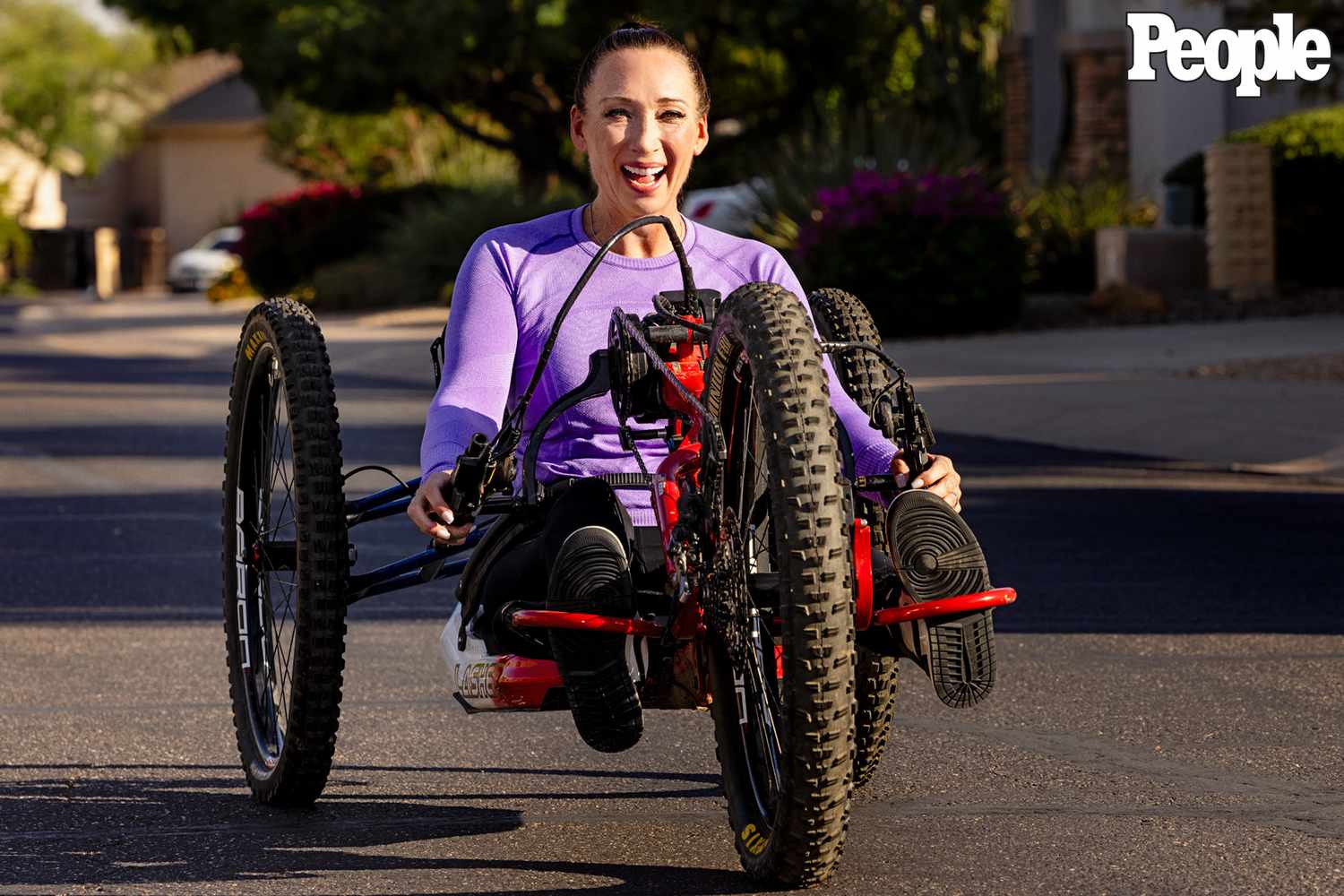
Her adaptive mountain bike features electric assist and oversized fat tires—one front, two back—allowing her to navigate challenging terrain and even ride to happy hour with friends.
What’s really cool is if I’m going to happy hour with the girls, and I don’t want to drive, I can put my wheelchair on the back and just boot-scoot. It’s fantastic. I’ve tipped over a few times, but yeah, what doesn’t kill you makes you stronger.
Her daily activities include “going for a push” in her wheelchair, swimming with Dillon, and riding her adaptive bike with friends. She approaches each activity with characteristic humor and determination.
Living with Asthma Decades Later: Constant Vigilance Required
Twenty-eight million Americans share Van Dyken’s asthma diagnosis. This chronic condition causes airway inflammation and narrowing, producing symptoms like coughing, wheezing, shortness of breath, and chest tightness.
While no cure exists, effective medication management allows most patients to live full, active lives.
Van Dyken keeps inhalers strategically placed throughout her environment—in her wheelchair pocket, each vehicle, and bedroom. She still experiences flare-ups approximately once yearly, typically triggered by allergens or respiratory infections.
Sitting right next to me all the time, in my wheelchair pocket, in each car and in my bedroom so I don’t have to move too much; my attacks can get that bad.
How Her Triggers Have Evolved
Interestingly, Van Dyken’s sensitivities have shifted over decades of exposure.
I’m not as allergic to animals as I used to be—probably because I’ve had ‘illegal’ dogs my entire adult life. But if I get a cold, it’s going straight to my chest.
Her experience aligns with emerging research suggesting controlled allergen exposure may reduce sensitivity over time. However, respiratory infections remain her primary trigger—a common pattern among asthma patients.
The Philosophy That Keeps Her Going
Van Dyken’s approach to adversity stems from lessons learned during childhood asthma battles. That same mindset carried her through Olympic competition and now sustains her through life with paralysis.
I’ve never been one to give up; I can’t say, ‘Poor me.’ You have to learn how to live your life. My glass is always half-full.
Her husband Tom provides crucial support, though Van Dyken emphasizes the importance of self-reliance and mental fortitude.
My husband helps me by just being there for me.
Van Dyken acknowledges realistic challenges while refusing victimhood.
Not every day is a great day, and there are a lot of challenges. But I take a breath, and then I’m okay with all that. I want to be out in the world—so I say, ‘Suck it up, buttercup.’
That phrase—”suck it up, buttercup”—perfectly encapsulates Van Dyken’s refusal to let circumstances dictate her quality of life.
Lessons for Anyone Facing Health Challenges
Van Dyken’s story offers actionable insights for managing chronic conditions or recovering from life-altering injuries:
- Don’t let diagnosis define limitations: Van Dyken competed at elite levels despite severe asthma
- Create systematic management strategies: Her color-coded peak flow system prevented dangerous overexertion
- Maintain perspective during setbacks: Paralysis didn’t end her active lifestyle or career success
- Adapt rather than surrender: Adaptive equipment allows continued participation in favorite activities
- Lead with positivity: Her “glass half-full” mentality attracts opportunities and support
Van Dyken continues inspiring audiences through motivational speaking engagements where she shares these principles. Her broadcasting work keeps her connected to competitive swimming, while her personal life demonstrates that fulfillment comes from attitude rather than circumstance.
For someone who once couldn’t climb stairs without gasping for air, Van Dyken has spent a lifetime proving that determination matters more than circumstance—whether facing childhood asthma, Olympic pressure, or life-changing paralysis.