Strength isn’t just about lifting heavy weights or looking good at the beach.
According to emerging research in longevity science, how strong you are today might be one of the most accurate predictors of how long you’ll live—and more importantly, how well you’ll live those years.
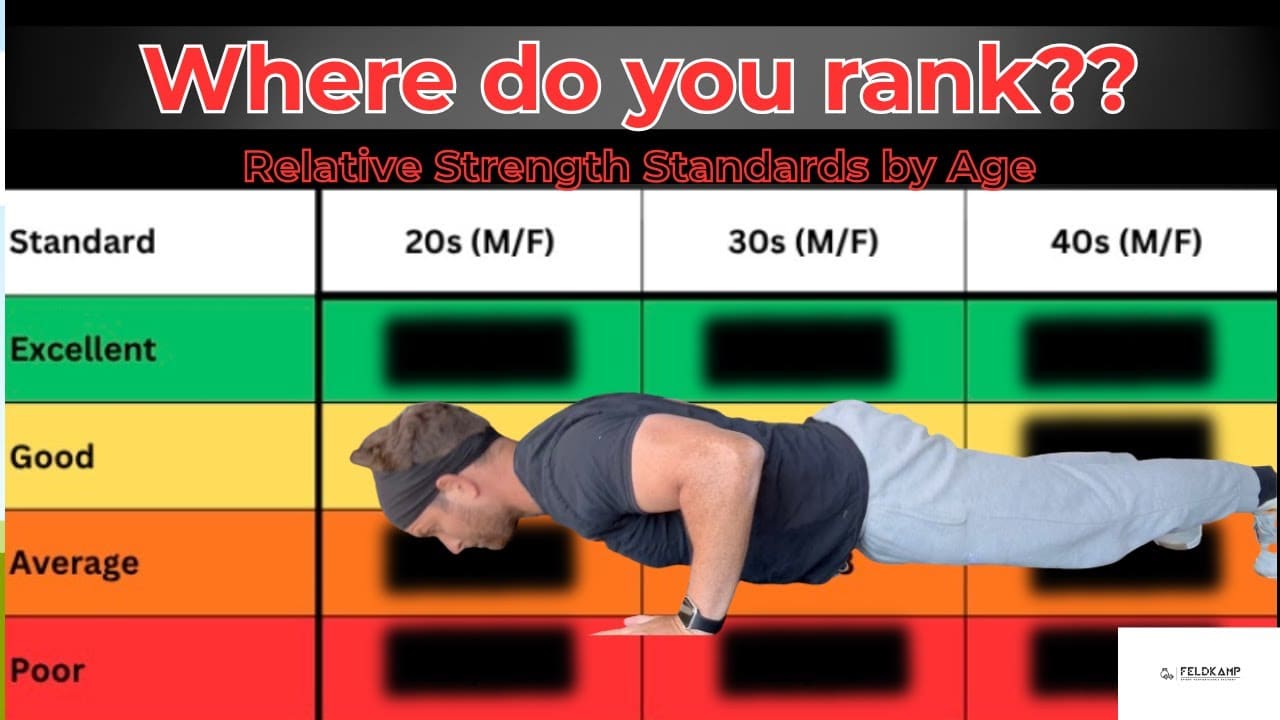
Even more surprising? Studies show that relative strength—your ability to move and control your own body weight—predicts longevity better than traditional health markers like blood pressure or body fat percentage.
Fitness experts are now advocating for a simple, accessible way to measure this critical health metric: six bodyweight tests you can do at home with nothing more than a stopwatch and a pull-up bar.
Jump to:
Why Relative Strength Matters More Than You Think
Muscle tissue does far more than enable athletic performance. It protects against injury, maintains metabolic health, and preserves independence as we age.
Relative strength—the ratio between your strength and body weight—tells a powerful story about functional capacity. Someone who can easily move their own body through space demonstrates neuromuscular efficiency, joint stability, and metabolic health all at once.
Research increasingly points to muscular strength as a biomarker of aging. The stronger you remain relative to your size, the longer you’re likely to stay mobile, injury-free, and independent.
The Six Tests That Measure Real-World Strength
These assessments aren’t about gym performance. They measure the strength patterns that keep you functional in daily life—and predict how gracefully you’ll age.
Test 1: Push-Ups for Upper Body Endurance
Push-ups reveal upper body pressing strength and muscular endurance. Performed correctly—chest to floor, full lockout at the top—they demand coordination between chest, shoulders, triceps, and core.
For people in their 30s:
- Men: 35 reps in 60 seconds is good; 40+ is excellent
- Women: 28 reps is good; 32+ is excellent
Quality matters more than quantity. Sagging hips or incomplete range of motion doesn’t count.
Test 2: Plank Hold for Core Control
Core stability underpins virtually every movement pattern. A proper plank—body rigid, no sagging through the lower back—measures anti-extension strength that protects your spine.
Standards for your 30s:
- Men: 2 minutes is good; 2:30+ is excellent
- Women: 1:30 is good; 2:00+ is excellent
The moment your hips drop or pike upward, the test ends. Maintaining perfect position separates true core strength from compensation patterns.
Test 3: Bodyweight Squats for Lower Body Function
Squats assess lower body endurance while revealing mobility restrictions in hips, knees, and ankles. Full depth—hip crease below knee level—with complete standing between reps demonstrates functional leg strength.
60-second targets for people in their 30s:
- Men: 35 reps is good; 45+ is excellent
- Women: 28 reps is good; 36+ is excellent
Inability to achieve proper depth often indicates mobility issues that accelerate joint degeneration over time.
Test 4: Pull-Ups for Relative Strength
Pull-ups might be the single best measure of strength-to-weight ratio. They require upper body pulling strength, grip endurance, and core stability—all while moving your entire body through space.
No kipping, no swinging, just control.
Excellence standards:
- Men: 8 clean reps
- Women: 5 clean reps
Each repetition should start from a dead hang and finish with chin clearly over the bar. Momentum-based reps don’t count—controlled movement patterns reflect true strength.
Test 5: Farmer Carry for Grip and Loaded Stability
Often overlooked, farmer carries test grip strength, postural endurance under load, and full-body stability. Walking 40 yards total distance without dropping the weight reveals practical strength that translates directly to real-world tasks.
Weight standards for your 30s:
- Men: 90% of body weight is good; 100% is excellent
- Women: 70% of body weight is good; 80% is excellent
Grip strength correlates strongly with cardiovascular health and overall mortality risk. This seemingly simple test packs predictive power.
Calculating Your Longevity Strength Index
Each test receives a score from one to four points based on performance:
- Excellent: 4 points
- Good: 3 points
- Average: 2 points
- Poor: 1 point
Add up your scores across all six tests, then divide by six. This gives you your Longevity Strength Index—a snapshot of your functional capacity and aging trajectory.
These benchmarks aren’t arbitrary numbers. They’re derived from research examining relationships between physical capacity and long-term health outcomes, including mortality risk, injury rates, and quality of life in later decades.
What Your Score Actually Predicts
Higher scores correlate with extended healthspan—the period of life spent in good health without chronic disease or disability.
Maintaining functional strength preserves independence. Simple activities like carrying groceries, climbing stairs, or playing with grandchildren remain possible when muscular capacity stays high.
You don’t need to be elite. You just need to be consistent.
Fall risk decreases dramatically with better strength scores. Hip fractures—often catastrophic events for older adults—become far less likely when leg strength and balance remain robust.
Metabolic health improves alongside muscle mass. Insulin sensitivity, glucose regulation, and cardiovascular function all benefit from maintaining strength throughout the lifespan.
Making Progress That Compounds Over Time
Elite performance isn’t the goal. Consistent improvement is what matters.
Every point that you can add over the years is just adding years to your life.
Testing quarterly provides objective feedback on whether training approaches are working. Progress doesn’t always feel obvious day-to-day, but standardized assessments reveal trends over months and years.
Small improvements compound. Moving from “average” to “good” on just two tests might seem modest, but those gains represent meaningful increases in functional capacity that protect against age-related decline.
Weakness in specific tests identifies training priorities. Someone who excels at push-ups but struggles with pull-ups knows exactly where to focus effort for balanced development.
Practical steps to improve scores:
- Test yourself this week to establish baseline measurements
- Retest every three months to track progress
- Focus training on your weakest areas first
- Prioritize movement quality over chasing higher numbers
- Address mobility restrictions that limit performance
Strength training doesn’t require expensive equipment or gym memberships. These six tests use minimal gear yet provide comprehensive assessment of functional capacity that predicts decades of health outcomes.
Building strength is building insurance against frailty, dependence, and premature decline. Start measuring today—your future self will thank you.