Brain health doesn’t just happen by accident.
In a recent conversation, renowned physician and researcher Dr. William Li revealed how the foods we eat directly impact our risk of developing dementia and Alzheimer’s disease.
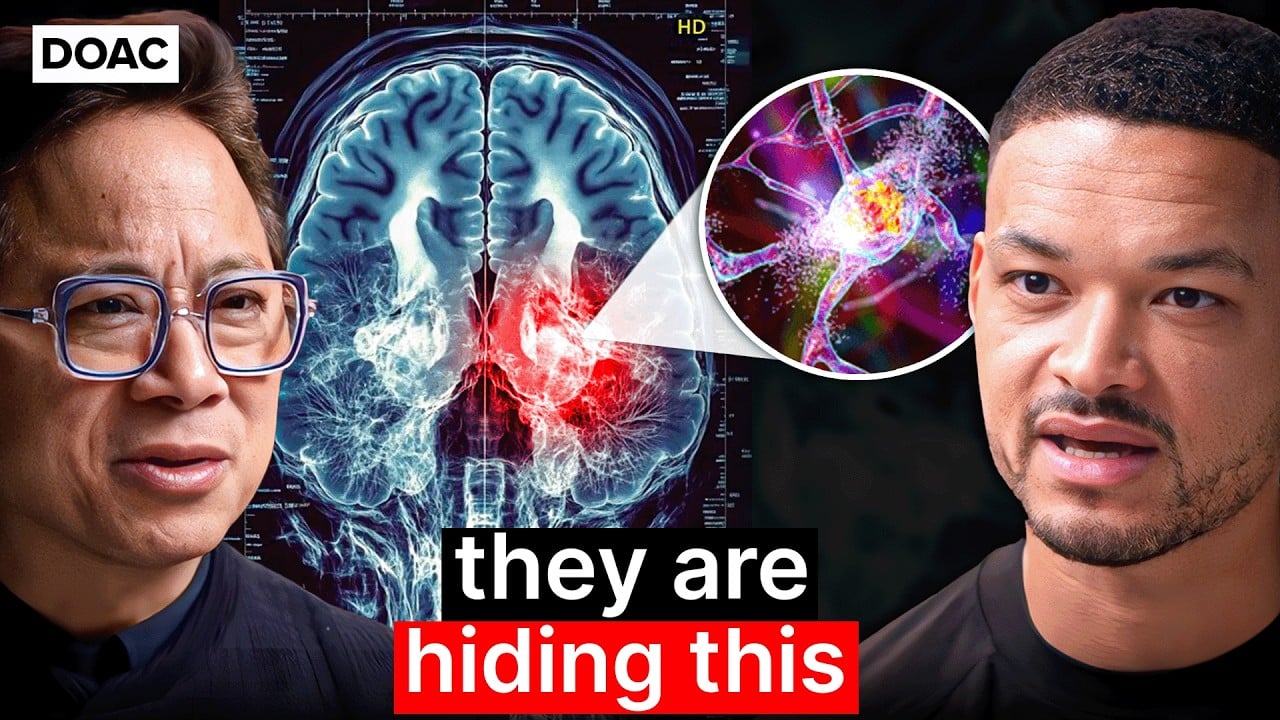
What he shared might completely change how you think about protecting your brain as you age.
Turns out, dark chocolate and beets could be more powerful than most people realize.
Jump to:
- 400 Miles of Blood Vessels Run Through Your Brain
- Dementia Isn’t Just One Disease
- Dark Chocolate and Beets: Unexpected Brain Protectors
- The Alzheimer’s Paradox: More Blood Vessels, Less Blood Flow
- Food as Medicine: Reclaiming Ancient Wisdom with Modern Science
- Five Superfoods Based on Science
- Love Your Food to Love Your Health
400 Miles of Blood Vessels Run Through Your Brain
Dr. Li explained that while our bodies contain roughly 60,000 miles of blood vessels coursing through every organ and tissue, approximately 400 miles of those vessels live exclusively in our brains.
Our brains are extraordinarily metabolically active, functioning constantly regardless of IQ or daily tasks. This incredible engine demands healthy circulation to keep working properly.
Our brain is very, very metabolically active, highly dependent upon a healthy circulation.
When circulation falters, cognitive problems emerge.
Dementia Isn’t Just One Disease
Most people lump all cognitive decline under terms like “dementia” or “Alzheimer’s,” but Dr. Li emphasized these aren’t singular conditions.
Dementia simply describes impaired cognition, most commonly during aging. Alzheimer’s represents just one subset and likely encompasses several distinct disease processes itself.
Vascular Dementia: The More Common Culprit
There’s another type called vascular dementia, and it’s actually more prevalent than Alzheimer’s.
Vascular dementia occurs when those 400 miles of brain blood vessels narrow, harden, and become clogged. Imagine interrupting a sprinkler system—the tributaries bringing oxygen simply can’t deliver what the brain desperately needs.
Over time, your brain is not going to function very well.
This understanding shifts everything about prevention.
Dark Chocolate and Beets: Unexpected Brain Protectors
So what can actually maintain healthy blood vessels throughout life for anyone aspiring toward longevity?
Dr. Li pointed to specific foods that support angiogenesis—the body’s process of building and maintaining blood vessels. Dark chocolate emerged as a surprising superstar.
Cacao in dark chocolate helps produce nitric oxide, a compound that widens blood vessels and improves blood flow. Better flow means better brain health, including reduced dementia risk.
Other nitric oxide producers include:
- Beetroot – powerful vascular support
- Spinach – promotes healthy circulation
- Plant-based foods – numerous polyphenols and compounds
Nitric Oxide Does Something Remarkable
Beyond widening blood vessels, nitric oxide recruits stem cells from bone marrow.
These aren’t cancer stem cells but healthy, primitive cells capable of regenerating virtually any tissue—brain, heart, lung, liver, skin. They literally regenerate us from inside out.
Stem cells that are recruited by nitric oxide actually can help to also regenerate the blood vessels and keep the blood vessels healthy feeding the brain.
Consider what happens during aging: brains shrink. Scans of older individuals show brain matter literally contracting inside the skull, like cotton shirts that shrank in the dryer.
Maintaining good blood flow, supported by stem cell recruitment, helps prevent or slow this shrinkage.
The Alzheimer’s Paradox: More Blood Vessels, Less Blood Flow
Dr. Li shared findings from groundbreaking research he published in The Lancet, connecting angiogenesis directly to Alzheimer’s disease.
Most assume Alzheimer’s brains have poor blood flow because they lack blood vessels. Scans confirm reduced circulation in affected brains.
But here’s the shocking twist: Alzheimer’s brains actually contain more blood vessels, not fewer.
These extra vessels simply don’t work properly. They’re abnormal, failing to create meaningful blood flow despite their presence.
Abnormal Vessels Produce Brain Toxins
The story gets worse.
These dysfunctional blood vessels don’t just fail at their primary job—they actively harm brain cells by secreting neurotoxins. They also produce precursors that build up the characteristic plaques associated with Alzheimer’s.
Abnormal angiogenesis in Alzheimer’s disease grows blood vessels that don’t create blood flow, but they secrete a toxin that kills brain cells.
This understanding opened an entire research field examining angiogenesis and Alzheimer’s, potentially revolutionizing treatment approaches.
Food as Medicine: Reclaiming Ancient Wisdom with Modern Science
Dr. Li passionately advocates for recognizing food as legitimate medicine.
Before pharmaceuticals emerged in the 1930s, diet and lifestyle represented humanity’s only medical tools. The industrial pharmaceutical revolution caused society to myopically focus on drugs while abandoning nutritional approaches.
We put aside a tool in the toolbox that we’ve always had. In fact, that’s the only thing we had before.
He’s clear: pharmaceuticals can be lifesaving, both new and old medicines. Nobody should throw out that tool.
But modern science can now apply sophisticated research methods—once reserved exclusively for drug development—to understand precisely why foods help, which ones work best, and what outcomes they produce.
Supplementation: Topping Off What Food Can’t Provide
Dr. Li does take supplements, though he emphasizes getting most micronutrients from whole foods first.
Single foods contain hundreds of polyphenols, fiber compounds, vitamins, and minerals working synergistically. Food remains the most efficient delivery system.
However, supplements serve their literal purpose: supplementing, or topping off, what diet alone can’t fully provide.
His personal regimen includes:
- Vitamin D – difficult obtaining sufficient amounts from food alone
- Omega-3 fatty acids – brain and cardiovascular support
- Akkermansia probiotic – improves metabolism, lowers metabolic syndrome risk, potentially reduces dementia development
- Lactobacillus reuteri – lowers inflammation, builds immunity, triggers brain release of oxytocin (social bonding hormone)
Chewable Probiotics for Dental Health
Interestingly, Dr. Li takes Lactobacillus reuteri in chewable form rather than capsules.
Why? This specific bacteria kills the organisms causing cavities and gum disease when chewed.
I haven’t had a cavity in well over a decade.
Five Superfoods Based on Science
When pressed to identify his top five foods based on research, Dr. Li shared his personal favorites:
1. Coffee and Tea
He lumps these together as beverages, drinking coffee mornings and tea evenings. Both overflow with beneficial polyphenols.
2. Tree Nuts
Walnuts, almonds, macadamia nuts, pistachios—he prefers toasting and seasoning them himself rather than buying prepackaged versions.
Tree nuts provide dietary fiber, quality protein, healthy fats, and can even kill certain cancer stem cells.
3. Tomatoes
Excellent hydration source packed with lycopene, supporting metabolism and overall health.
4. Berries
Blueberries, strawberries, and especially raspberries make his list.
Raspberries are pound-for-pound among the most fiber-rich foods available—light, hollow, packed with fiber and anti-inflammatory polyphenols.
5. Leafy Greens
Following Mediterranean and Asian culinary traditions, he emphasizes bok choy, kale, chicory, and escarole.
Love Your Food to Love Your Health
Perhaps most importantly, Dr. Li doesn’t prescribe rigid formulas or set menus.
His humanistic approach recognizes that sustainable health requires enjoying what you eat. He’s identified over 200 scientifically-backed healthy foods in his books Eat to Beat Disease and Eat to Beat Your Diet.
You should love your food to love your health. And if you could actually do both at the same time, you have to find out what are the foods that resonate with you.
His advice? Take a highlighter to those 200 foods and circle the ones you already love. Start there. Stick with those.
You’re already way ahead of the game, building confidence while doing exactly what your brain needs to stay sharp for decades.