Fitness expert Jeff Cavaliere recently tackled one of the most confusing topics in strength training: how to actually perform your reps when building muscle.
His answer might surprise you—it depends entirely on your goal.
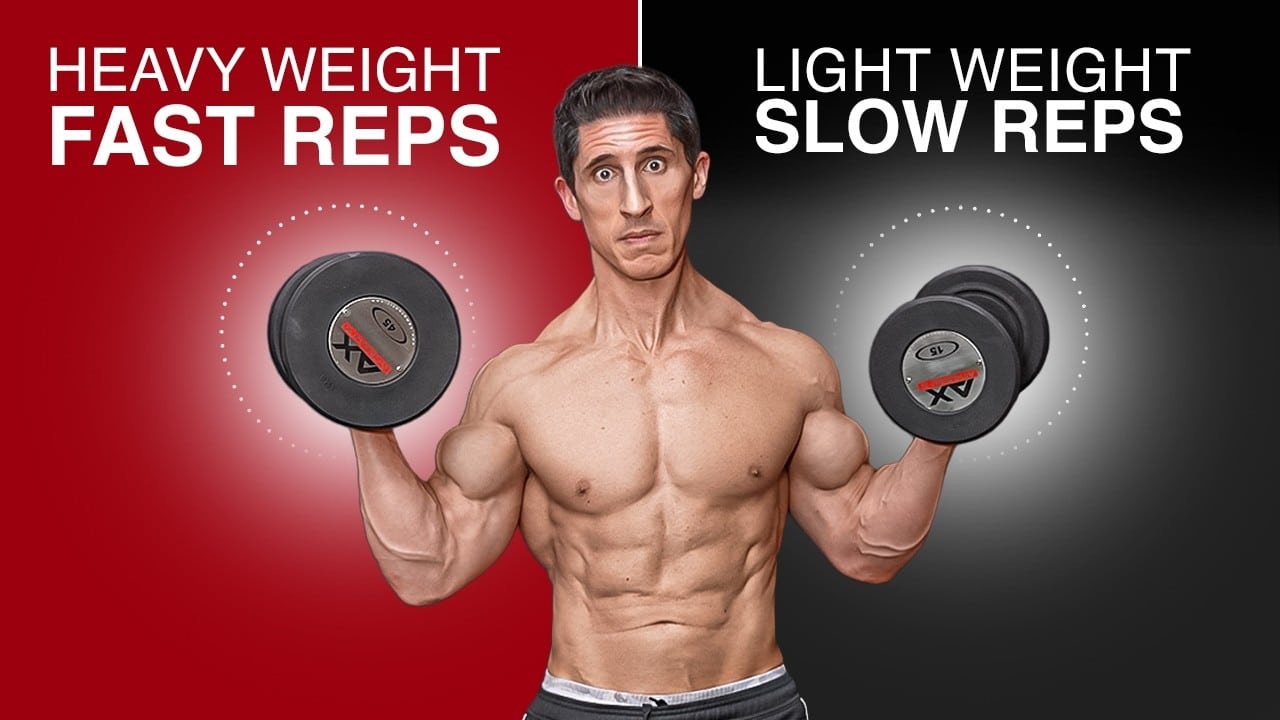
In a detailed video breakdown, Cavaliere explained why the “best” way to lift isn’t universal, and why chasing efficiency might actually sabotage your muscle growth.
The distinction between training for strength versus hypertrophy changes everything about how you should approach each rep.
Jump to:
Strength Training Demands Efficiency
When training for pure strength, Cavaliere emphasizes one key principle: efficiency is everything.
Using the barbell bench press as an example, he explains that maximal strength output requires all contributing muscles working together seamlessly. You shouldn’t worry about isolating chest from triceps or shoulders—you want them firing in concert.
When you’re doing this exercise, you should not be caring about how to isolate the chest from the triceps, from the shoulders. You want them all to work in concert because at the end of the day, your absolute level of strength or the output of how much you could actually lift is going to rely on the fact of all those muscles contributing together to that lift.
Speed matters here too. Accelerating the bar develops power alongside strength—two qualities that complement each other in performance training.
Building Muscle Requires Intentional Inefficiency
Here’s where Cavaliere’s approach gets interesting: for hypertrophy, you want to do the exact opposite.
Rather than seeking efficiency, muscle growth thrives on strategic inefficiency—finding new ways to challenge muscles beyond just adding weight to the bar.
You want to try to find ways that you can be inefficient. In other words, find new ways to challenge your muscles so that they are forced to have to come back and grow bigger and stronger. And that doesn’t always come in the form of just using heavier and heavier weights cuz at some point you wind up stalling out there.
The Lat Pulldown Example
Cavaliere demonstrates this concept using lat pulldowns. For strength, you’d use heavier weight, potentially underhand grip, and allow all assisting muscles to contribute naturally.
For hypertrophy? Take lighter weight and make everything deliberately harder:
- Slow down tempo dramatically
- Switch to overhand grip to minimize bicep involvement
- Use a narrow grip with elbows in front of body
- Emphasize the squeeze at peak contraction
- Control the stretch at the top position
Each modification increases time under tension and muscular stress without requiring maximal loads. It looks inefficient because it is—and that’s precisely the point.
Understanding Effective Reps and Intensity
Cavaliere breaks down rep quality using intensity curves that reveal why lighter weights can sometimes produce superior growth stimulus.
With a traditional 8-10 rep max weight taken to failure, intensity starts relatively low. Early reps feel manageable. Difficulty only skyrockets near the end—those final few “effective reps” where real growth occurs.
Now consider using a 13-rep max weight but performing only 10 reps with intensity techniques applied from rep one. The game changes completely.
Lighter Weight, Higher Cumulative Tension
By incorporating slow eccentrics, extended stretches, and deliberate contractions from the first rep, that lighter weight immediately jumps to higher intensity levels.
Reps two, three, and four maintain elevated difficulty throughout. Fatigue compounds. By rep ten, cumulative tension under that intensity curve potentially exceeds the heavier set—even if peak intensity doesn’t quite match.
The tension that we got here, the cumulative tension could actually be higher underneath that curve, the red lighter one, than it could be maybe in this one, even though it peaked out over here.
When Heavy Weight Doesn’t Work
Cavaliere warns against blindly chasing heavier loads without proper execution.
Using excessive weight with momentum-driven reps registers extremely low on muscular tension despite impressive numbers. Momentum replaces muscle work—the intensity simply isn’t there regardless of what’s loaded on the bar.
The Super Light Trap
Conversely, going too light presents its own problems. Even with perfect form, intense squeezing, and advanced techniques like one-and-a-half reps, insufficient load means insufficient tension.
Unless you’re performing extremely high rep counts, minimal weight won’t register meaningful stimulus. There’s a threshold below which technique can’t compensate for inadequate resistance.
Higher Reps Build Strength Too
Cavaliere challenges the myth that strength only develops in low rep ranges like three to five reps.
If you progress from 10 reps to 11, then 12, then 13 with the same weight, you’re absolutely getting stronger. That increased strength capacity elevates all training intensities—higher rep work and lower rep work both benefit.
Don’t let anybody fool you. You’re getting stronger at that lift. When you get stronger here, what happens? It brings everything up.
Improved strength in one rep range raises the baseline for all others. It’s not an either-or proposition.
The Balanced Approach
Rather than declaring one method superior, Cavaliere advocates integrating both approaches strategically.
Train for both strength and hypertrophy. Explore higher and lower rep ranges. Apply intensity techniques when appropriate, and pursue progressive overload across the spectrum.
Understanding when to be efficient (strength) versus inefficient (hypertrophy) unlocks training adaptability that pure program-hopping never will.
Practical Takeaways
- Define your goal first: strength or hypertrophy dictates rep execution
- For strength: maximize efficiency, recruit all muscles, incorporate speed
- For hypertrophy: embrace inefficiency through tempo, squeeze, and stretch variations
- Match weight to technique: too heavy with poor form or too light with perfect form both fail
- Higher reps build strength: progressive overload works across rep ranges
- Vary your approach: periodize between strength-focused and hypertrophy-focused training blocks
Cavaliere’s framework provides clarity in an area clouded by conflicting advice. By understanding why different rep schemes work—and when to apply them—lifters can move beyond dogma toward results-driven programming tailored to specific outcomes.