Chest training doesn’t have to mean endless sets with long rest periods.
According to Jeff Cavaliere, creator of Athlean-X and physical therapist who’s worked with professional athletes, most people waste their time doing repetitions that don’t actually build muscle.
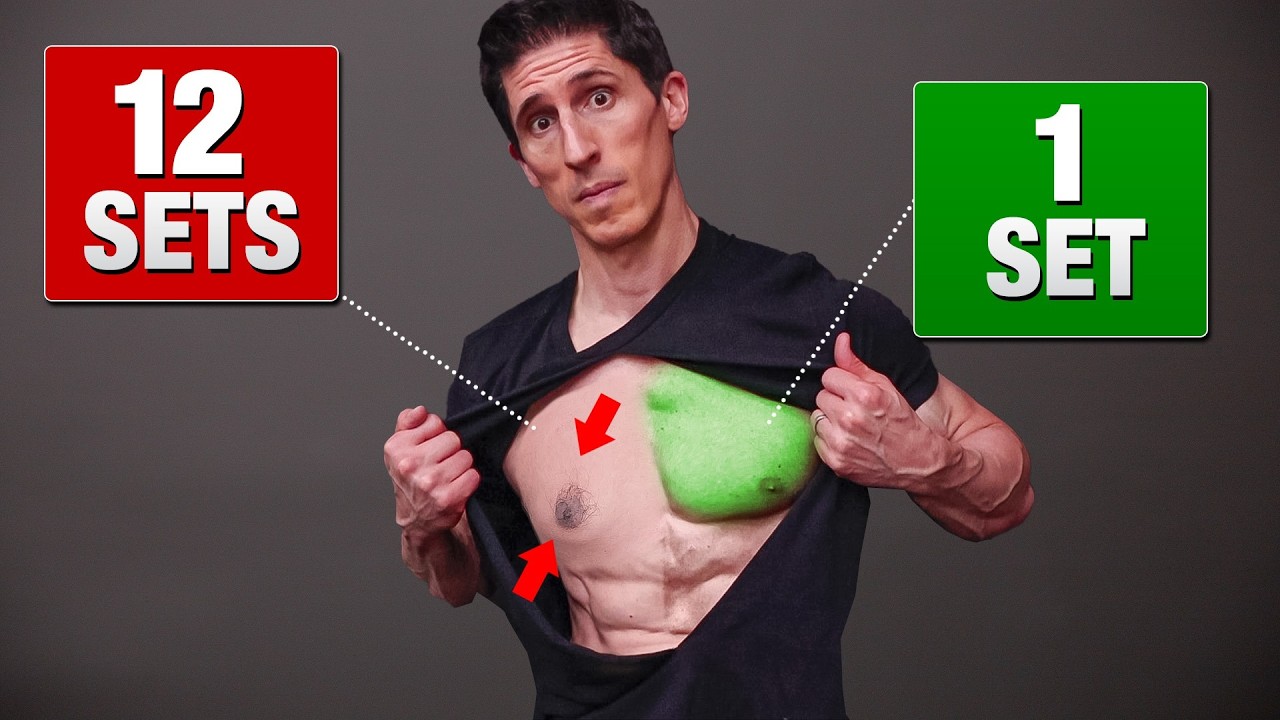
His controversial approach slashes rest time and focuses only on what he calls “effective reps”—the hardest repetitions at the end of a set where real muscle growth happens.
In a recent video demonstration with Jesse Laico, Cavaliere showed exactly how to transform chest workouts from volume-focused marathons into strategic, hypertrophy-driven sessions.
Jump to:
- The Problem With Traditional Training
- Effective Reps: Shortcutting to Growth
- Programming Effective Rep Training
- Why This Doesn’t Work With Light Weights
- Building a Complete Chest Workout
- Real-World Results
- Hypertrophy Versus Strength Training
- Practical Implementation Tips
- Understanding Training Efficiency
- Variations and Alternatives
- Who Should Try This Method
- Sources
The Problem With Traditional Training
Most lifters follow conventional wisdom: pick a weight, bang out 10-12 reps, rest 2-3 minutes, repeat.
Cavaliere’s demonstration revealed something fascinating. During Jesse’s first set to failure with a 10-12 rep max weight, the first six or seven repetitions felt relatively easy. Only the final reps—numbers eight through eleven—created genuine muscular tension and fatigue.
No products found.
These should be rather easy, right? Yeah. This is fairly easy.
Those initial “easy” reps serve one purpose: getting to a point of meaningful fatigue where muscles actually respond and grow.
That’s not inherently wrong, but Cavaliere questioned the logic behind resting long enough to repeat all those preparatory reps again.
Effective Reps: Shortcutting to Growth
After Jesse’s traditional set, Cavaliere instructed him to rest only 15-30 seconds—then immediately perform another set.
The result? Immediate difficulty.
Oh, it’s already starting to be difficult.
Jesse managed only five reps, but every single repetition challenged him significantly. By rep three, he was working as hard as he did on rep nine of his previous set.
This concept—called “effective reps”—focuses training on repetitions performed under significant fatigue. Instead of regenerating full recovery between sets, shortened rest periods keep muscles in a fatigued state where every subsequent rep becomes growth-stimulating.
No products found.
The research picture here is more nuanced than Cavaliere’s demonstration might suggest. While proximity to failure does matter significantly for muscle growth, studies comparing short versus moderate rest periods show mixed results. A 2016 study published in the Journal of Strength and Conditioning Research found that longer rest periods (3 minutes versus 1 minute) actually produced superior muscle and strength gains over eight weeks of training.
However, rest-pause training—which involves brief rest intervals similar to what Cavaliere demonstrates—has shown effectiveness in research contexts. The key appears to be total training volume and intensity management, not just rest period manipulation alone.
Programming Effective Rep Training
Cavaliere’s method completely reframes workout structure around accumulated effective repetitions rather than traditional set schemes.
Here’s how it works in practice:
- Select a weight that causes failure at 10-12 reps
- Perform an “ignition set” to complete failure—this set doesn’t count toward your effective rep total
- Rest 15-30 seconds
- Perform another set to failure—now every rep counts as “effective”
- Continue rest-pause cycles until reaching 20 total effective reps
The ignition set does not count. The first set does not count. So you’ve got six, whatever, six effective reps in the first set. You drop down maybe the next one you’re doing four. Now you’re at 10. You keep going until you chip away to your 20 effective reps.
Once those 20 effective reps are completed, that exercise is finished. Completely done. Move to a different movement pattern—cable crossovers, dips, incline presses—targeting chest from another angle.
Weight Adjustment Strategy
Two approaches exist for managing fatigue accumulation:
No products found.
Option One: Keep weight constant. Accept that rep counts will decrease with each mini-set (5 reps, then 4, then 3, then 2). This requires more total sets but maintains maximum tension throughout.
Option Two: Drop weight strategically. When reps fall to 2-3 per mini-set, reduce load by 5-10 pounds. This allows slightly higher reps per set and fewer total sets to reach 20 effective reps.
Neither approach is superior—both create sufficient stimulus when executed properly.
Beginner Versus Advanced Considerations
Experience level dramatically affects appropriate rest intervals within this method.
Advanced lifters typically need closer to 30 seconds rest. They understand how to truly reach failure and generate maximum effort, meaning their fatigue runs deeper and requires slightly longer recovery.
Beginners often underestimate their capacity and stop sets prematurely. They can usually work with 15-20 second rest periods since their “failure” point often leaves additional reps in reserve.
No products found.
You can elicit a higher effort, right? You know what it is to train to failure. You know what it is to give a high effort. So, you’re likely not leaving anything on the table.
Why This Doesn’t Work With Light Weights
Cavaliere specifically warned against applying effective rep methodology to high-rep, light-weight training.
When performing sets of 15, 20, or 25+ reps, even more repetitions become “meaningless” before reaching productive fatigue. Those early reps accumulate joint stress and metabolic byproducts without triggering growth signals.
Some would actually argue with lighter weights it becomes more of a mileage factor where you’re just wearing and tearing with no real benefit. If you don’t bring yourself at these higher rep ranges, 15 rep sets, 20 rep sets, 25 rep sets to absolute failure, you’ve wasted the set.
High-rep training can build muscle, but only when pushed to absolute technical failure. Otherwise, you’re accumulating fatigue without stimulus—the worst possible training outcome.
Building a Complete Chest Workout
Cavaliere outlined a sample chest session structured entirely around effective repetitions:
- Dumbbell Bench Press: 20 effective reps at 10-12 rep max weight
- Cable Crossovers: 20 effective reps targeting different angle
- Weighted Dips (with pause at bottom): 10 effective reps
- Incline Dumbbell Press: 20 effective reps
Notice the structure: exercises aren’t measured in sets anymore. Each movement has a target number of effective reps. Some require 20, others only 10 when intensity increases through tempo manipulation (like paused dips).
This approach naturally regulates volume. When accumulating effective reps becomes excessively difficult, you’ve likely reached sufficient training stimulus for that movement pattern.
No products found.
Real-World Results
Multiple athletes and fitness enthusiasts who adopted Cavaliere’s effective rep methodology reported significant strength gains.
One practitioner described his pull-up performance improvement:
I went from being able to do about 10 pull-ups in a row to 20 in about a month and a half.
Another athlete questioned traditional rest period dogma after implementing shortened intervals:
If I’m at my last three reps, why do we have to rest for 2 minutes? Like, who said that? Who made that up? Is it really a recovery thing 2 minutes before you can go back into 12 more reps?
These anecdotal improvements don’t replace controlled research, but they highlight potential applications. Individual response varies significantly based on training history, recovery capacity, and overall program design.
Hypertrophy Versus Strength Training
Cavaliere emphasized that effective rep training specifically targets muscle growth, not maximal strength or power development.
Strength and power training require longer rest periods—typically 3-5 minutes—to maintain high force output and movement quality across sets. Those training goals prioritize neural efficiency and skill practice.
No products found.
When you’re training for strength and power, we want those longer rest periods, right? We want to be able to get good, high quality repetitions. Practice makes perfect. No, only perfect practice makes perfect.
Hypertrophy training, conversely, benefits from metabolic inefficiency. Creating an uncomfortable internal environment with accumulated fatigue, metabolic stress, and sustained tension drives adaptive responses that increase muscle size.
Shortened rest intervals amplify metabolic stress—one of several mechanisms contributing to muscle growth alongside mechanical tension and muscle damage.
Practical Implementation Tips
Successfully applying effective rep methodology requires attention to several key factors:
Know your true failure point. Effective rep training only works when initial sets genuinely reach technical failure—the point where another rep with proper form becomes impossible.
Time rest periods strictly. Use a timer or count seconds deliberately. The natural tendency will be extending rest as fatigue accumulates.
Track effective rep totals. Keep a training log noting how many mini-sets were required to reach your effective rep target. Progressive improvement means reaching 20 effective reps in fewer total sets over time.
No products found.
Adjust rest periods based on honest self-assessment. If you consistently reach effective rep targets too easily, shorten rest intervals. If form deteriorates severely between mini-sets, extend rest slightly.
Don’t apply this to every exercise. Effective rep training creates substantial fatigue. Reserve this approach for primary compound movements, not accessory work that may already be pre-exhausted.
Understanding Training Efficiency
Cavaliere’s philosophy challenges common assumptions about training volume and session length.
Traditional approaches emphasize time under tension and total repetitions performed. This often leads to hour-long sessions with extensive rest periods between numerous sets.
Effective rep methodology prioritizes quality of muscular tension over quantity of repetitions. Sessions become shorter and more intense, potentially improving adherence for time-constrained individuals.
However, this intensity comes with costs. Recovery demands increase significantly. Central nervous system fatigue, joint stress, and systemic exhaustion accumulate faster with rest-pause protocols than traditional training.
No products found.
Programming must account for this by potentially reducing training frequency or incorporating deload weeks more regularly.
Variations and Alternatives
While Cavaliere’s specific 20 effective rep protocol offers one framework, similar principles apply across various advanced techniques:
Cluster sets use slightly longer intra-set rest (30-45 seconds) with heavier loads, blending strength and hypertrophy adaptations.
Myo-reps follow nearly identical structure to effective reps but typically target lower total rep counts (12-15 rather than 20).
Drop sets reduce load immediately at failure without any rest period, pushing muscles through multiple failure points in one extended set.
Each variation manipulates rest periods, load, and volume differently while sharing the core principle: maximizing productive repetitions while minimizing wasted work.
No products found.
Who Should Try This Method
Effective rep training suits specific populations better than others.
Intermediate to advanced lifters with established work capacity and technical proficiency will extract maximum benefit. They understand movement patterns deeply enough to maintain form under extreme fatigue.
Time-pressed individuals seeking efficient training may appreciate condensed sessions that deliver similar or superior stimulus compared to traditional longer workouts.
Lifters experiencing plateau in muscle growth despite consistent training may find the novel stimulus of rest-pause protocols reignites adaptation.
Conversely, complete beginners should master fundamental movement patterns and develop baseline work capacity before implementing aggressive fatigue-management techniques. Technical proficiency must precede intensity.
Sources
- Schoenfeld BJ, Pope ZK, Benik FM, et al. (2016). Longer Interset Rest Periods Enhance Muscle Strength and Hypertrophy in Resistance-Trained Men. Journal of Strength and Conditioning Research. https://pubmed.ncbi.nlm.nih.gov/26605807/